Reduce time to first gameplay.
Increase repeat play through social features.
Improve engagement without overwhelming users.
Time to discover games.
Willingness to return.
Feature preference (chat, leaderboard, points).
GOALS
SUCCESS METRICS
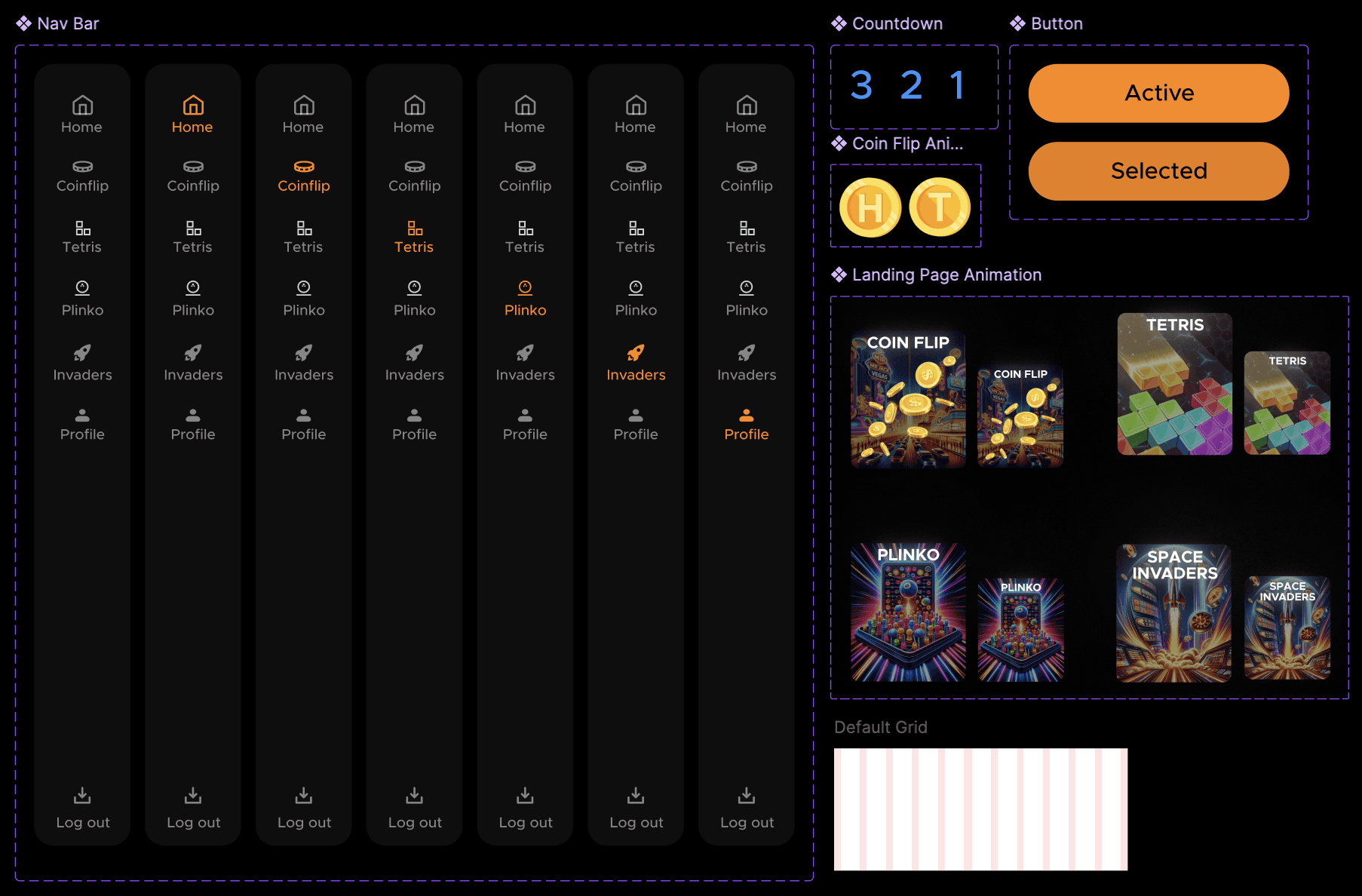
DESIGN SYSTEM
The palette uses high contrast to guide attention, with orange driving action and blue providing balance in a visually dense interface.
Used for key actions, highlights, attention-driving elements.
Primary Accent
#FF8700
Used for secondary actions and creating visual contrast.
Secondary Highlight
#2E93FF
Ensures readability and accessibility across the interface.
Text Contrast
#FFFFFF
Used to create depth and reduce visual noise.
Background Base
#000000
#191919
METROPOLIS
Headings
Sub-headings
Body Text
Regular
Medium
Bold
A Casual Multiplayer Gaming Experience

Team
UX Researcher & Product Designer (Me)
Software Developers
Timeline
6 weeks
Freelance Project
Type
How do you design a casual multiplayer game that’s zero-friction to play, social by choice, and rewarding to replay?



?
The Problem?
Casual players struggle to discover games quickly and lack social features that keep them engaged over time.
Casual gaming sessions are short. Any friction before gameplay or lack of motivation after a session increases drop-off and reduces retention.
Why This Matters?
Projected +42% retention (based on reduced steps & motivational incentives)
Before moving into solutions, I focused on understanding how casual players discover games, what motivates them to return, and how social features influence engagement without overwhelming gameplay.
The research aimed to answer three key questions:
How quickly do users expect to start playing a game?
What factors influence repeat play in casual multiplayer games?
How can social interaction be integrated without disrupting focus?
RESEARCH
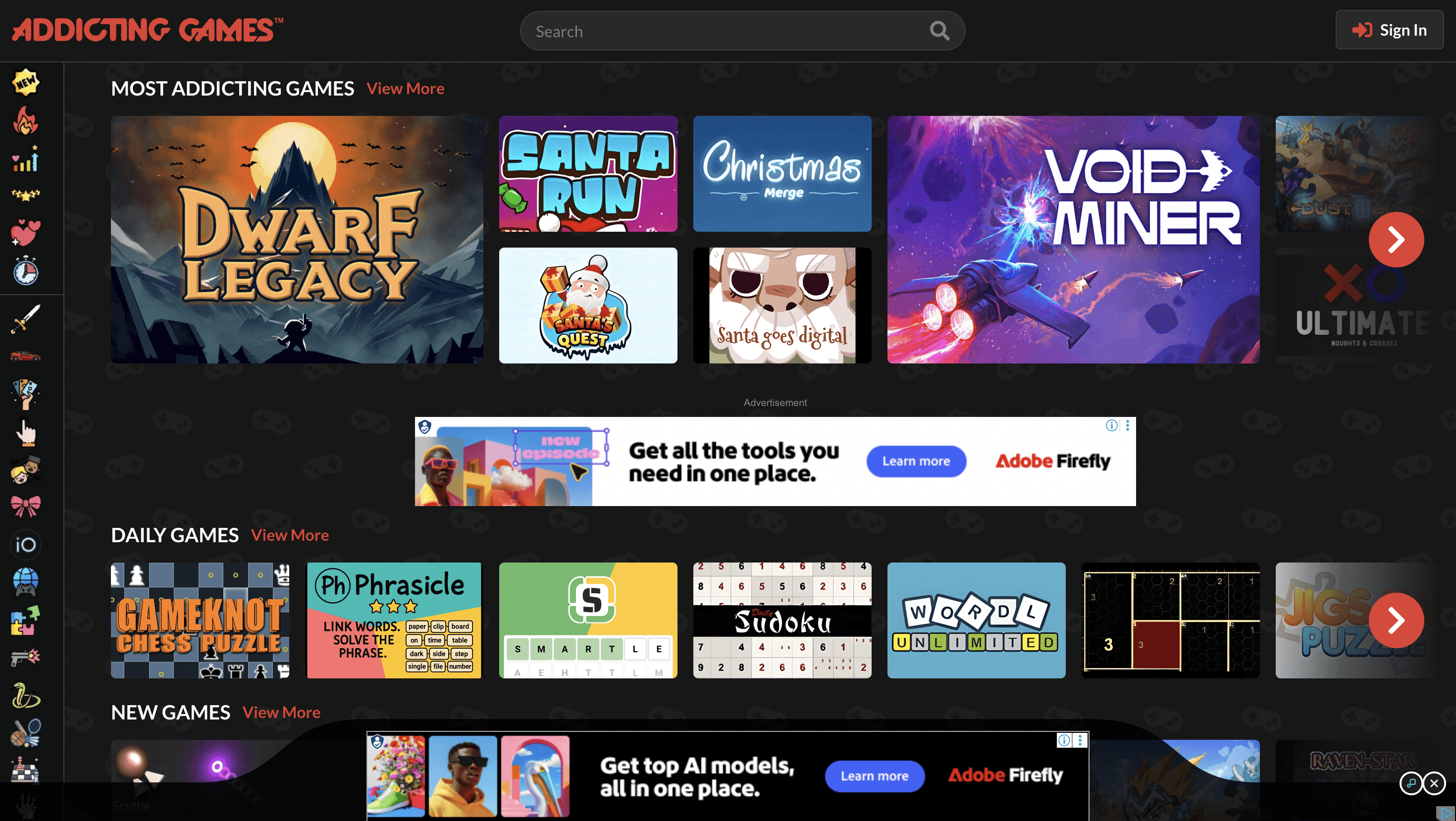
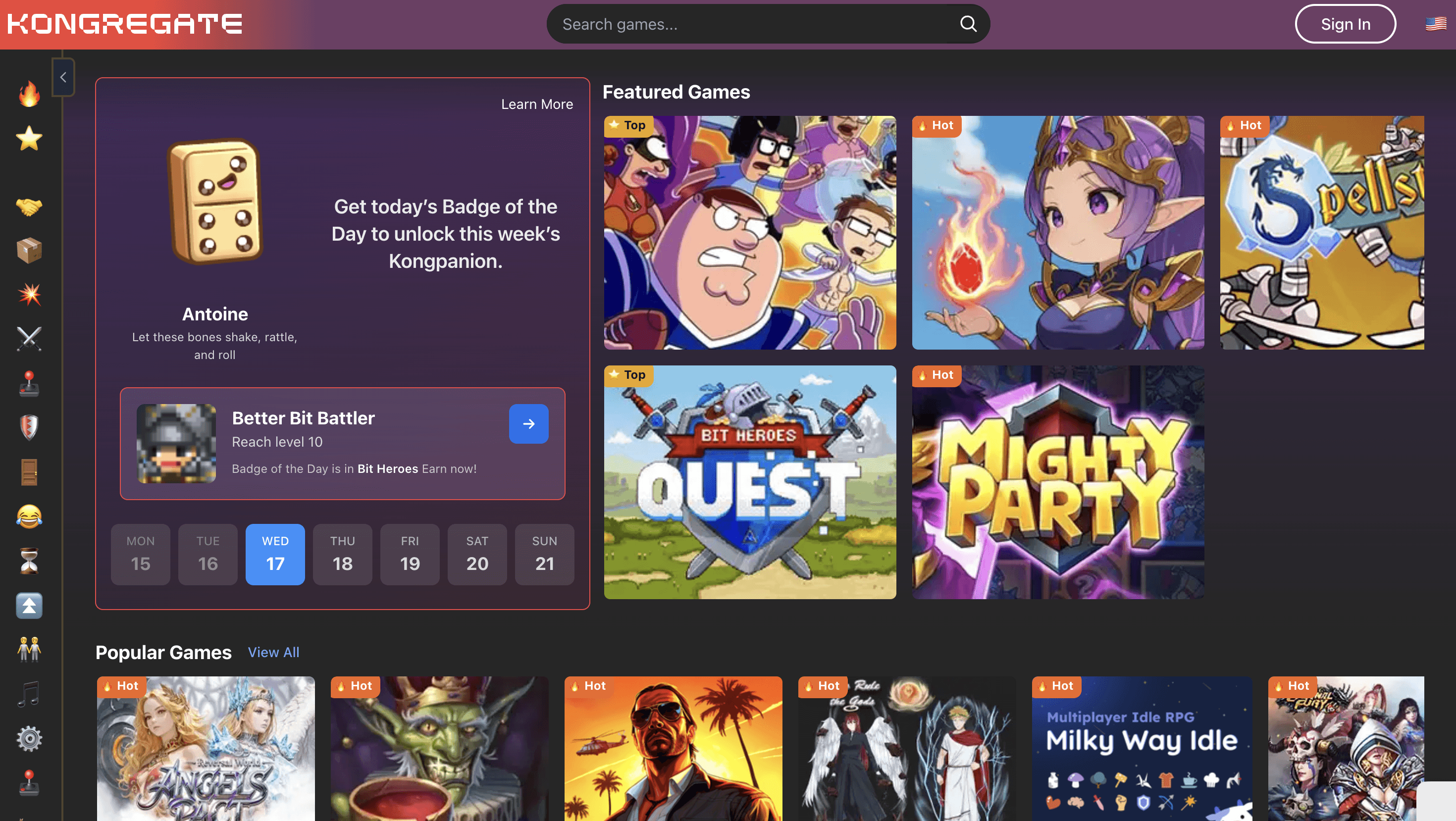
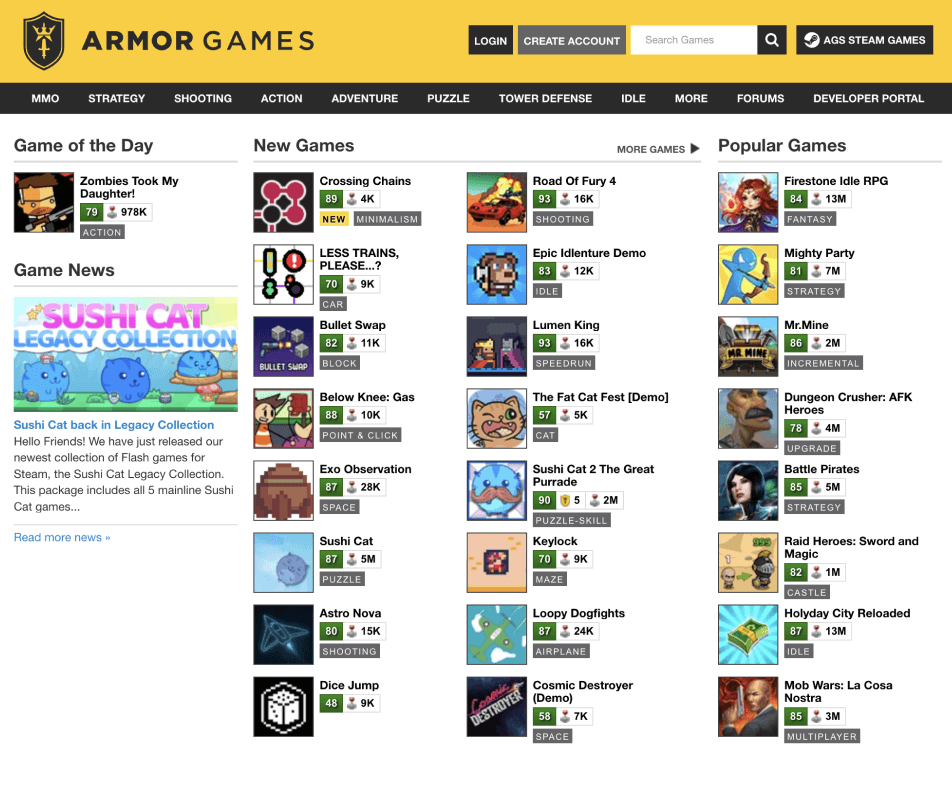
Competitive Heuristic Review (3 Platforms)
Key Observations:
Many platforms prioritized visual complexity over fast game access.
Social features (chat, leaderboards) were often buried or optional.
Progress systems lacked clarity beyond win/lose states.
Onboarding friction increased drop-off for casual players.
Design Implication:
Glitch needed to prioritize speed, clarity, and visible motivation.
I started with a heuristic review across three platforms before talking to users. I wanted to identify existing patterns first so that interviews could go deeper rather than just confirming what I could already observe.
User Interviews (3 Participants)
Key Patterns Identified:
Users expect to start playing within 1–2 interactions.
Excessive setup or configuration leads to frustration.
Playing alone feels disengaging over time.
Visible rewards and progress increase motivation to return.
Social presence is valued, even without active interaction.
What Surprised Me:
Users were more motivated by seeing others’ wins than by winning themselves.
Chat was valued more as a sense of presence than for constant conversation.
Leaderboards sparked curiosity rather than intimidation when positioned clearly.

“Sometimes I just want a quick game,
other times I want to challenge my friends.”

“I just want to open the app and start playing right away.
If I have to set up too much, I’ll drop it.”
PROBLEM DECOMPOSITION
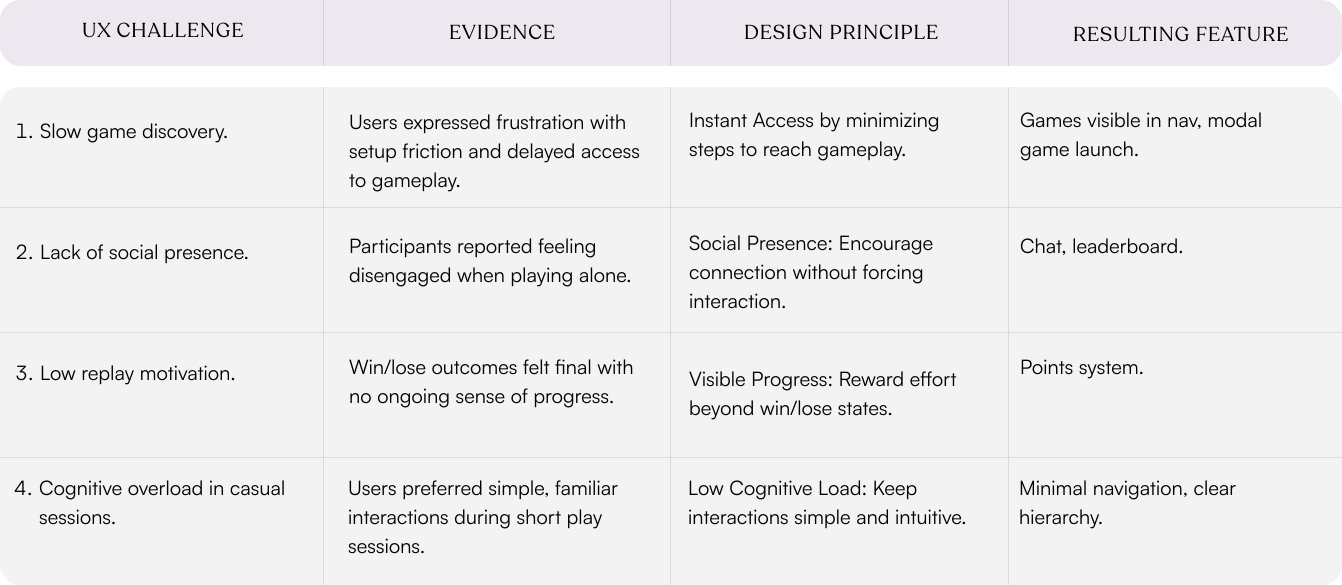
Research helped break the broader problem into actionable UX challenges. These insights directly informed early design decisions.
Ideation & Early Exploration
. . . . . . . . . . . . . . . . . . . . . . . . . . . . . . . . . . . . . . . . . . . . . . . . . . . . . . . . . . . . . . . . . . . . . . . . . . . . . . . . . . . . . . . . . . . . . . . . . . . . . . . . . . . . . . . . . . . . . . . . . . . . . . . . . . . . . . . . . . . . . . . . . . . . . . . . . . . . . . . . . . . . . . . . . . . . . . . . . . . . . . . . . . . . . . . . . . . . . . . . . . . . . . . . . . . . . . . . . . . . . . . . . . . . . . . . . . . . . . . . . . . . . . . . . . . . . . . . . . . . . . . . . . . . . . . . . . . . . . . . . . . . . . . . . . . . . . . . . . . . . . . . . . . . . . . . . . . . . . . . . . . . . . . . . . . . . . . . . . . . . . . . . . . . . . . . . . . . . . . . . . . . . . . . . . . . . . . . . . . . . . . . . . . . . . . . . . . . . . . . . . . . . . . . . . . . . . . . . . . . . . . . . . . . . . . . . . . . . . . . . . . . . . . . . . . . . . . . . . . . . . . . . . . . . . . . . . . . . . . . . . . . . . . . . . . . . . . . . . . . . . . . . . . . . . . . . . . . . . . . . . . . . . . . . . . . . . . . . . . . . . . . . . . . . . . . . . . . . . . . . . . . . . . . . . . . . . . . . . . . . . . . . . . . . . . . . . . . . . . . . . . . . . . . . . . . . . . . . . . . . . . . . . . . . . . . . . . . . . . . . . . . . . . . . . . . . . . . . . . . . . . . . . . . . . . . . . . . . . . . . . . . . . . . . . . . . . . . . . . . . . . . . . . . . . . . . . . . . . . . . . . . . . . . . . . . . . . . . . . . . . . . . . . . . . . . . . . . . . . . . . . . . . . . . . . . . . . . . . . . . . . . . . . . . . . . . . . . . . . . . . . . . . . . . . . . . . . . . . . . . . . . . . . . . . . . . . . . . . . . . . . . . . . . . . . . . . . . . . . . . . . . . . . . . . . . . . . . . . . . . . . . . . . . . . . . . . . . . . . . . . . . . . . . . . . . . . . . . . . . . . . . . . . . . . . . . . . . . . . . . . . . . . . . . . . . . . . . . . . . . . . . . . . . . . . . . . . . . . . . . . . . . . . . . . . . . . . . . . . . . . . . . . . . . . . . . . . . . . . . . . . . . . . . . . . . . . . . . . . . . . . . . . . . . . . . . . . . . . . . . . . . . . . . . . . . . . . . . . . . . . . . . . . . . . . . . . . . . . . . . . . . . . . . . . . . . . . . . . . . . . . . . . . . . . . . . . . . . . . . . . . . . . . . . . . . . . . . . . . . . . . . . . . . . . . . . . . . . . . . . . . . . . . . . . . . . . . . . . . . . . . . . . . . . . . . . . . . . . . . . . . . . . . . . . . . . . . . . . . . . . . . . . . . . . . . . . . . . . . . . . . . . . . . . . . . . . . . . . . . . . . . . . . . . . . . . . . . . . . . . . . . . . . . . . . . . . . . . . . . . . . . . . . . . . . . . . . . . . . . . . . . . . . . . . . . . . . . . . . . . . . . . . . . . . . . . . . . . . . . . . . . . . . . . . . . . . . . . . . . . . . . . . . . . . . . . . . . . . . . . . . . . . . . . . . . . . . . . . . . . . . . . . . . . . . . . . . . . . . . . . . . . . . . . . . . . . . . . . . . . . . . . . . . . . . . . . . . . . . . . . . . . . . . . . . . . . . . . . . . . . . . . . . . . . . . . . . . . . . . . . . . . . . . . . . . . . . . . . . . . . . . . . . . . . . . . . . . . . . . . . . . . . . . . . . . . . . . . . . . . . . . . . . . . . . . . . . . . . . . . . . . . . . . . . . . . . . . . . . . . . . . . . . . . . . . . . . . . . . . . . . . . . . . . . . . . . . . . . . . . . . . . . . . . . . . . . . . . . . . . . . . . . . . . . . . . . . . . . . . . . . . . . . . . . . . . . . . . . . . . . . . . . . . . . . . . . . . . . . . . . . . . . . . . . . . . . . . . . . . . . . . . . . . . . . . . . . . . . . . . . . . . . . . . . . . . . . . . . . . . . . . . . . . . . . . . . . . . . . . . . . . . . . . . . . . . . . . . . . . . . . . . . . . . . . . . . . . . . . . . . . . . . . . . . . . . . . . . . . . . . . . . . . . . . . . . . . . . . . .
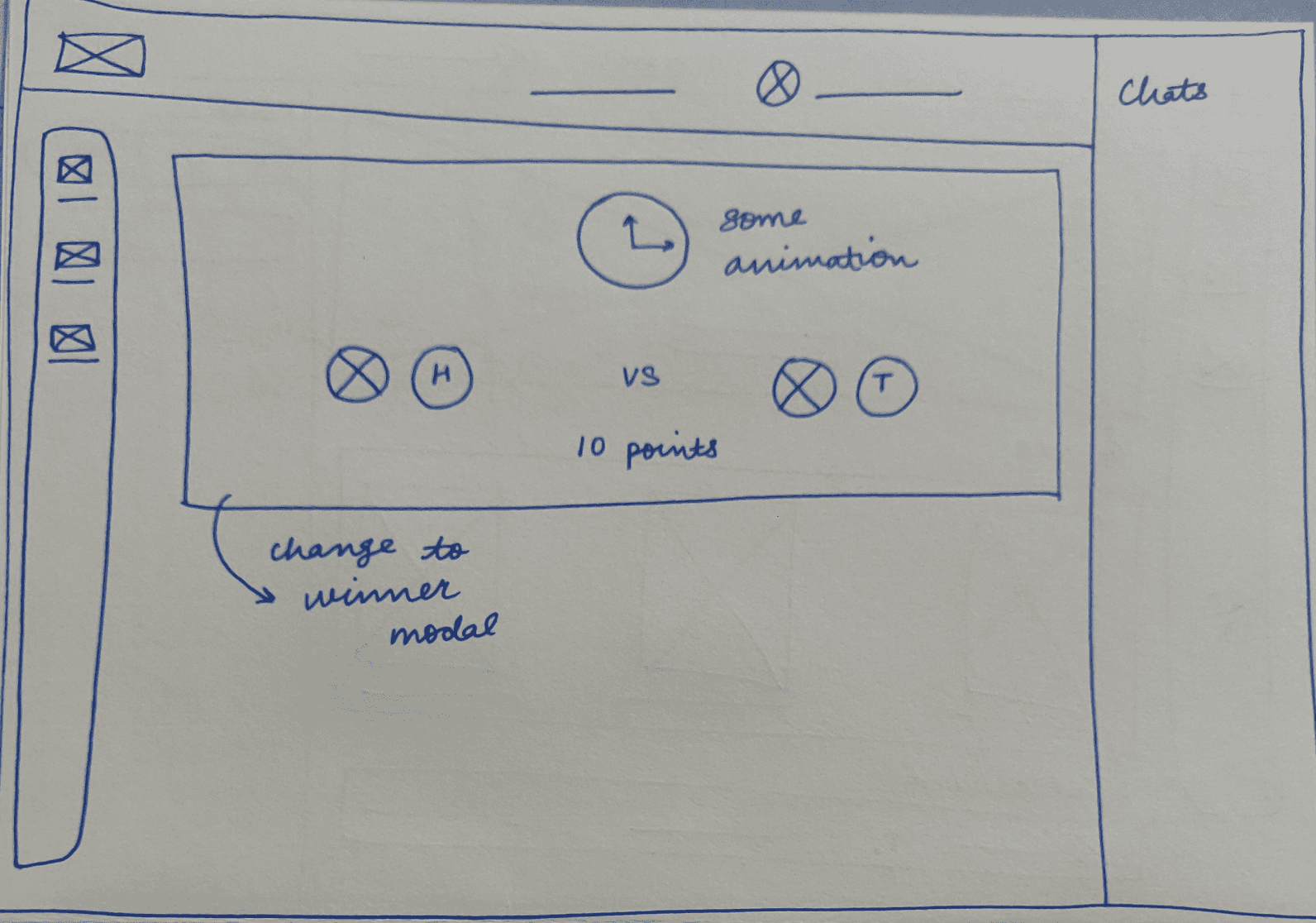
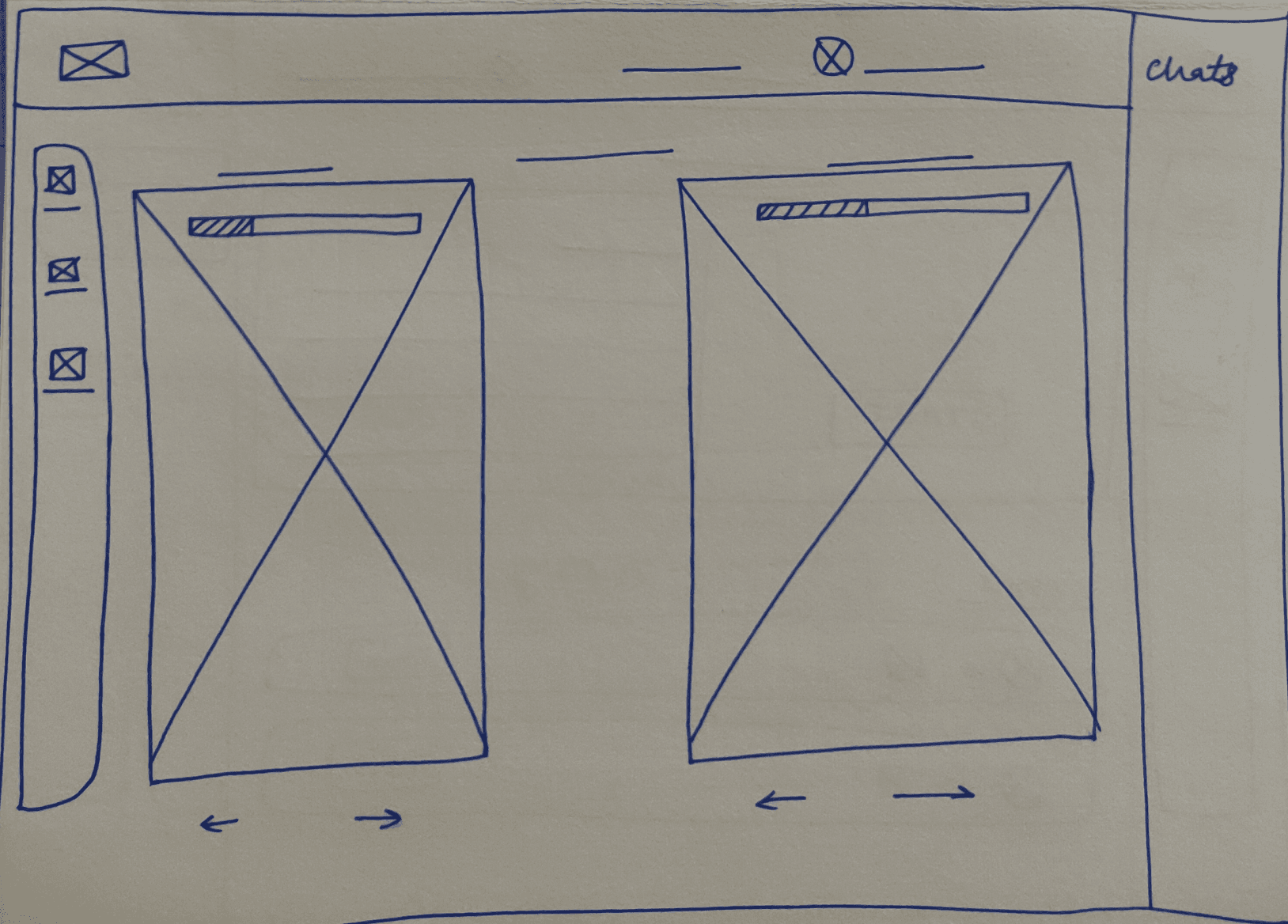
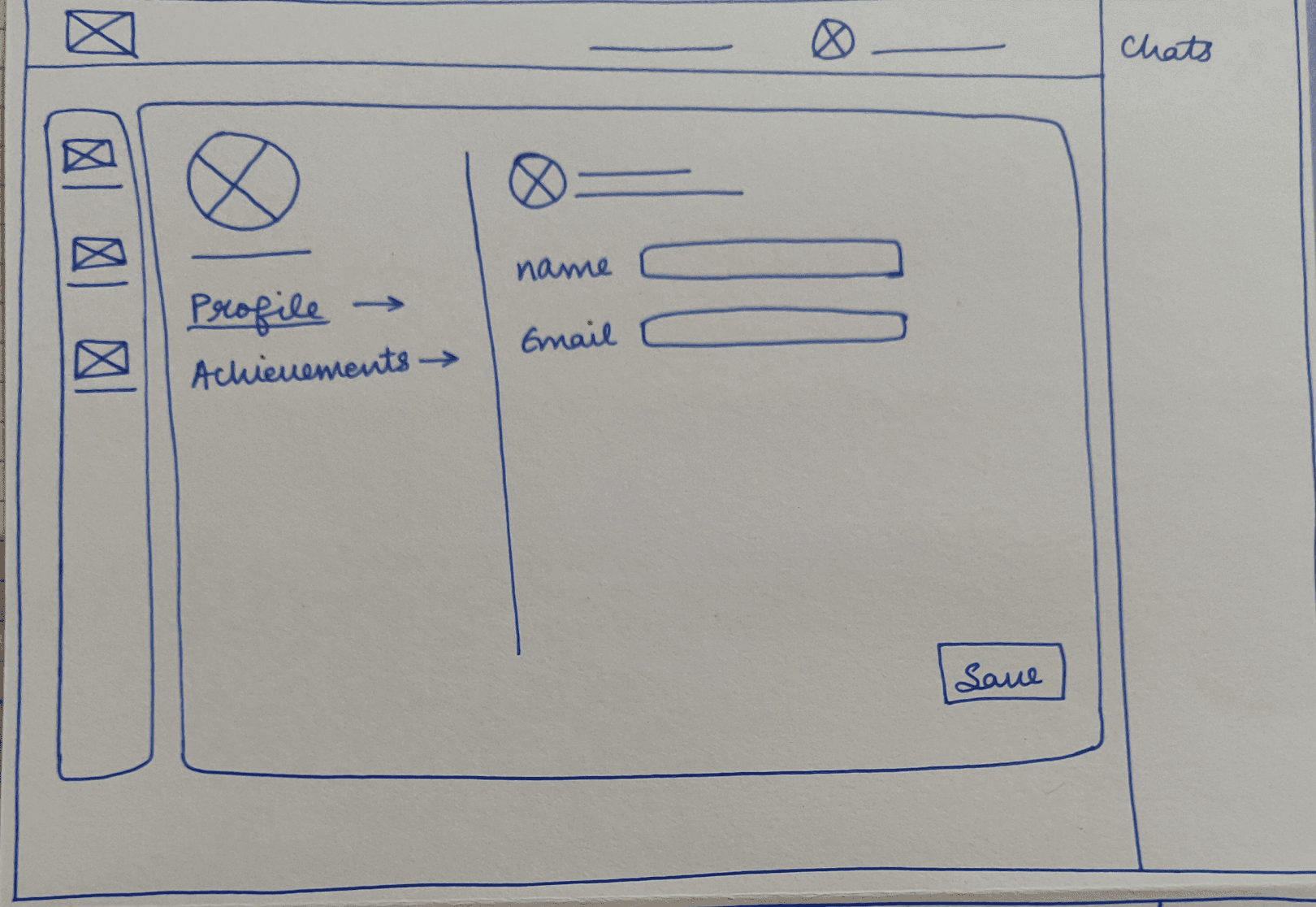
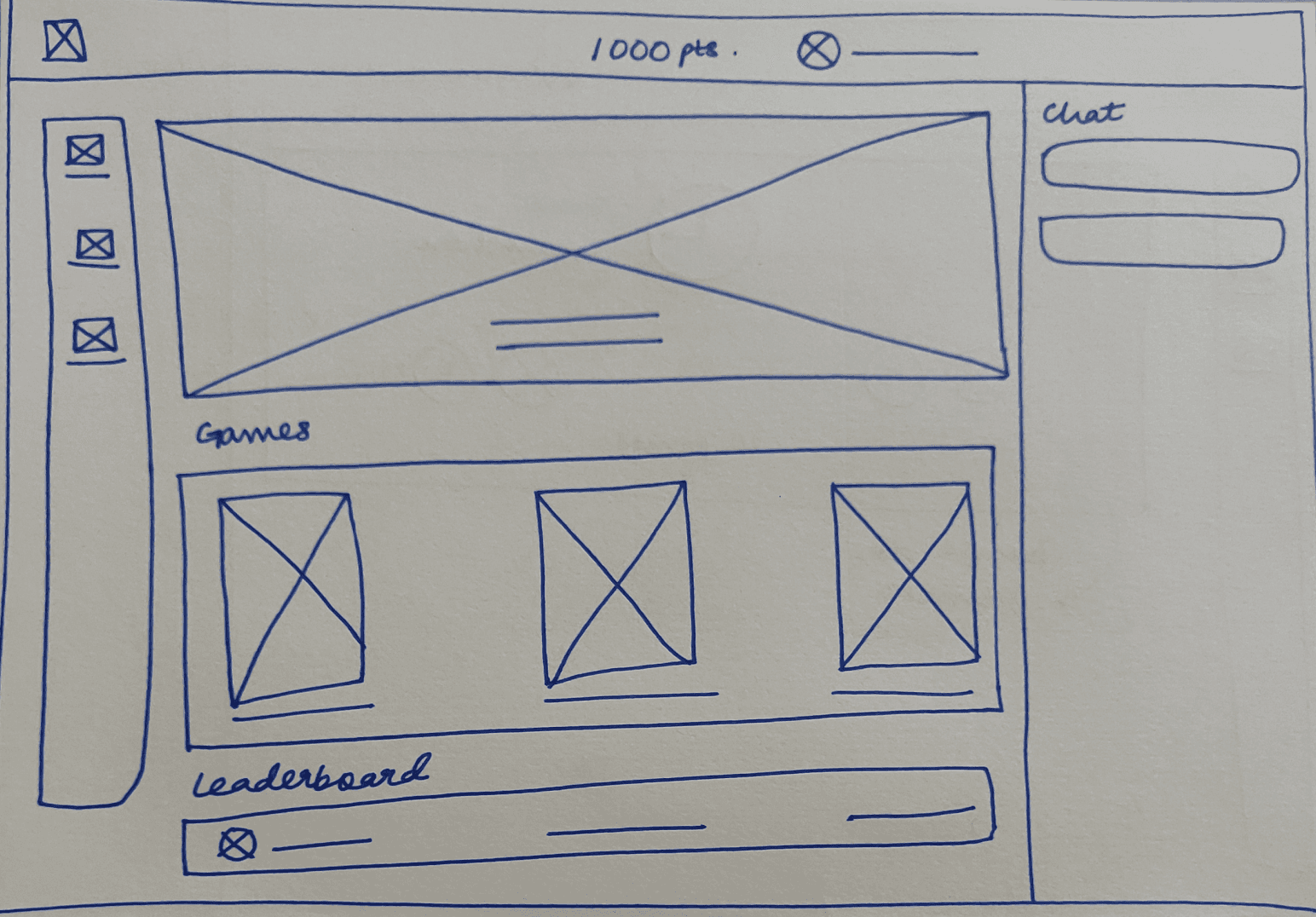
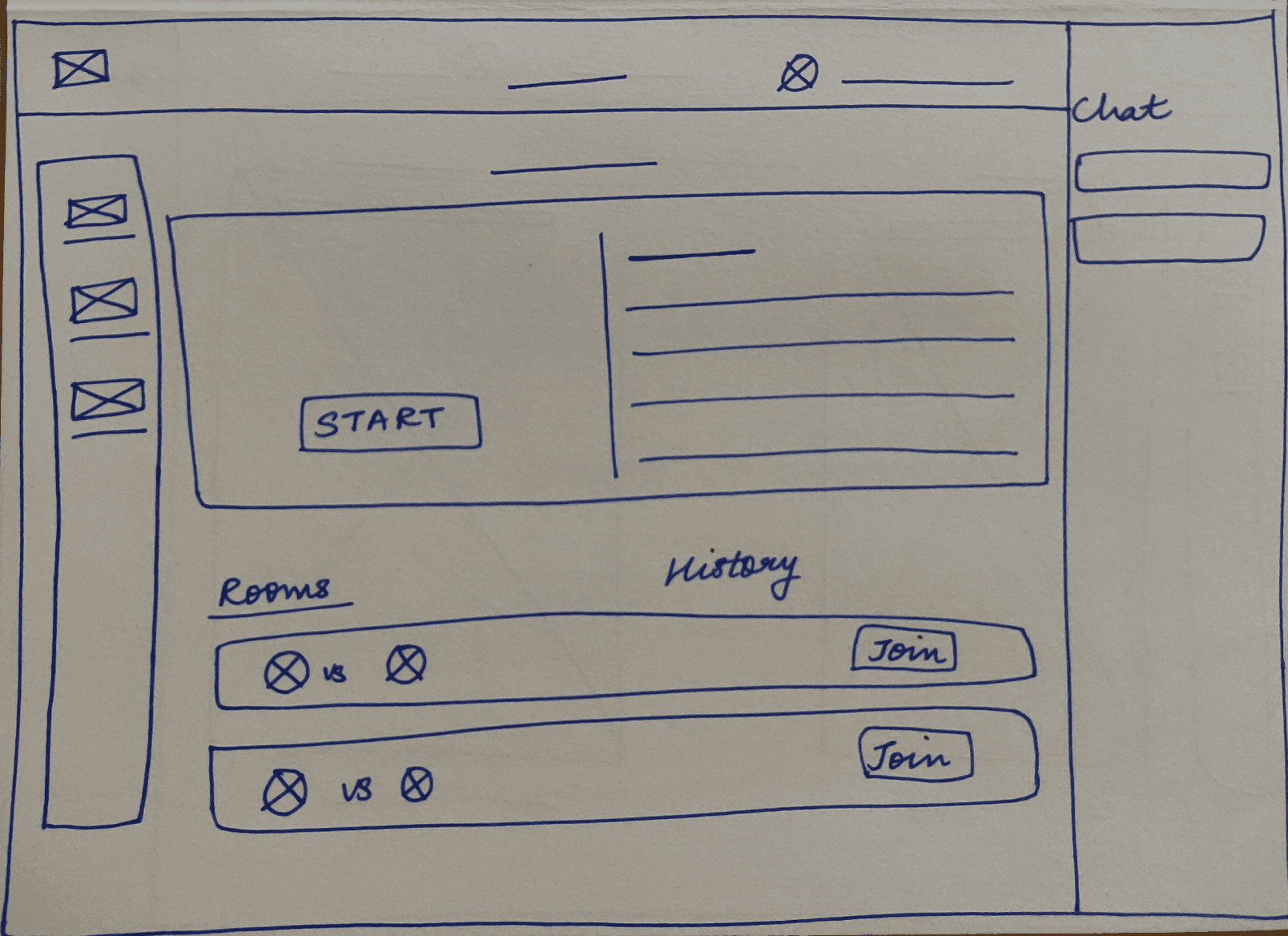
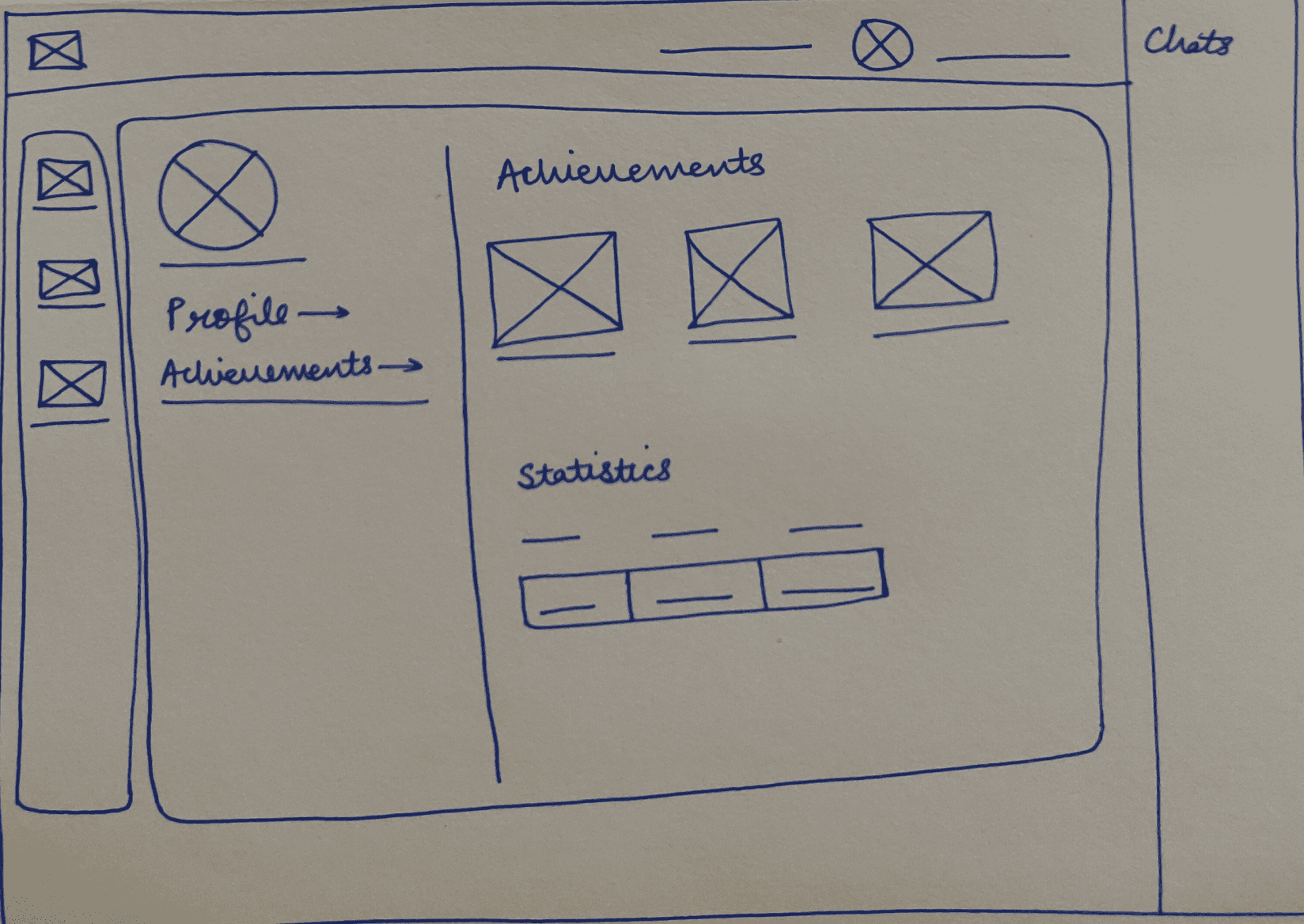
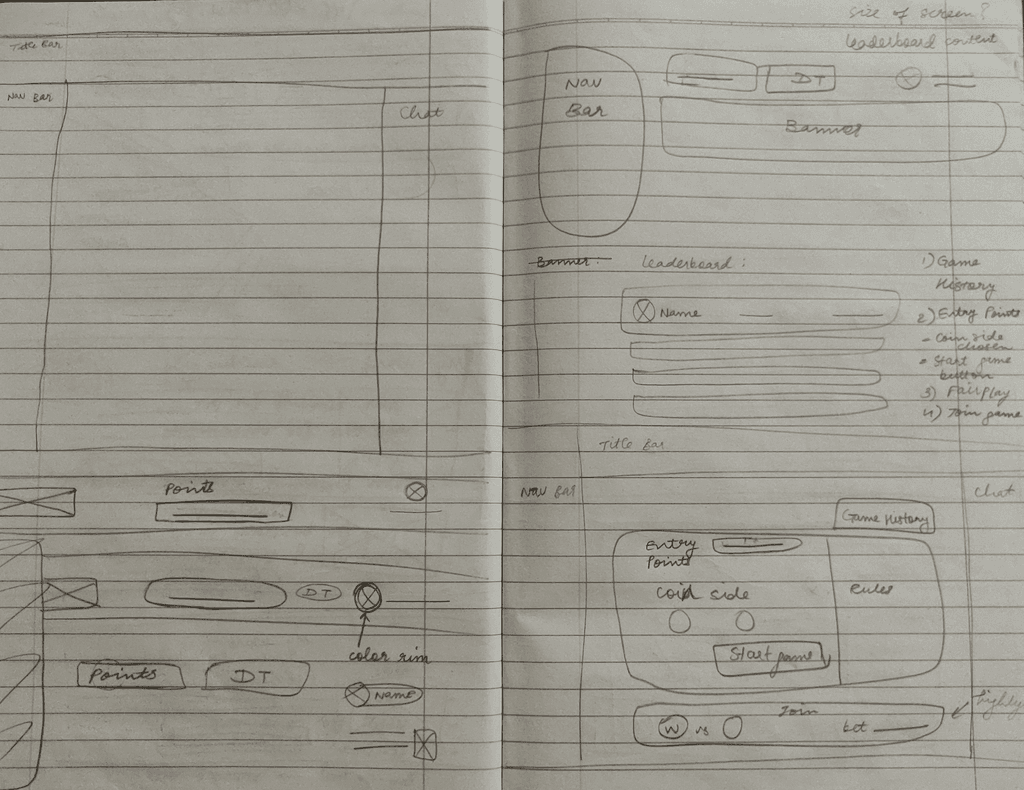
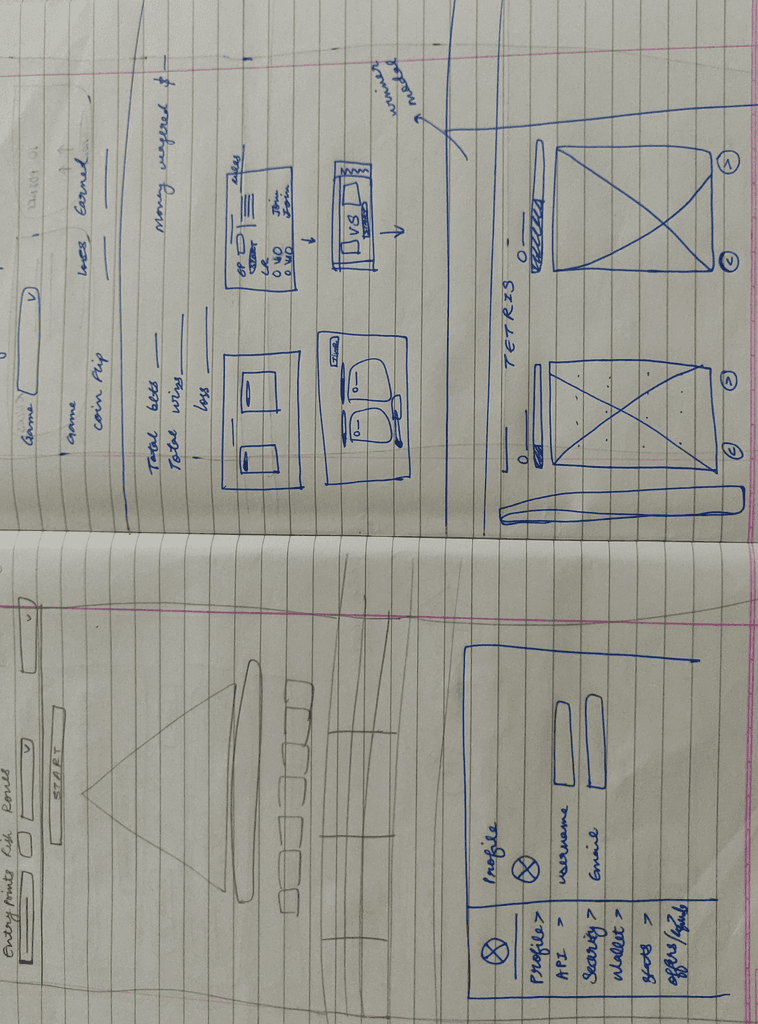
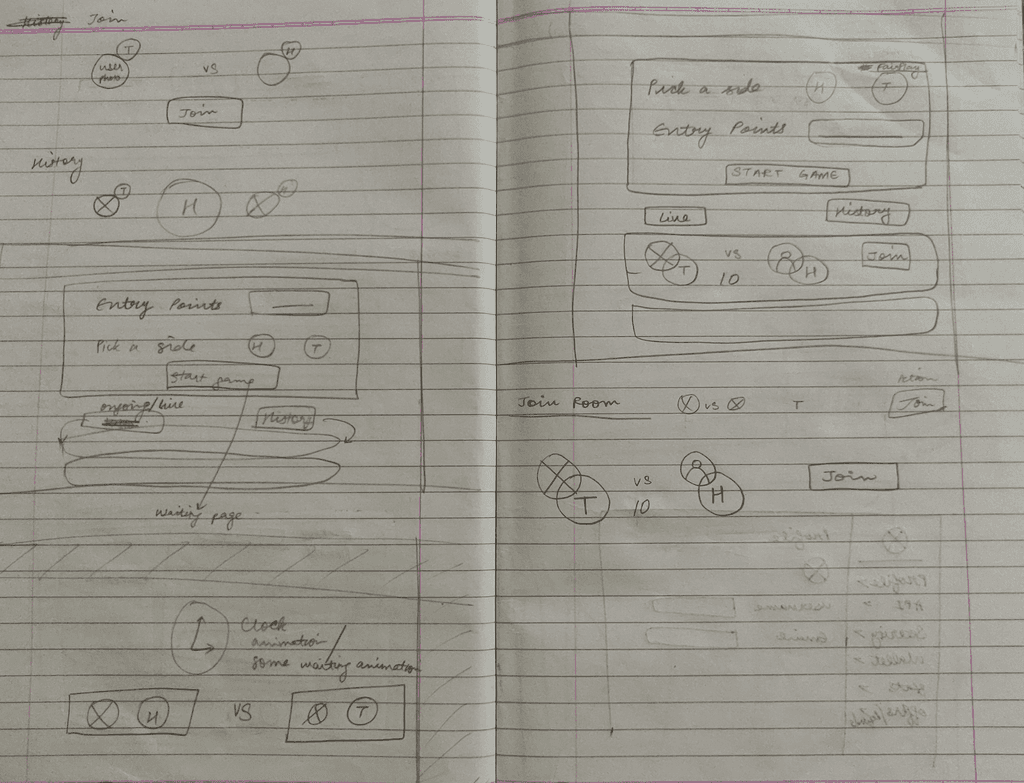
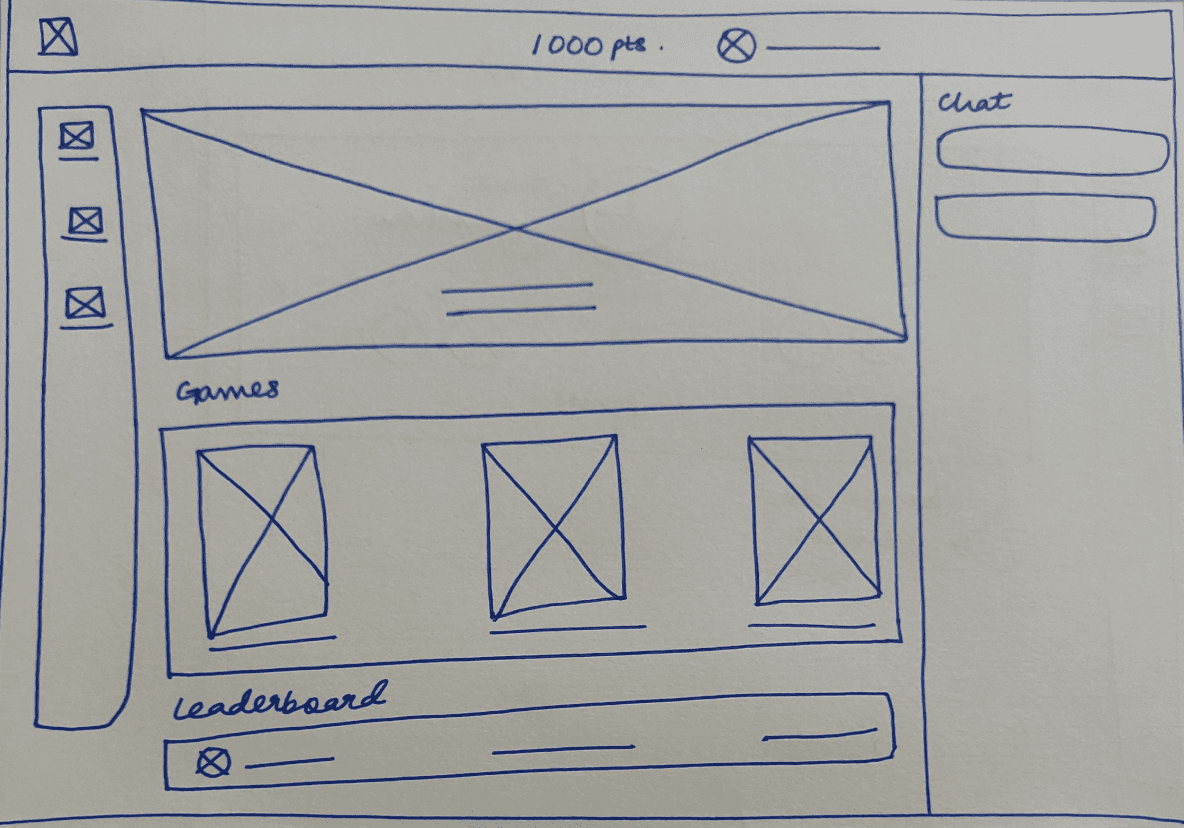
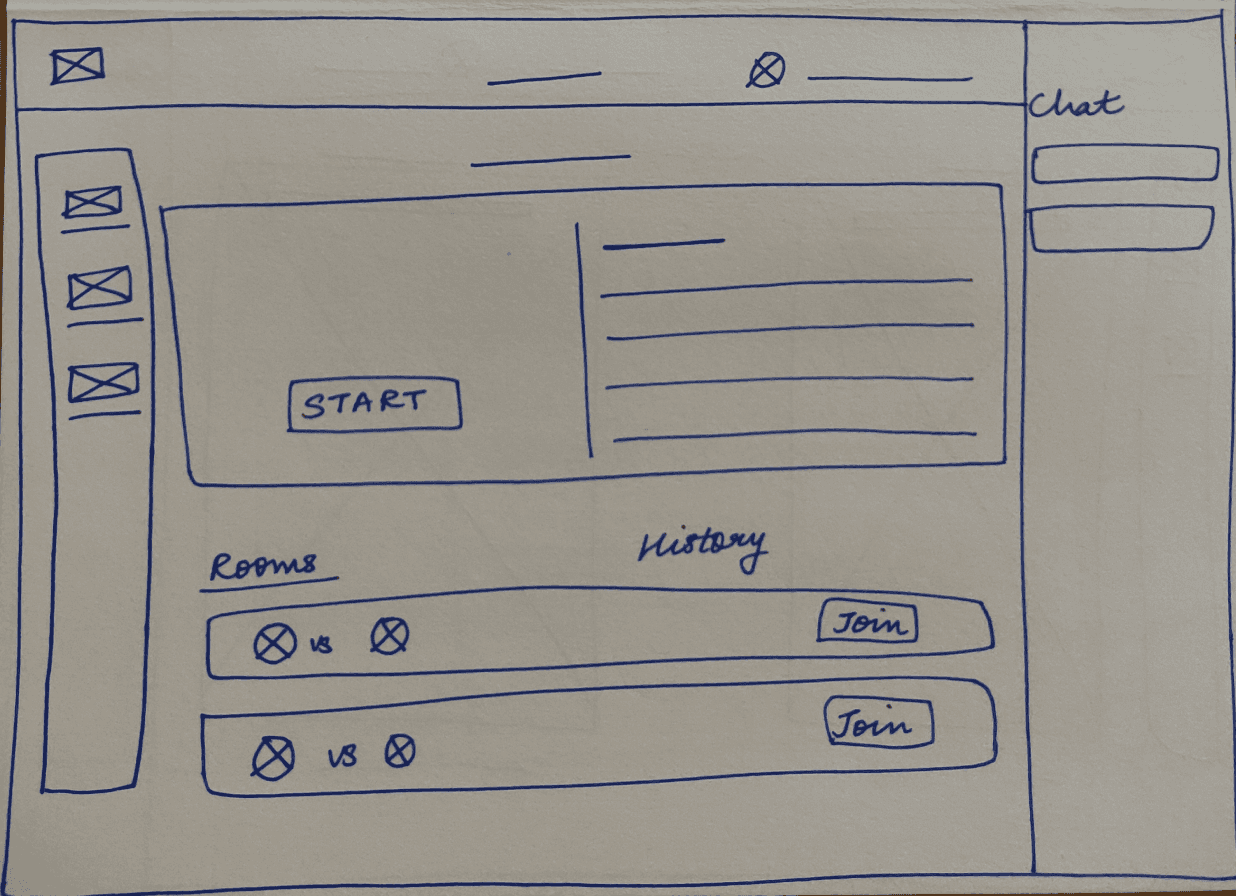
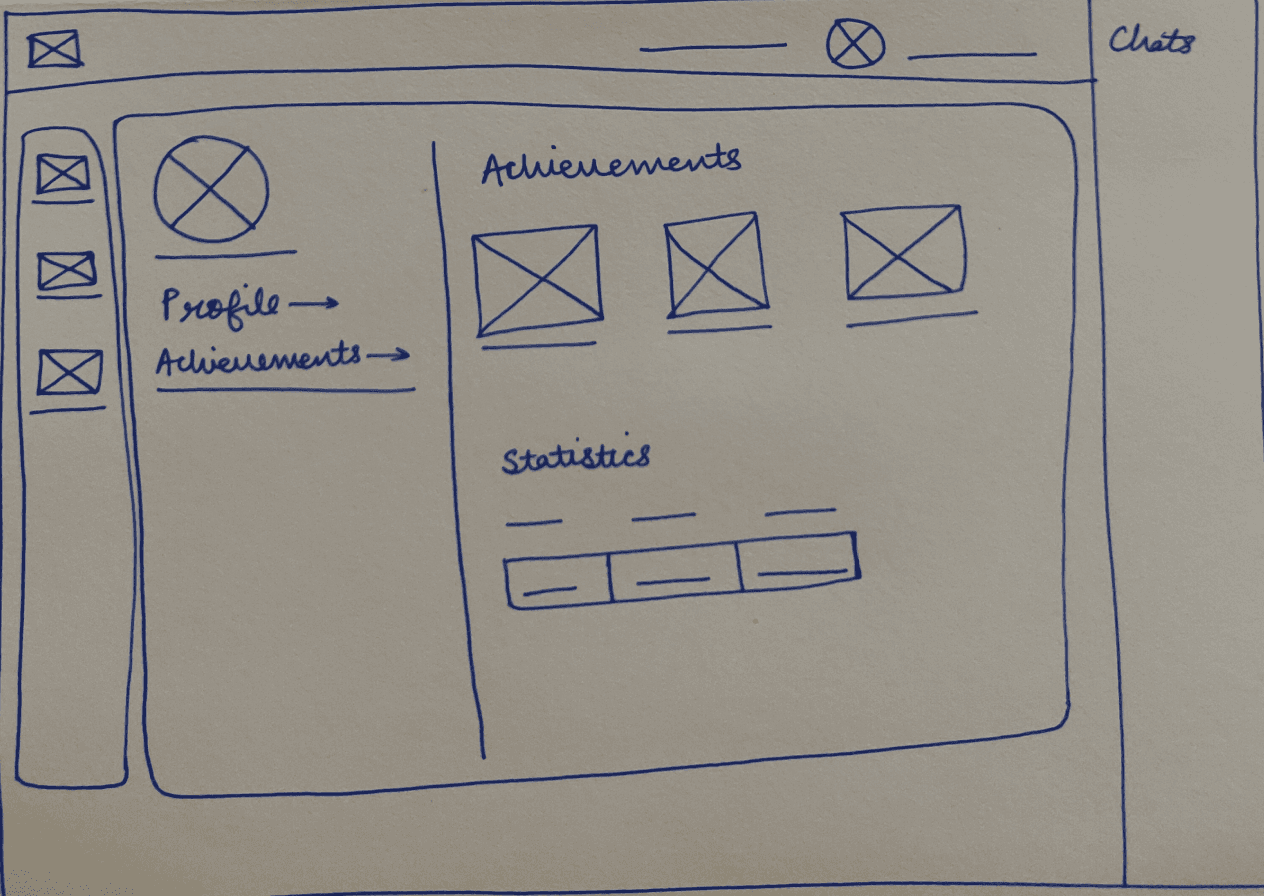
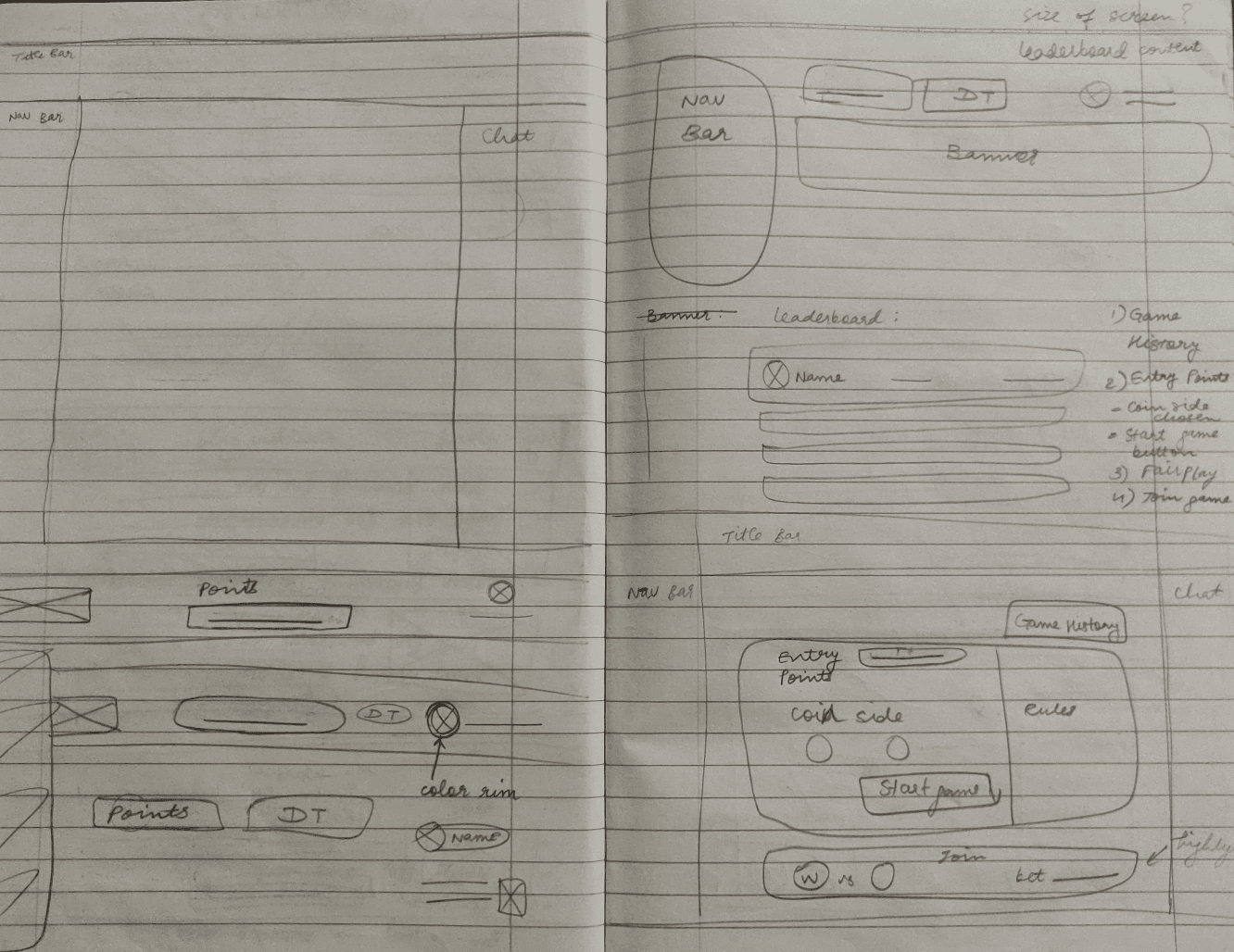
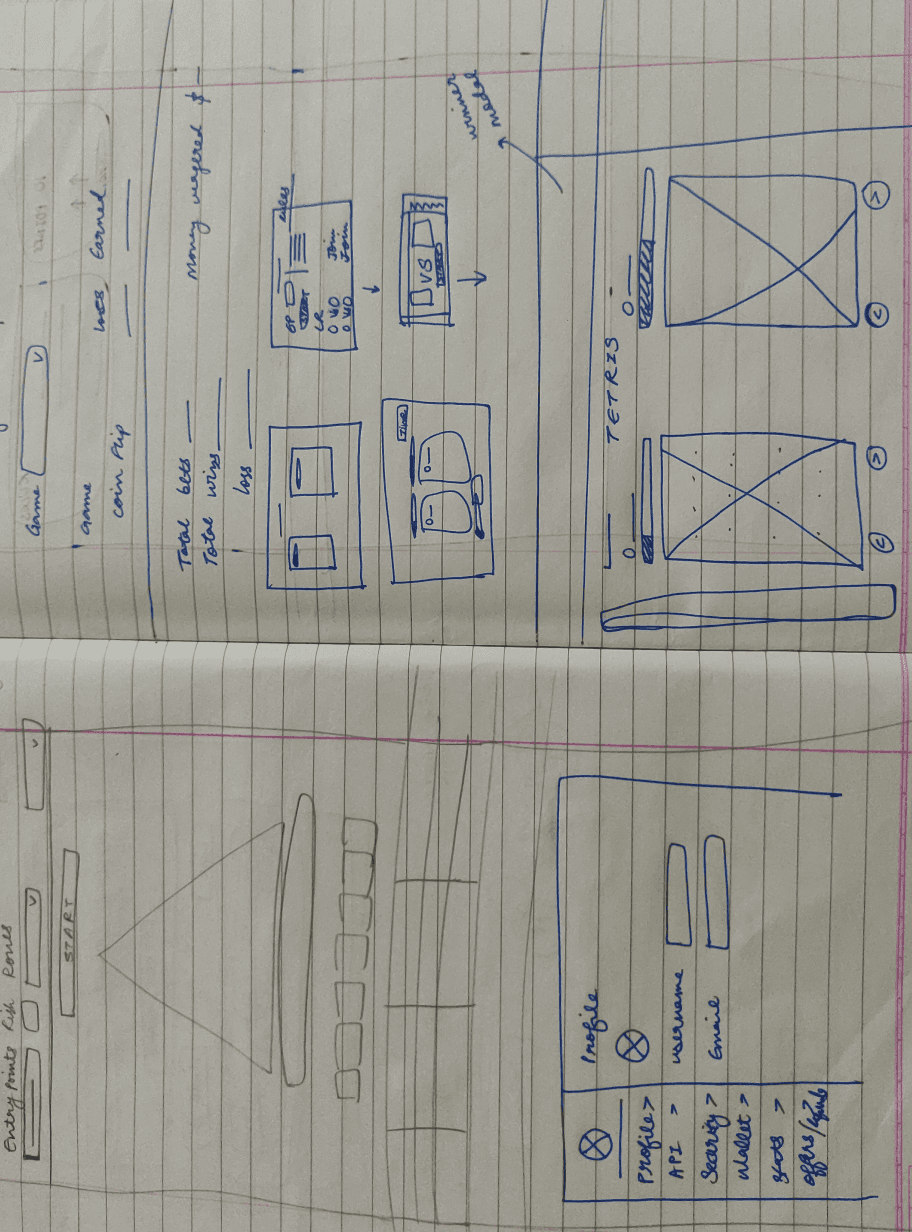
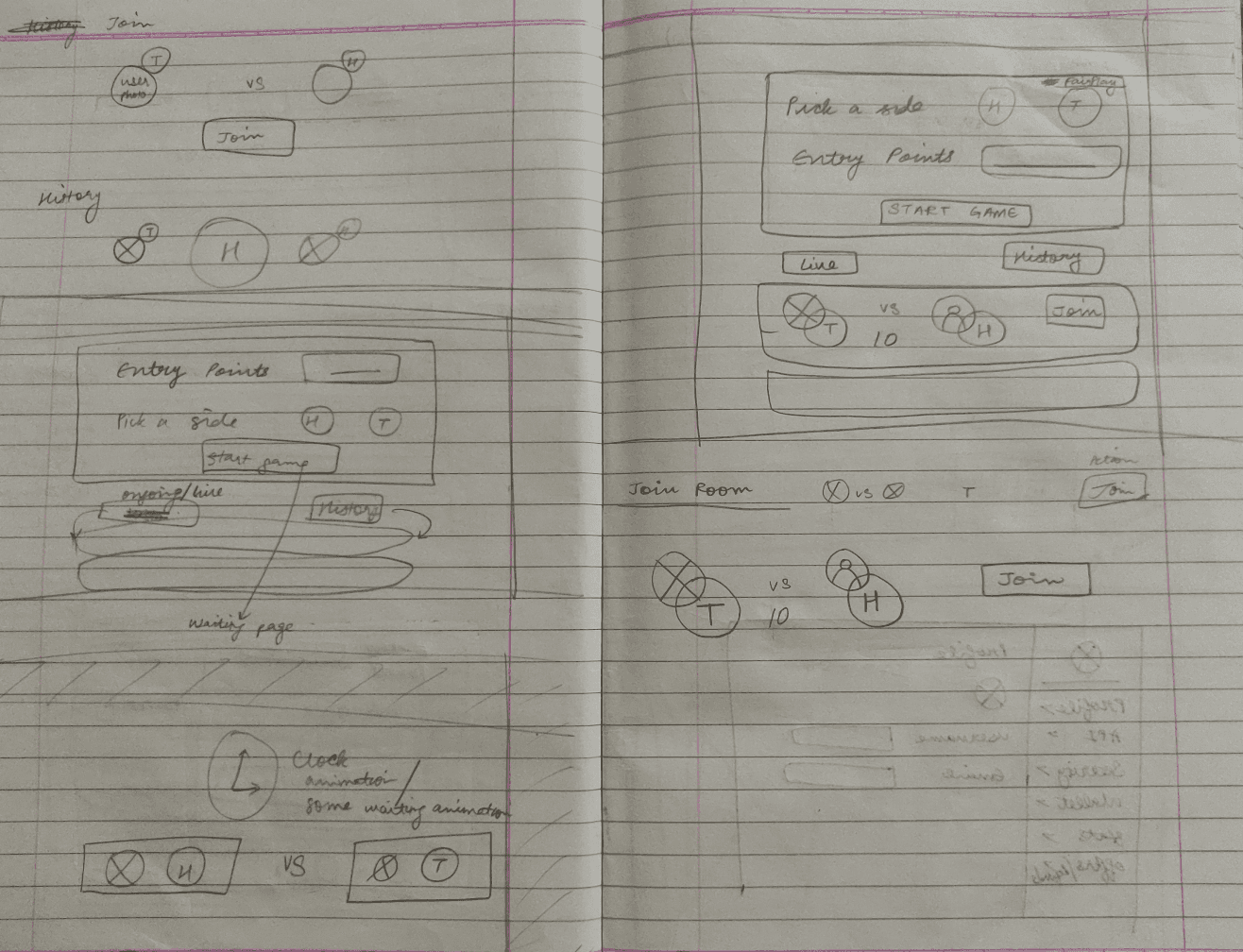
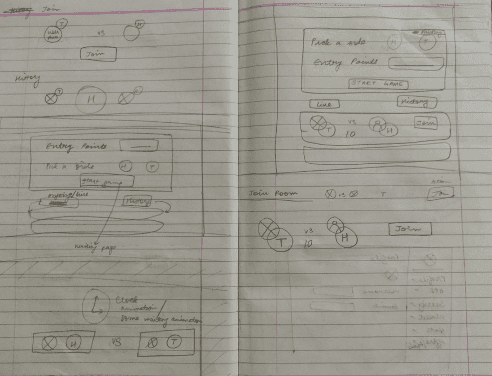
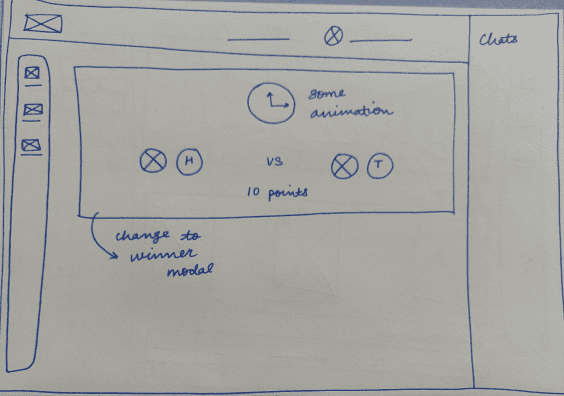
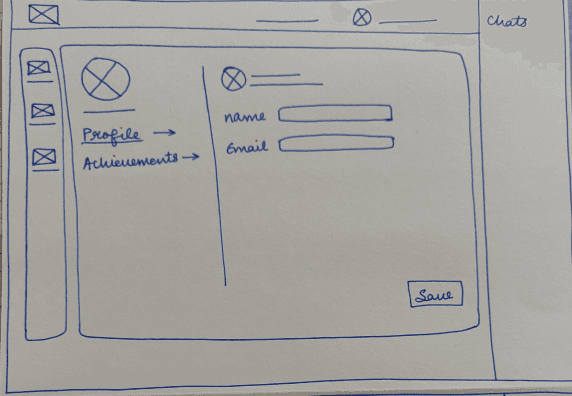
Started from rough sketches
Explored multiple entry-point layouts
Prioritized ideas that reduced steps to play
Tested nav-first vs modal-first approaches
Early exploration focused on reducing steps to play while keeping social features discoverable but optional.
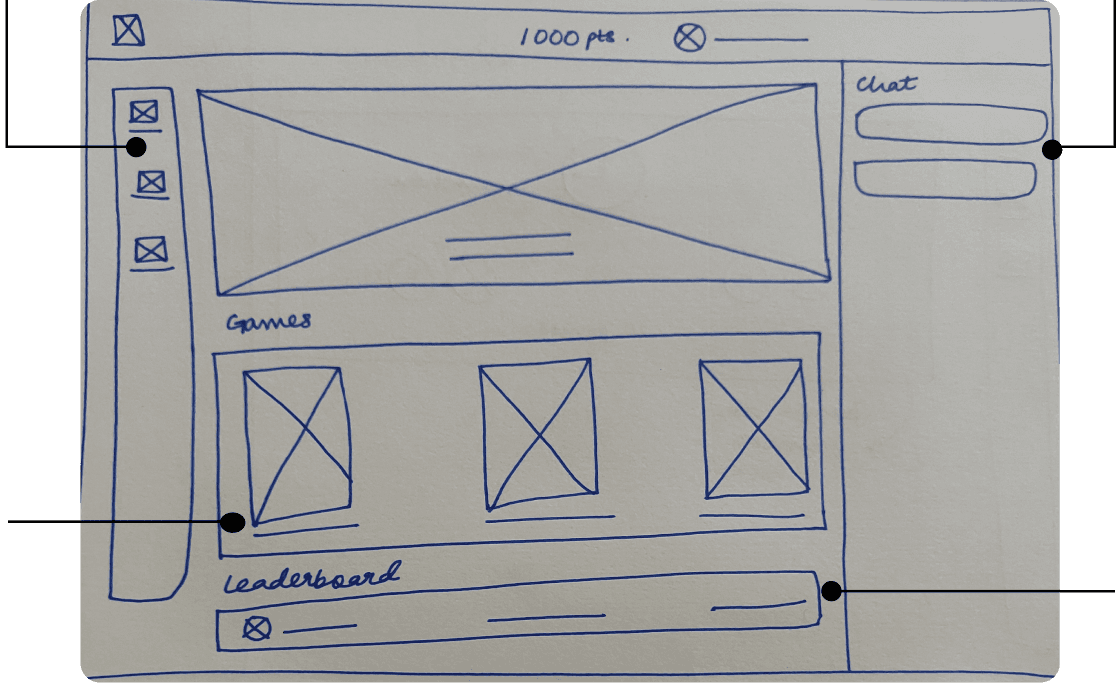
EARLY FLOW DECISIONS
These ensured users could start playing immediately while discovering social features organically.
Centralized games in
the nav bar
Removed unnecessary
onboarding steps
Made chat persistent
but unobtrusive
Positioned leaderboard as discoverable,
not mandatory
ITERATIONS (based on feedback & Initial User testing)
I chose moderated think-aloud sessions because I needed to catch hesitation in real time. A survey would've told me what users thought after the fact. I needed to see where they paused in the moment.
7 moderated sessions · Think-aloud · Interactive prototype
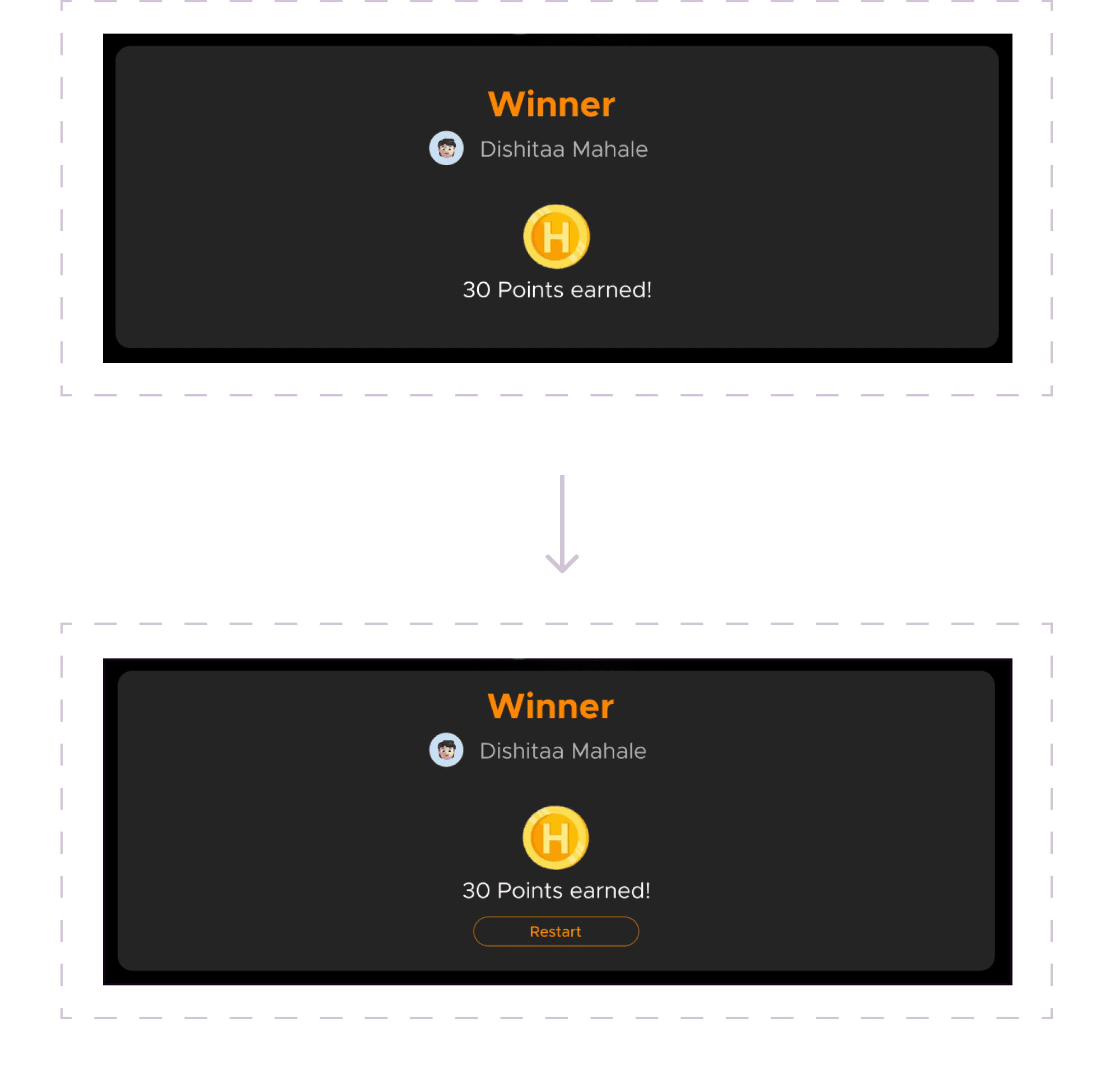
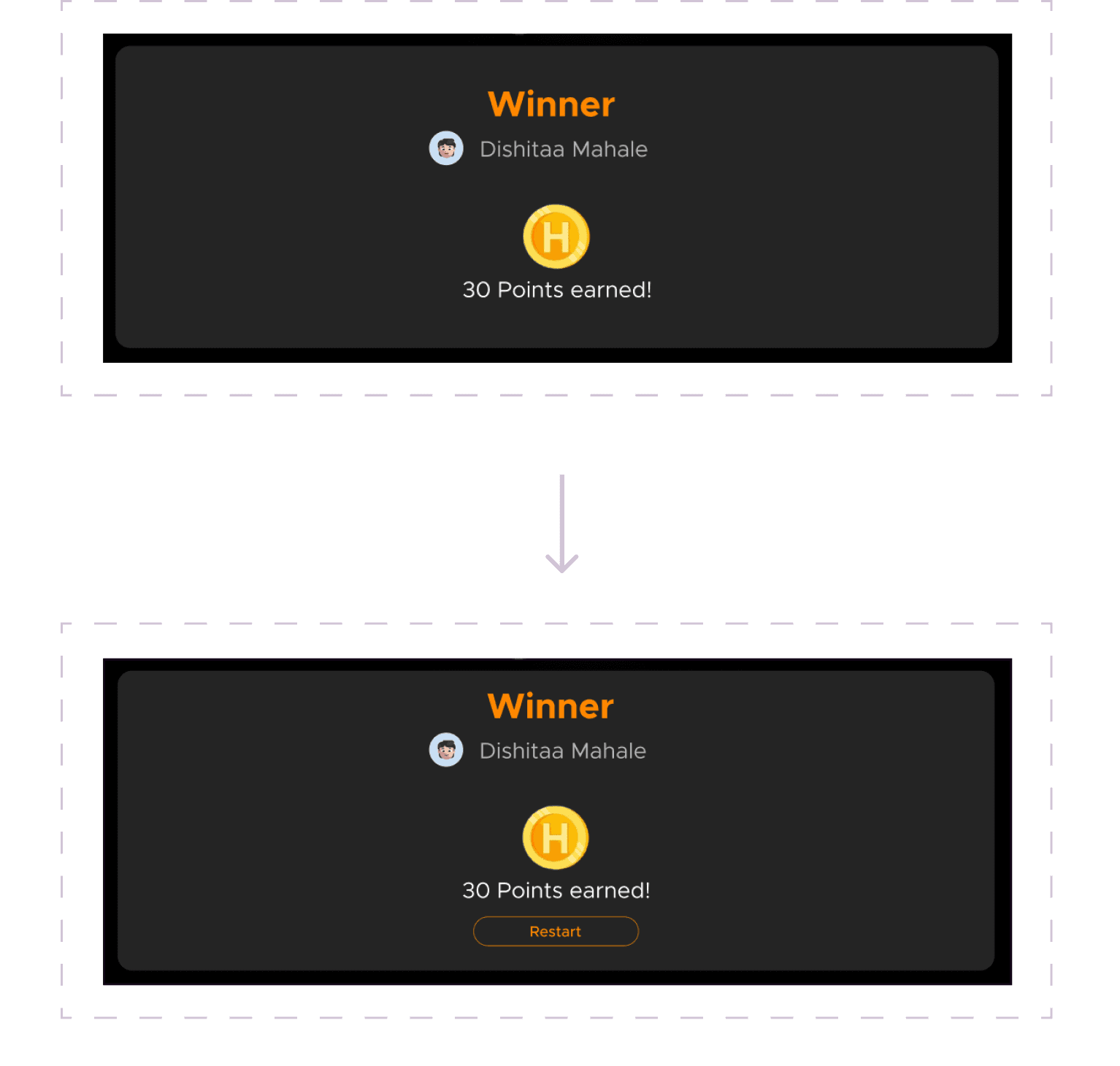
Restart Button to Increase Engagement
User Feedback
During usability testing, several users paused after the game ended and attempted to exit rather than replay, indicating uncertainty about the next action.
Design Change
Added a clearly visible Restart button to the end-of-game state to encourage immediate replay and reduce drop-off between sessions.
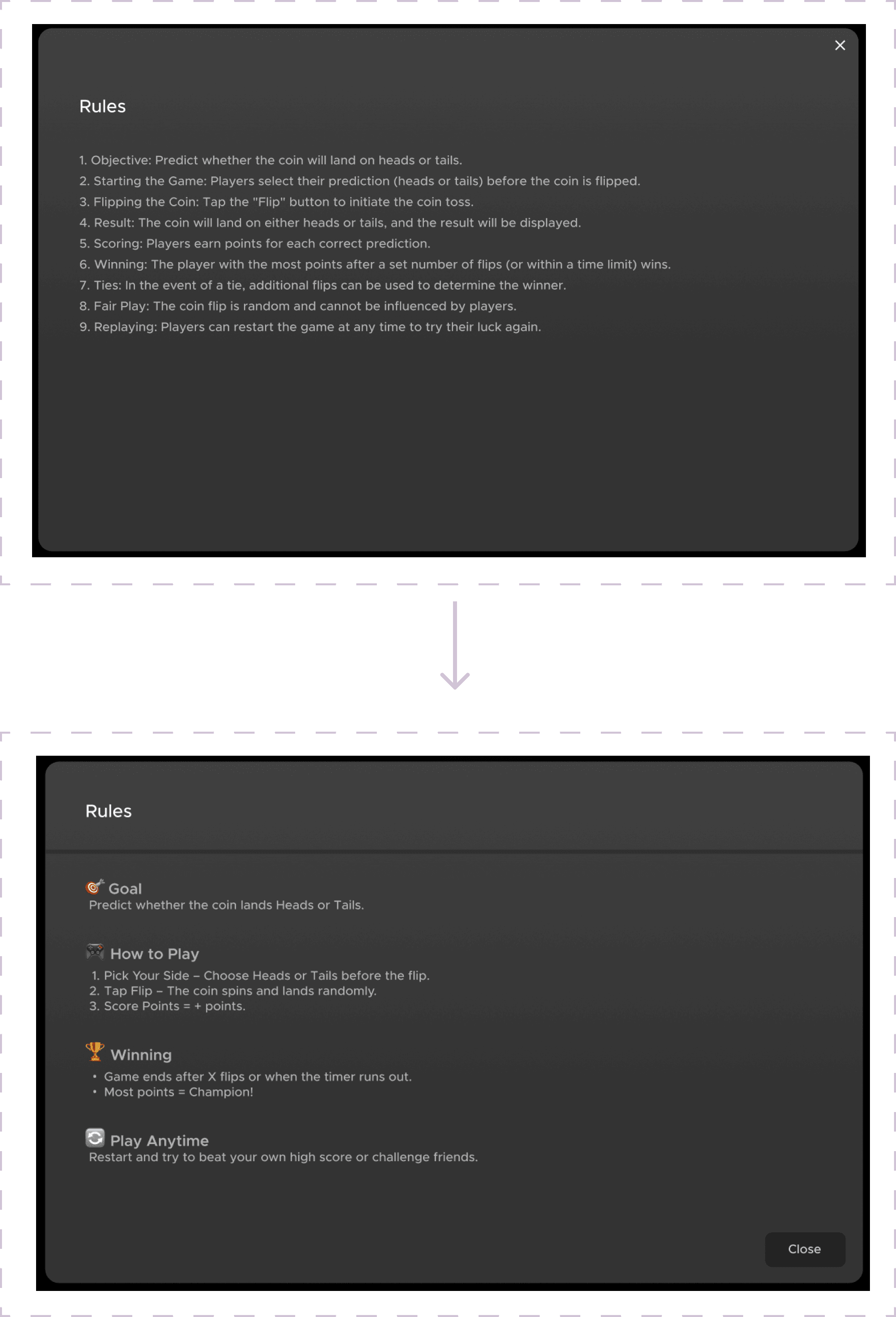
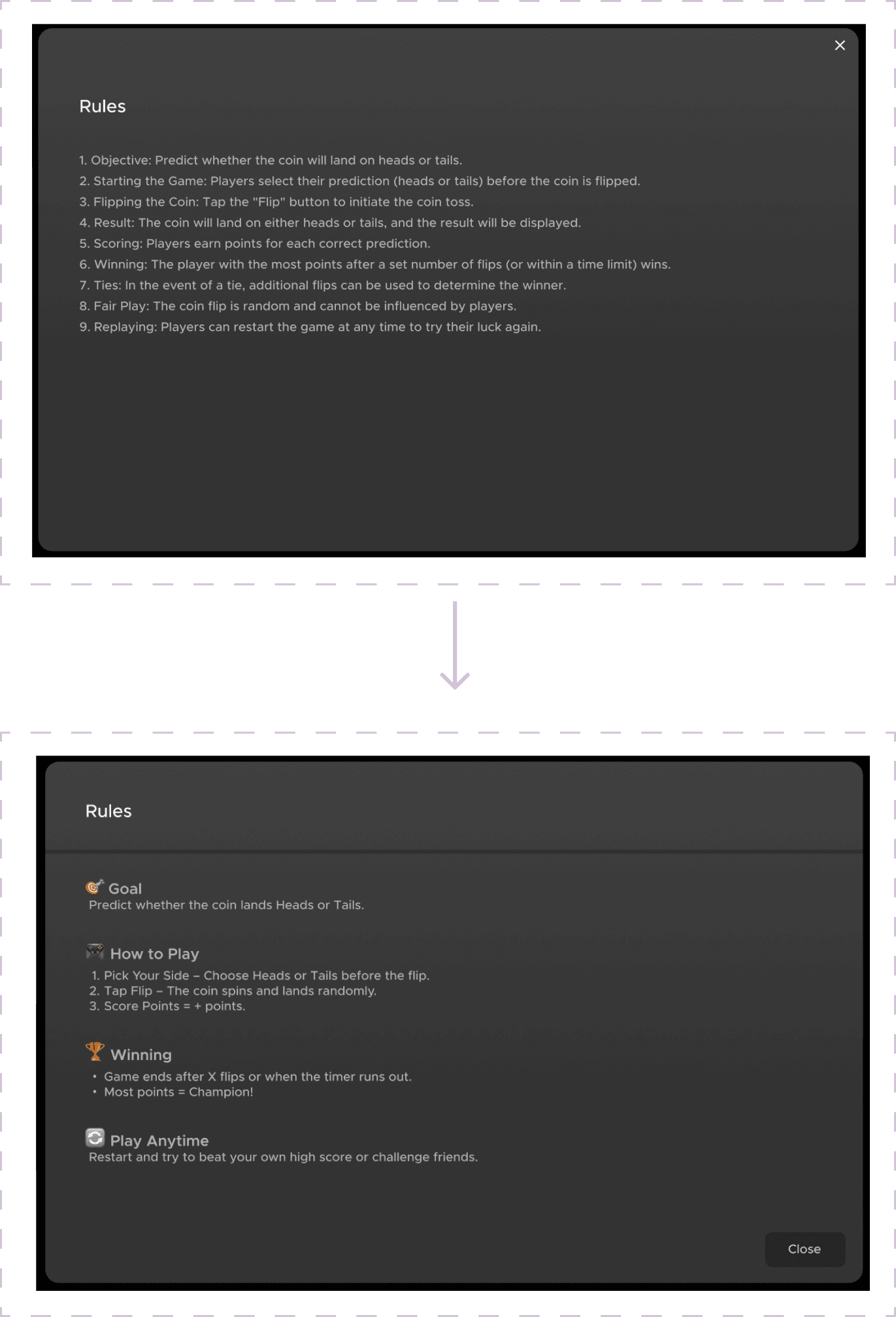
Rules Readability Improvements
User Feedback
Users skimmed or skipped the rules and asked clarifying questions during gameplay, suggesting the information was not easily scannable.
Design Change
Reworked the rules layout to improve readability by simplifying language, improving hierarchy, and making key actions more visually prominent.
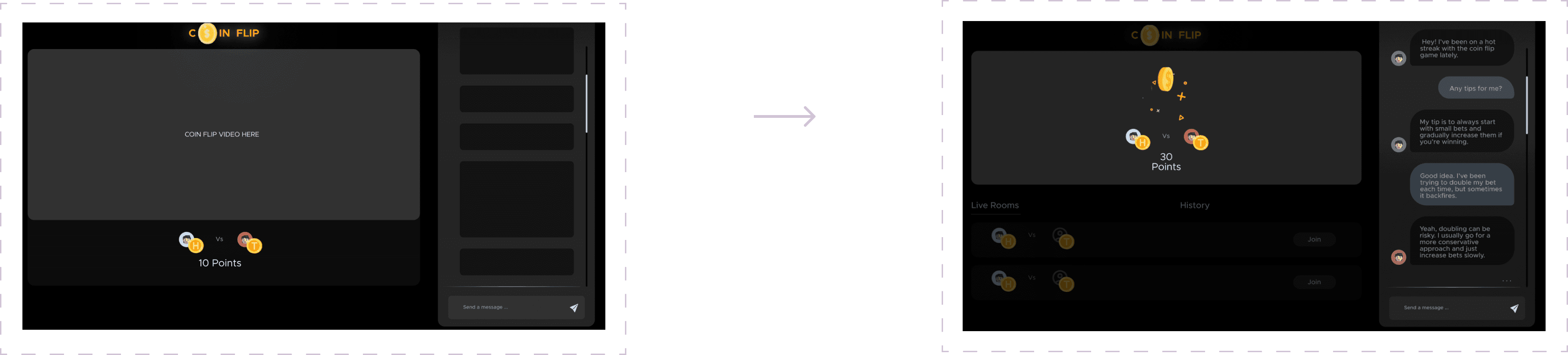
Modal-Based Game Launch (Development Constraint)
When developers flagged that a new page for each game would require additional routing and increase load time, I moved to a modal instead. This wasn't just a technical compromise. Keeping users on the same page actually maintained context better during gameplay, which aligned with the goal of reducing friction.
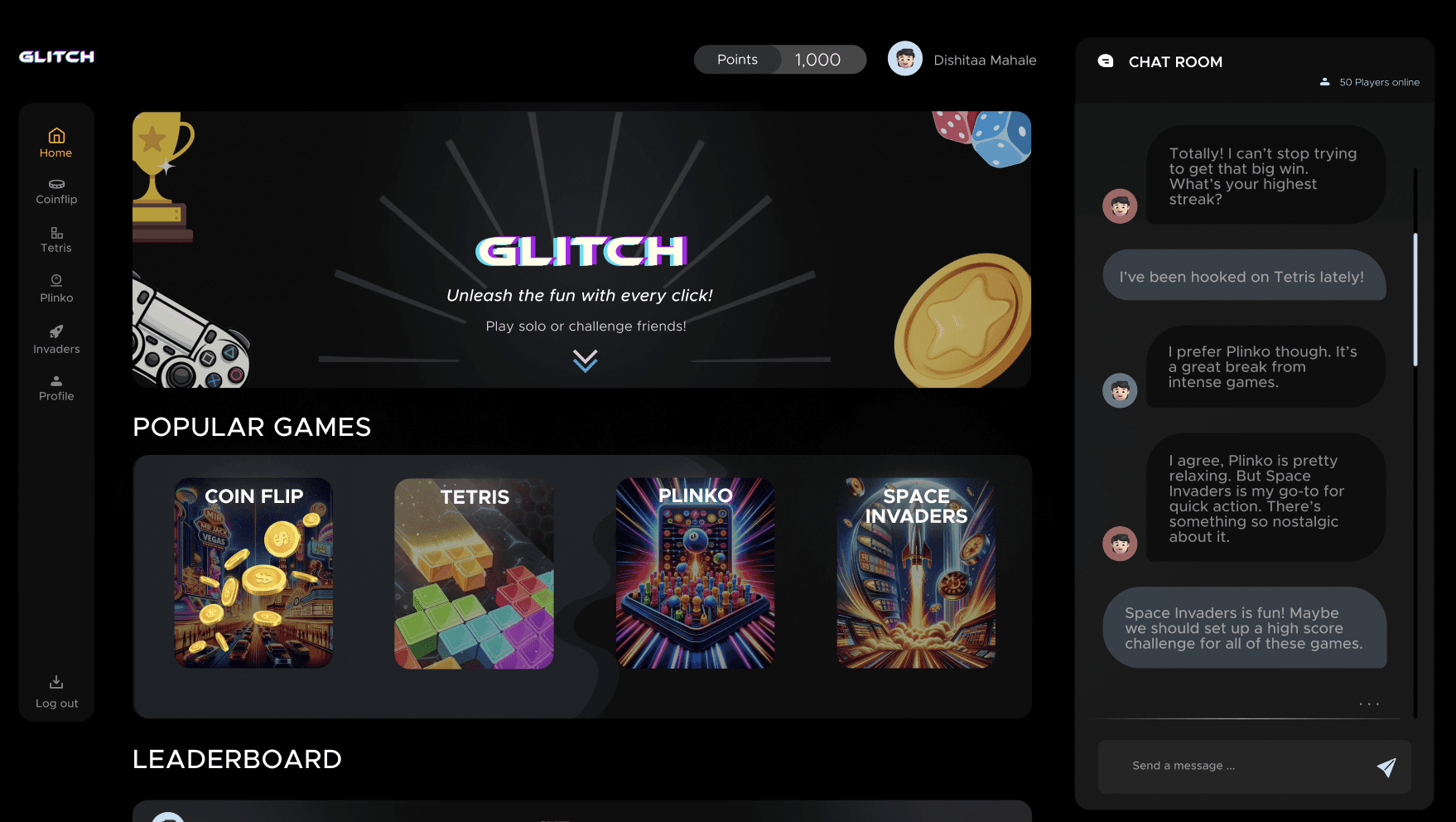
FINAL SOLUTION
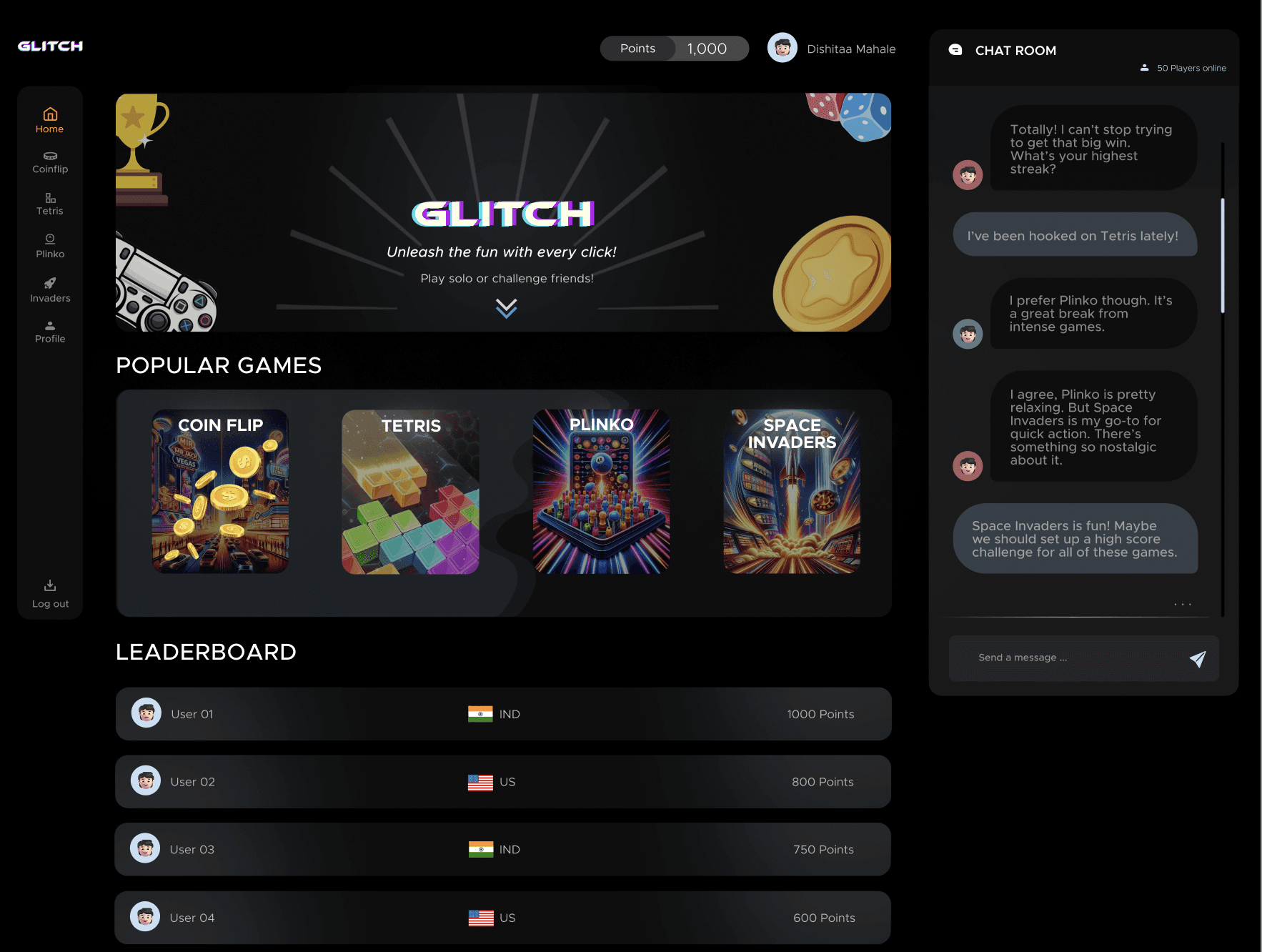
Interactive Chat Section
All games accessible through the nav bar
Points earned
Leaderboard Section
DESIGN RATIONALE
Features
Entry Points and Rewards
Encouraged to imitate wins of other players.
Social proof
Live Game Rooms and Game History
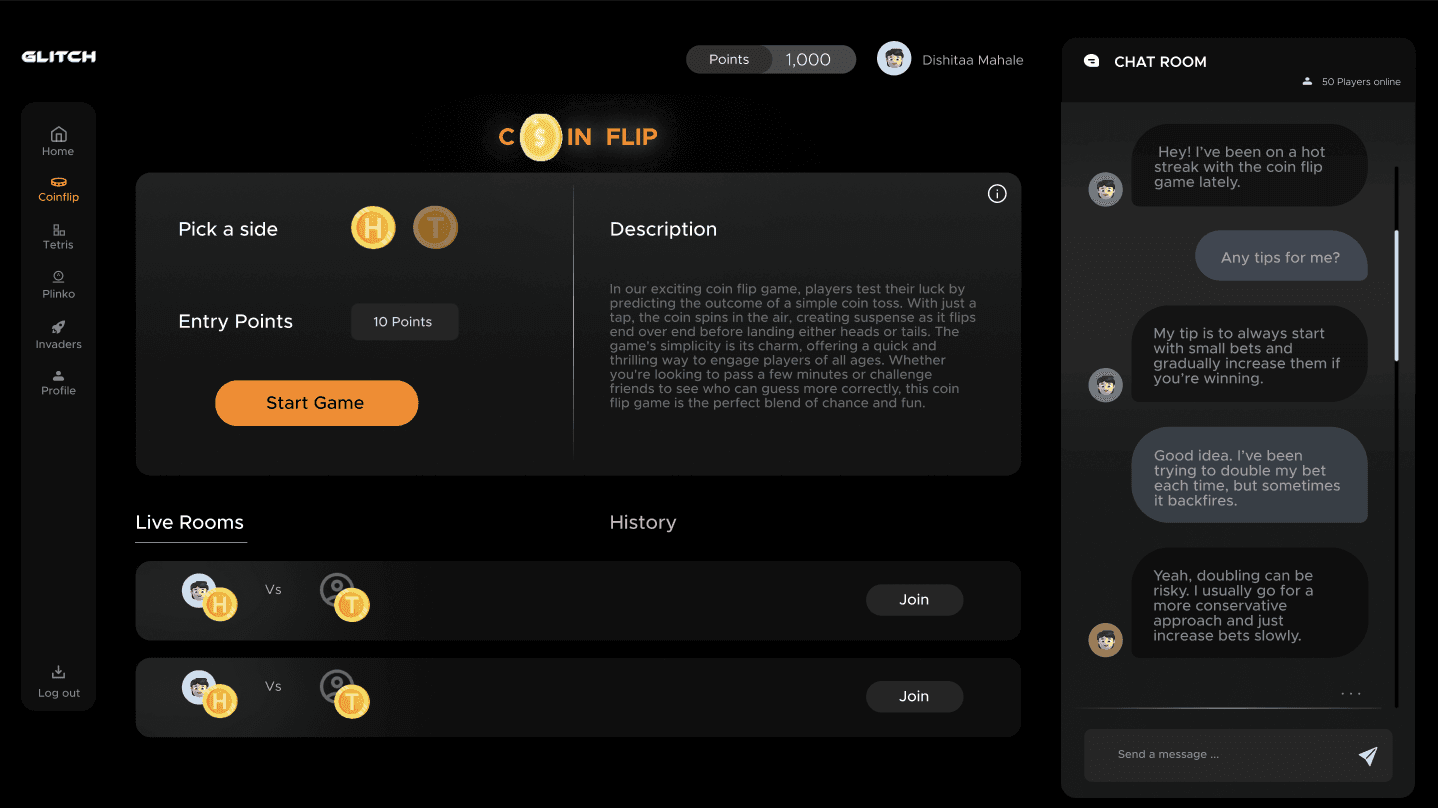
Multiplayer and Chat Section
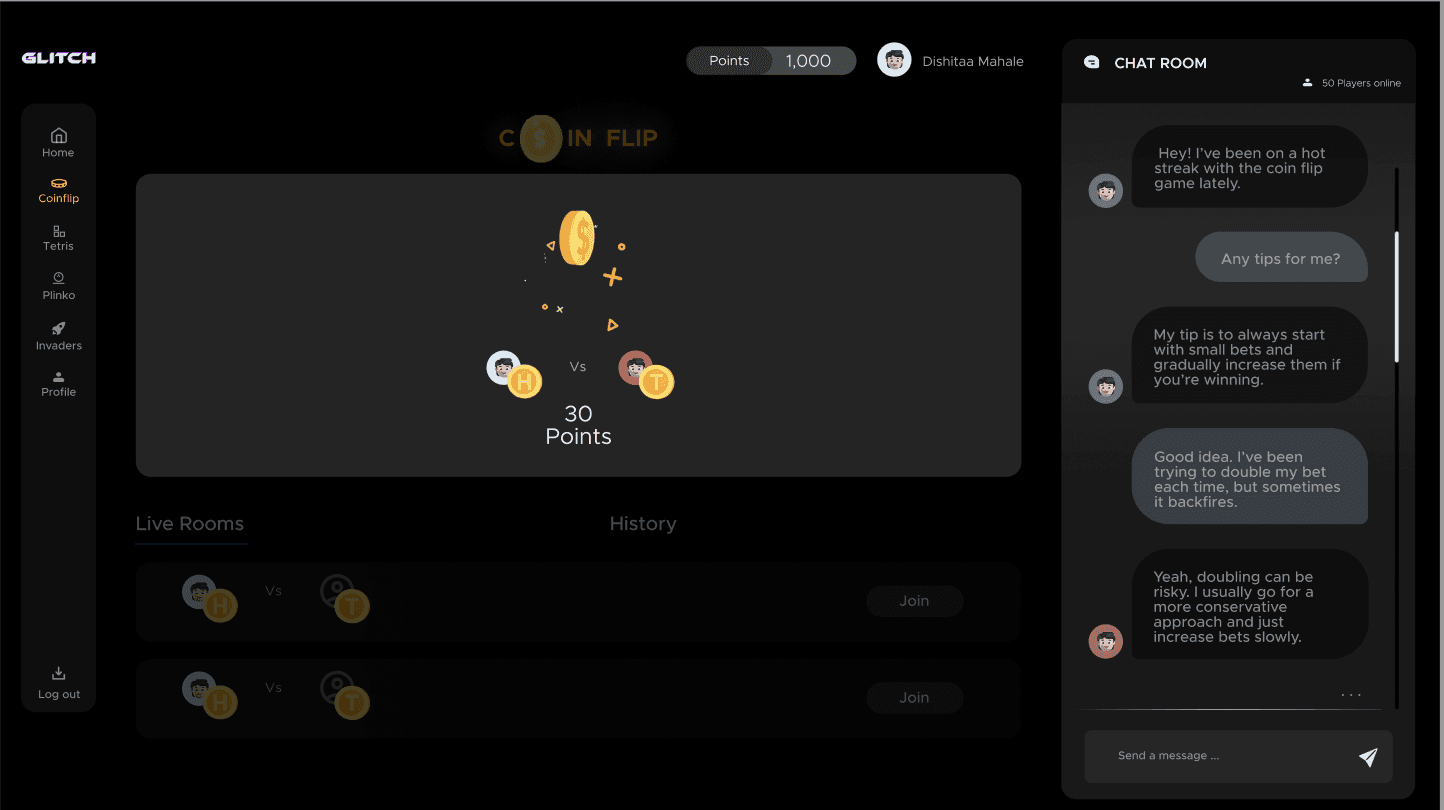
Having multiplayer games and real time chat.
Social Proof & Belongingness
~42% projected increase in retention
5 of 7 participants reported they would return more often if chat was enabled.
Leaderboard
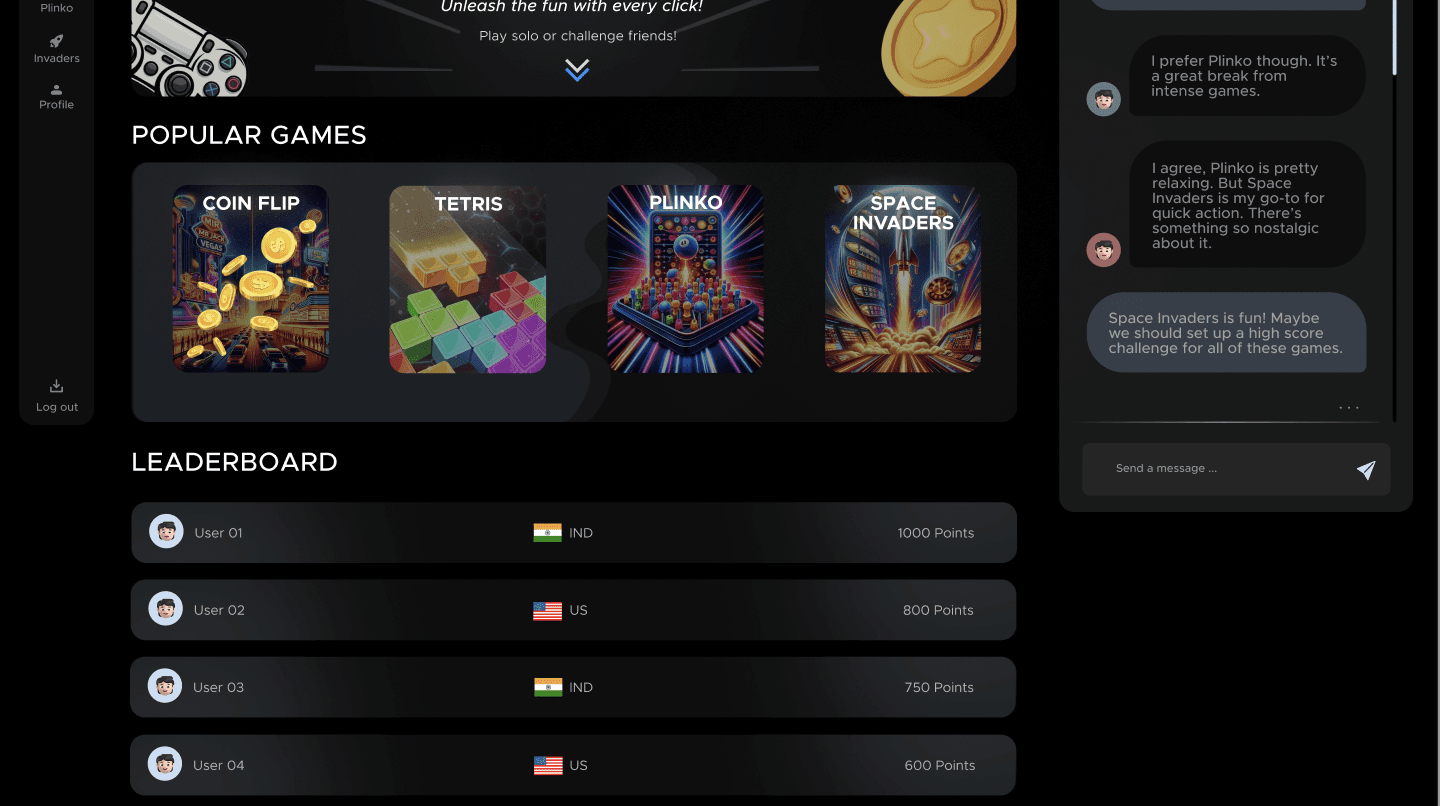
To repeat play rate.
Competition & Motivation
71% of users navigated to Leaderboard within first 3 minutes
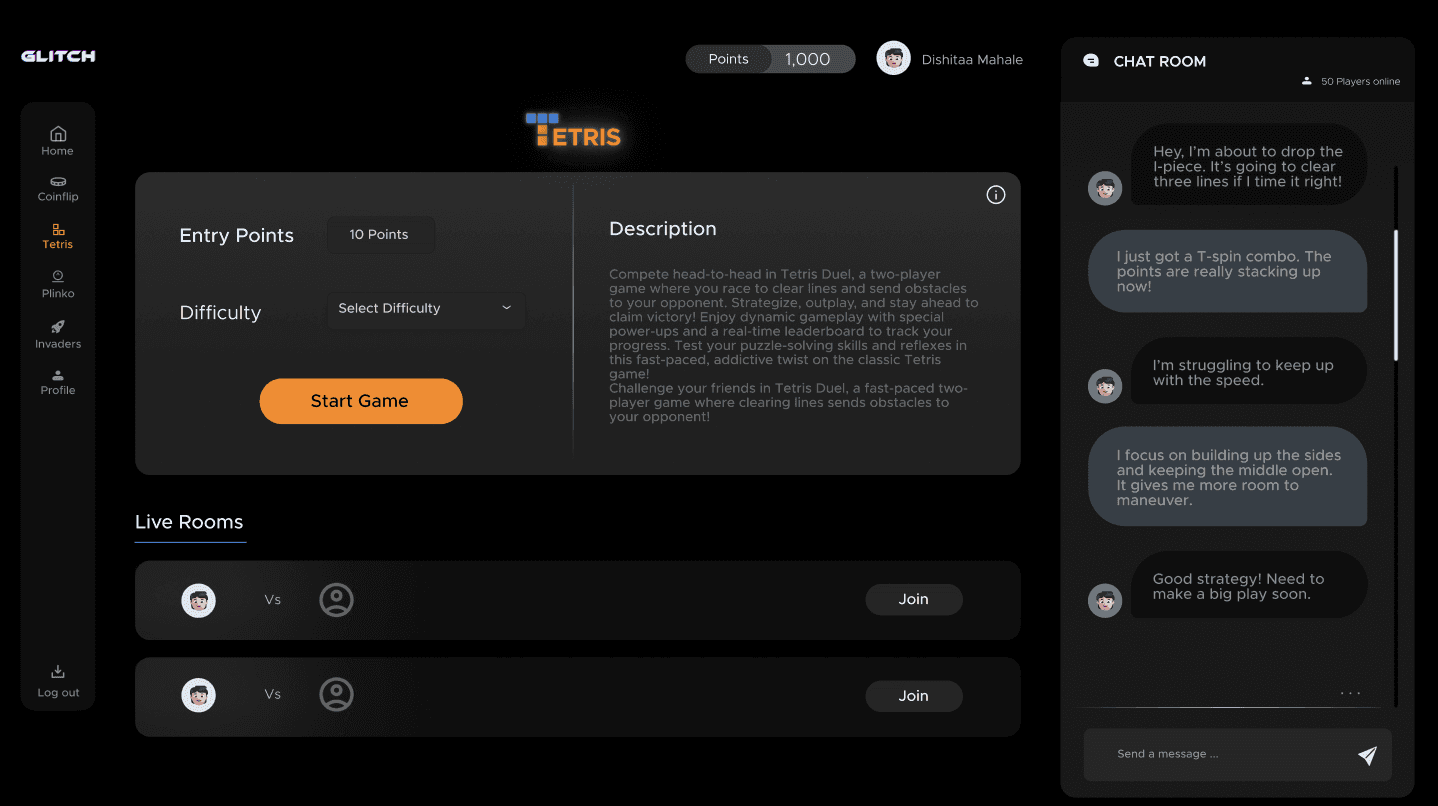
Added sense of achievement.
Gamification & Reinforcement
6 of 7 participants preferred the points system over just win/lose.
Usability Testing - Conducted user test on 7 users
Development Challenges & Solutions
Design Feasibility
We iterated on multiple designs, ensuring each concept was practical for coding.User Engagement
We incorporated animations to boost engagement and kept the CSS simple to implement.Usability
Modal windows were added to improve visual appeal and usability.Navigation and Aesthetics
Focus was on creating a colorful, engaging, and easy-to-navigate design.
Through our collaborative approach, we achieved a harmonious blend of visual appeal and practical development.
REFLECTION
I saw that removing steps before gameplay increased engagement more than adding new features.
I learned to treat speed as a UX requirement, not a bonus.

Making chat and leaderboards optional created connection without overwhelming casual players.
I realized social features don’t need to be loud to be effective.

Watching users hesitate and struggle showed me where simplicity mattered more than complexity.
Usability testing helped me let go of my early assumptions.

Designing within technical constraints pushed me toward cleaner and more practical solutions.
Working closely with developers improved my design decisions.

If I revisited it, I would test retention across multiple sessions to better understand motivation and progression over time.
If I revisited this project, I’d test retention over multiple sessions.

USER JOURNEY
User Goal
“I want to play something quickly.”
Actions
Opens the app with limited time.
Emotion
😐 Neutral / Slightly Impatient
Pain Point
Short attention span.
Game Entry
User Goal
Find a game without friction.
Actions
Scans the navigation →
Looks for familiar games.
Emotion
😕 Frustrated
Pain Point
Too many steps involved.
2. Game Discovery
User Goal
Start playing instantly with light competition.
Actions
Launches a game → completes multiple steps before gameplay begins.
Emotion
😕 → 🙂
Annoyed, then happy the game started.
Pain Point
No instant game access.
Game Play
User Goal
Feel a meaningful sense of outcome after playing.
Actions
Sees result → Earns points.
Emotion
🙂 Relieved if won
😕 Demotivated if lost.
Pain Point
Win/lose outcomes felt final and demotivating, especially after a loss.
Win/Lose State
User Goal
Decide if continuing to play feels worthwhile.
Sees the game end screen → Pauses without a clear next step → Closes the game after a single match
Actions
The match ends naturally, with no progress or social pull to continue.
Pain Point
Emotion
😐 → 😕
Neutral → Disengaged
Post-Game Decision
Reduce time to first gameplay.
Increase repeat play through social features.
Improve engagement without overwhelming users.
Time to discover games.
Willingness to return.
Feature preference (chat, leaderboard, points).
GOALS
SUCCESS METRICS
A Casual Multiplayer Gaming Experience
Timeline
Type
Freelance Project
6 weeks
How do you design a casual multiplayer game that’s zero-friction to play, social by choice, and rewarding to replay?
Team
UX Researcher & Product Designer (Me)
Software Developers
?
The Problem?
Casual players struggle to discover games quickly and lack social features that keep them engaged over time.
Casual gaming sessions are short. Any friction before gameplay or lack of motivation after a session increases drop-off and reduces retention.
Why This Matters?
Projected +42% retention (based on reduced steps & motivational incentives)
Before moving into solutions, I focused on understanding how casual players discover games, what motivates them to return, and how social features influence engagement without overwhelming gameplay.
The research aimed to answer three key questions:
How quickly do users expect to start playing a game?
What factors influence repeat play in casual multiplayer games?
How can social interaction be integrated without disrupting focus?
RESEARCH
Competitive Heuristic Review (3 Platforms)
Key Observations:
Many platforms prioritized visual complexity over fast game access.
Social features (chat, leaderboards) were often buried or optional.
Progress systems lacked clarity beyond win/lose states.
Onboarding friction increased drop-off for casual players.
Design Implication:
Glitch needed to prioritize speed, clarity, and visible motivation.
I started with a heuristic review across three platforms before talking to users. I wanted to identify existing patterns first so that interviews could go deeper rather than just confirming what I could already observe.
User Interviews (3 Participants)
Key Patterns Identified:
Users expect to start playing within 1–2 interactions.
Excessive setup or configuration leads to frustration.
Playing alone feels disengaging over time.
Visible rewards and progress increase motivation to return.
Social presence is valued, even without active interaction.
What Surprised Me:
Users were more motivated by seeing others’ wins than by winning themselves.
Chat was valued more as a sense of presence than for constant conversation.
Leaderboards sparked curiosity rather than intimidation when positioned clearly.
“Sometimes I just want a quick game,
other times I want to challenge my friends.”
“I just want to open the app and start playing right away.
If I have to set up too much, I’ll drop it.”
PROBLEM DECOMPOSITION
Research helped break the broader problem into actionable UX challenges. These insights directly informed early design decisions.
Ideation & Early Exploration
. . . . . . . . . . . . . . . . . . . . . . . . . . . . . . . . . . . . . . . . . . . . . . . . . . . . . . . . . . . . . . . . . . . . . . . . . . . . . . . . . . . . . . . . . . . . . . . . . . . . . . . . . . . . . . . . . . . . . . . . . . . . . . . . . . . . . . . . . . . . . . . . . . . . . . . . . . . . . . . . . . . . . . . . . . . . . . . . . . . . . . . . . . . . . . . . . . . . . . . . . . . . . . . . . . . . . . . . . . . . . . . . . . . . . . . . . . . . . . . . . . . . . . . . . . . . . . . . . . . . . . . . . . . . . . . . . . . . . . . . . . . . . . . . . . . . . . . . . . . . . . . . . . . . . . . . . . . . . . . . . . . . . . . . . . . . . . . . . . . . . . . . . . . . . . . . . . . . . . . . . . . . . . . . . . . . . . . . . . . . . . . . . . . . . . . . . . . . . . . . . . . . . . . . . . . . . . . . . . . . . . . . . . . . . . . . . . . . . . . . . . . . . . . . . . . . . . . . . . . . . . . . . . . . . . . . . . . . . . . . . . . . . . . . . . . . . . . . . . . . . . . . . . . . . . . . . . . . . . . . . . . . . . . . . . . . . . . . . . . . . . . . . . . . . . . . . . . . . . . . . . . . . . . . . . . . . . . . . . . . . . . . . . . . . . . . . . . . . . . . . . . . . . . . . . . . . . . . . . . . . . . . . . . . . . . . . . . . . . . . . . . . . . . . . . . . . . . . . . . . . . . . . . . . . . . . . . . . . . . . . . . . . . . . . . . . . . . . . . . . . . . . . . . . . . . . . . . . . . . . . . . . . . . . . . . . . . . . . . . . . . . . . . . . . . . . . . . . . . . . . . . . . . . . . . . . . . . . . . . . . . . . . . . . . . . . . . . . . . . . . . . . . . . . . . . . . . . . . . . . . . . . . . . . . . . . . . . . . . . . . . . . . . . . . . . . . . . . . . . . . . . . . . . . . . . . . . . . . . . . . . . . . . . . . . . . . . . . . . . . . . . . . . . . . . . . . . . . . . . . . . . . . . . . . . . . . . . . . . . . . . . . . . . . . . . . . . . . . . . . . . . . . . . . . . . . . . . . . . . . . . . . . . . . . . . . . . . . . . . . . . . . . . . . . . . . . . . . . . . . . . . . . . . . . . . . . . . . . . . . . . . . . . . . . . . . . . . . . . . . . . . . . . . . . . . . . . . . . . . . . . . . . . . . . . . . . . . . . . . . . . . . . . . . . . . . . . . . . . . . . . . . . . . . . . . . . . . . . . . . . . . . . . . . . . . . . . . . . . . . . . . . . . . . . . . . . . . . . . . . . . . . . . . . . . . . . . . . . . . . . . . . . . . . . . . . . . . . . . . . . . . . . . . . . . . . . . . . . . . . . . . . . . . . . . . . . . . . . . . . . . . . . . . . . . . . . . . . . . . . . . . . . . . . . . . . . . . . . . . . . . . . . . . . . . . . . . . . . . . . . . . . . . . . . . . . . . . . . . . . . . . . . . . . . . . . . . . . . . . . . . . . . . . . . . . . . . . . . . . . . . . . . . . . . . . . . . . . . . . . . . . . . . . . . . . . . . . . . . . . . . . . . . . . . . . . . . . . . . . . . . . . . . . . . . . . . . . . . . . . . . . . . . . . . . . . . . . . . . . . . . . . . . . . . . . . . . . . . . . . . . . . . . . . . . . . . . . . . . . . . . . . . . . . . . . . . . . . . . . . . . . . . . . . . . . . . . . . . . . . . . . . . . . . . . . . . . . . . . . . . . . . . . . . . . . . . . . . . . . . . . . . . . . . . . . . . . . . . . . . . . . . . . . . . . . . . . . . . . . . . . . . . . . . . . . . . . . . . . . . . . . . . . . . . . . . . . . . . . . . . . . . . . . . . . . . . . . . . . . . . . . . . . . . . . . . . . . . . . . . . . . . . . . . . . . . . . . . . . . . . . . . . . . . . . . . . . . . . . . . . . . . . . . . . . . . . . . . . . . . . . . . . . . . . . . . . . . . . . . . . . . . . . . . . . . . . . . . . . . . . . . . . . . . . . . . . . . . . . . . . . . . . . . . . . . . . . . . . . . . . . . . . . . . . . . . . . . . . . . . . . . . . . . . . . . . . . . . . . . . . . . . . . . . . . . . . . . . . . . .
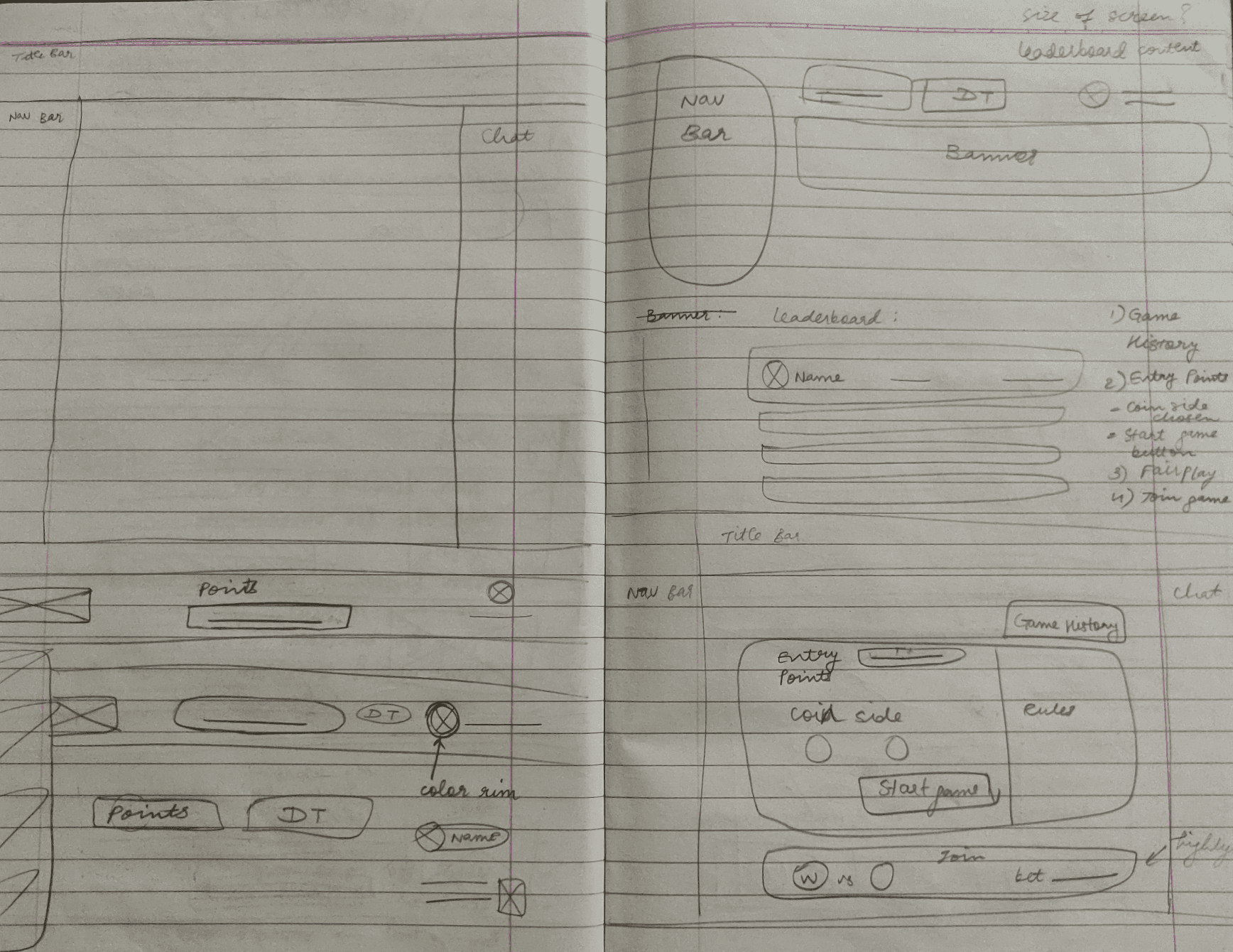
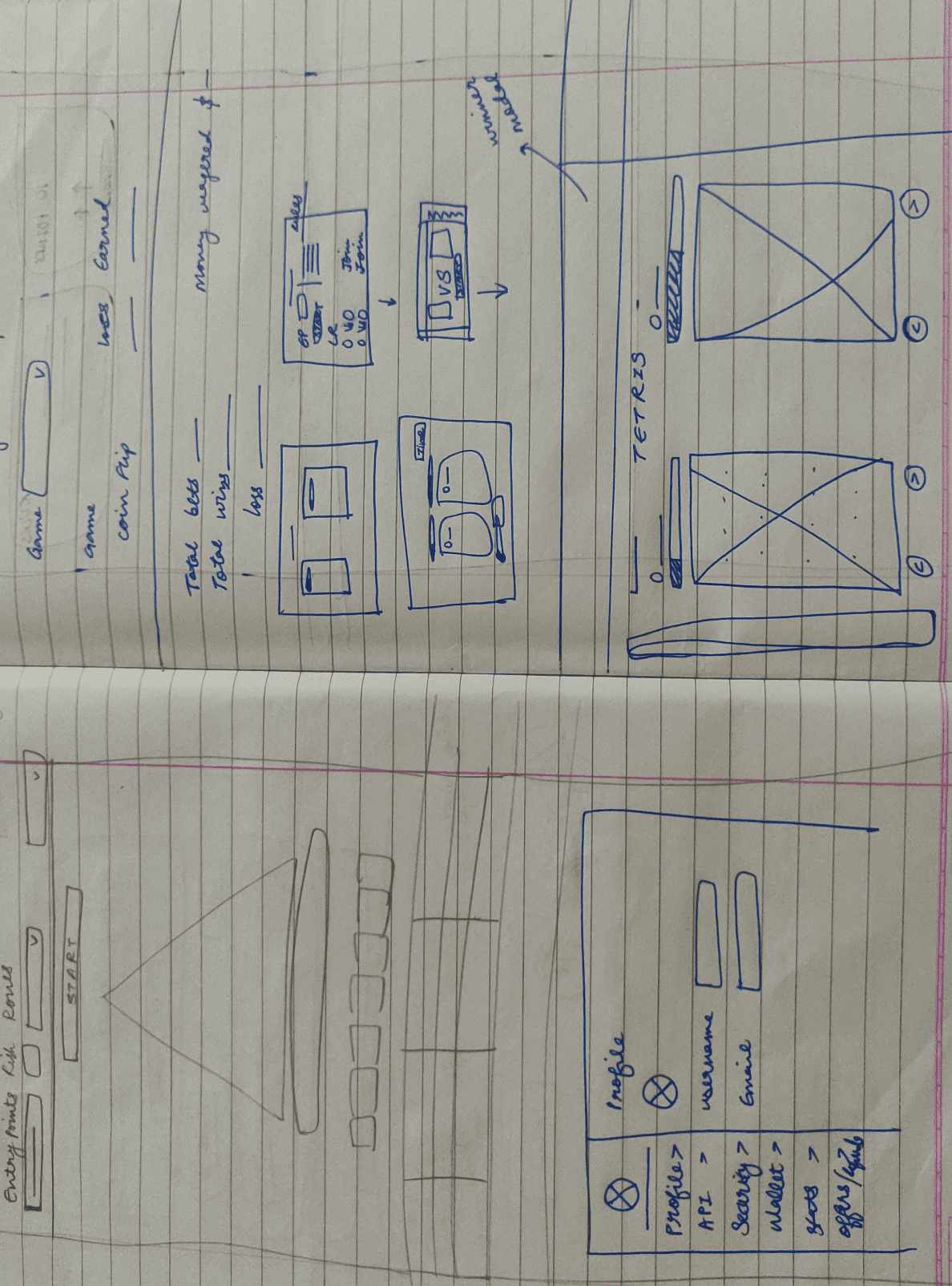
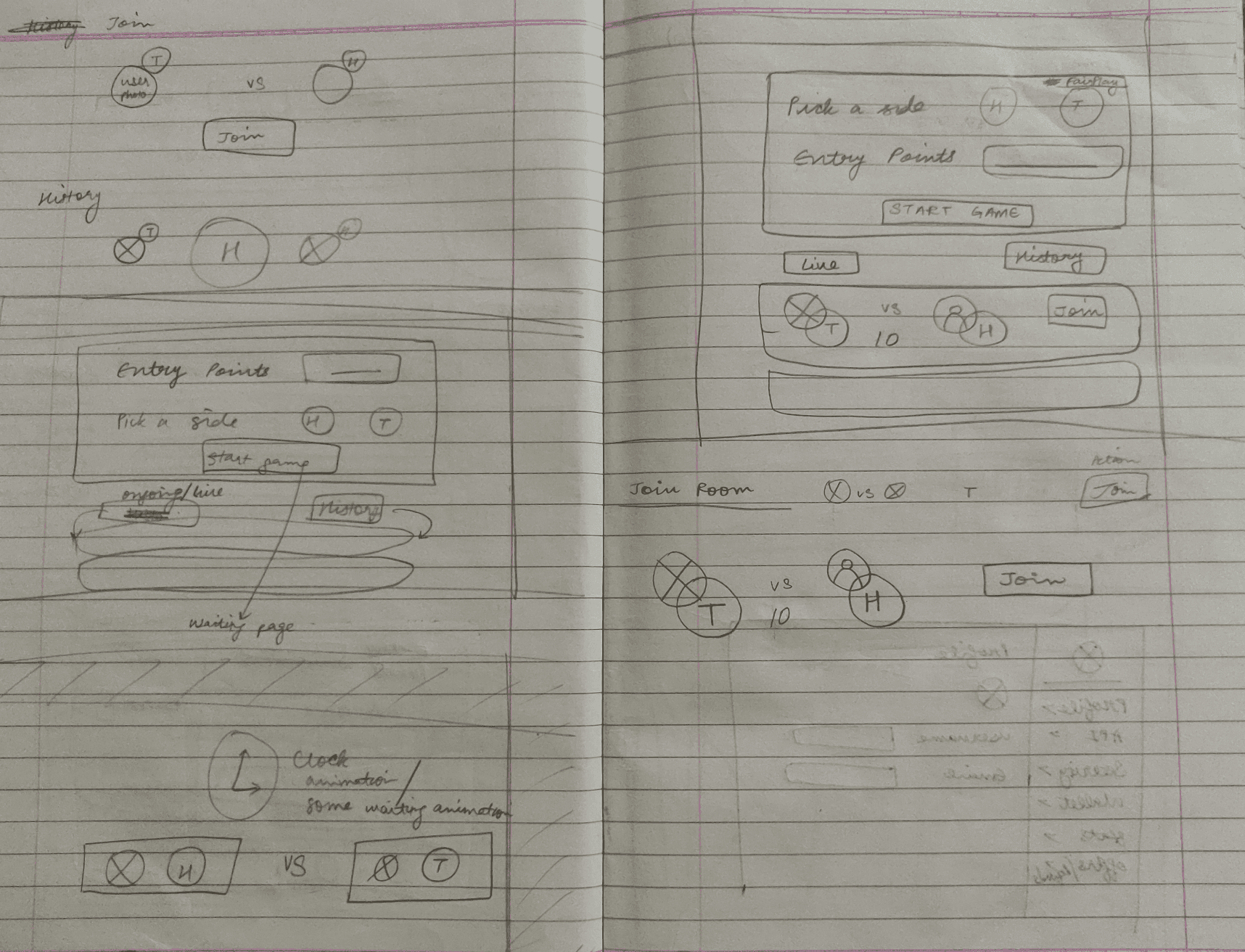
Started from rough sketches
Explored multiple entry-point layouts
Prioritized ideas that reduced steps to play
Tested nav-first vs modal-first approaches
Early exploration focused on reducing steps to play while keeping social features discoverable but optional.
EARLY FLOW DECISIONS
These ensured users could start playing immediately while discovering social features organically.
Centralized games in
the nav bar
Removed unnecessary
onboarding steps
Made chat persistent
but unobtrusive
Positioned leaderboard as discoverable,
not mandatory
ITERATIONS (based on feedback & Initial User testing)
I chose moderated think-aloud sessions because I needed to catch hesitation in real time. A survey would've told me what users thought after the fact. I needed to see where they paused in the moment.
7 moderated sessions · Think-aloud · Interactive prototype
Restart Button to Increase Engagement
User Feedback
During usability testing, several users paused after the game ended and attempted to exit rather than replay, indicating uncertainty about the next action.
Design Change
Added a clearly visible Restart button to the end-of-game state to encourage immediate replay and reduce drop-off between sessions.
Rules Readability Improvements
User Feedback
Users skimmed or skipped the rules and asked clarifying questions during gameplay, suggesting the information was not easily scannable.
Design Change
Reworked the rules layout to improve readability by simplifying language, improving hierarchy, and making key actions more visually prominent.
Modal-Based Game Launch (Development Constraint)
When developers flagged that a new page for each game would require additional routing and increase load time, I moved to a modal instead. This wasn't just a technical compromise. Keeping users on the same page actually maintained context better during gameplay, which aligned with the goal of reducing friction.
FINAL SOLUTION
Interactive Chat Section
All games accessible through the nav bar
Points earned
Leaderboard Section
DESIGN RATIONALE
Features
Entry Points and Rewards
Encouraged to imitate wins of other players.
Social proof
Live Game Rooms and Game History
Multiplayer and Chat Section
Having multiplayer games and real time chat.
Social Proof & Belongingness
~42% projected increase in retention
5 of 7 participants reported they would return more often if chat was enabled.
Leaderboard
To repeat play rate.
Competition & Motivation
71% of users navigated to Leaderboard within first 3 minutes
Added sense of achievement.
Gamification & Reinforcement
6 of 7 participants preferred the points system over just win/lose.
Usability Testing - Conducted user test on 7 users
Development Challenges & Solutions
Design Feasibility
We iterated on multiple designs, ensuring each concept was practical for coding.User Engagement
We incorporated animations to boost engagement and kept the CSS simple to implement.Usability
Modal windows were added to improve visual appeal and usability.Navigation and Aesthetics
Focus was on creating a colorful, engaging, and easy-to-navigate design.
Through our collaborative approach, we achieved a harmonious blend of visual appeal and practical development.
REFLECTION
I saw that removing steps before gameplay increased engagement more than adding new features.
I learned to treat speed as a UX requirement, not a bonus.
Making chat and leaderboards optional created connection without overwhelming casual players.
I realized social features don’t need to be loud to be effective.
Watching users hesitate and struggle showed me where simplicity mattered more than complexity.
Usability testing helped me let go of my early assumptions.
Designing within technical constraints pushed me toward cleaner and more practical solutions.
Working closely with developers improved my design decisions.
If I revisited it, I would test retention across multiple sessions to better understand motivation and progression over time.
If I revisited this project, I’d test retention over multiple sessions.
USER JOURNEY
User Goal
“I want to play something quickly.”
Actions
Opens the app with limited time.
Emotion
😐 Neutral / Slightly Impatient
Pain Point
Short attention span.
Game Entry
User Goal
Find a game without friction.
Actions
Scans the navigation →
Looks for familiar games.
Emotion
😕 Frustrated
Pain Point
Too many steps involved.
2. Game Discovery
User Goal
Start playing instantly with light competition.
Actions
Launches a game → completes multiple steps before gameplay begins.
Emotion
😕 → 🙂
Annoyed, then happy the game started.
Pain Point
No instant game access.
Game Play
User Goal
Feel a meaningful sense of outcome after playing.
Actions
Sees result → Earns points.
Emotion
🙂 Relieved if won
😕 Demotivated if lost.
Pain Point
Win/lose outcomes felt final and demotivating, especially after a loss.
Win/Lose State
User Goal
Decide if continuing to play feels worthwhile.
Sees the game end screen → Pauses without a clear next step → Closes the game after a single match
Actions
The match ends naturally, with no progress or social pull to continue.
Pain Point
Emotion
😐 → 😕
Neutral → Disengaged
Post-Game Decision
DESIGN SYSTEM
The palette uses high contrast to guide attention, with orange driving action and blue providing balance in a visually dense interface.
Used for key actions, highlights, attention-driving elements.
Primary Accent
#FF8700
Used for secondary actions and creating visual contrast.
Secondary Highlight
#2E93FF
Ensures readability and accessibility across the interface.
Text Contrast
#FFFFFF
Used to create depth and reduce visual noise.
Background Base
#000000
#191919
METROPOLIS
Headings
Sub-headings
Body Text
Regular
Medium
Bold
Reduce time to first gameplay.
Increase repeat play through social features.
Improve engagement without overwhelming users.
Time to discover games.
Willingness to return.
Feature preference (chat, leaderboard, points).
GOALS
SUCCESS METRICS
A Casual Multiplayer Gaming Experience
How do you design a casual multiplayer game that’s fast to start, social by choice, and rewarding to replay?
Team
UX Researcher & Product Designer (Me)
Software Developers
Timeline
6 weeks
?
The Problem?
Casual players struggle to discover games quickly and lack social features that keep them engaged over time.
Casual gaming sessions are short. Any friction before gameplay or lack of motivation after a session increases drop-off and reduces retention.
Why This Matters?
Projected +42% retention (based on reduced steps & motivational incentives)
Before moving into solutions, I focused on understanding how casual players discover games, what motivates them to return, and how social features influence engagement without overwhelming gameplay.
The research aimed to answer three key questions:
How quickly do users expect to start playing a game?
What factors influence repeat play in casual multiplayer games?
How can social interaction be integrated without disrupting focus?
RESEARCH
Competitive Heuristic Review (3 Platforms)
Key Observations:
Many platforms prioritized visual complexity over fast game access.
Social features (chat, leaderboards) were often buried or optional.
Progress systems lacked clarity beyond win/lose states.
Onboarding friction increased drop-off for casual players.
Design Implication:
Glitch needed to prioritize speed, clarity, and visible motivation.
The heuristic review revealed several recurring patterns across competing platforms.
User Interviews (3 Participants)
Key Patterns Identified:
Users expect to start playing within 1–2 interactions.
Excessive setup or configuration leads to frustration.
Playing alone feels disengaging over time.
Visible rewards and progress increase motivation to return.
Social presence is valued, even without active interaction.
What Surprised Me:
Users were more motivated by seeing others’ wins than by winning themselves.
Chat was valued more as a sense of presence than for constant conversation.
Leaderboards sparked curiosity rather than intimidation when positioned clearly.
“Sometimes I just want a quick game,
other times I want to challenge my friends.”
“I just want to open the app and start playing right away.
If I have to set up too much, I’ll drop it.”
PROBLEM DECOMPOSITION
Research helped break the broader problem into actionable UX challenges. These insights directly informed early design decisions.
Ideation & Early Exploration
. . . . . . . . . . . . . . . . . . . . . . . . . . . . . . . . . . . . . . . . . . . . . . . . . . . . . . . . . . . . . . . . . . . . . . . . . . . . . . . . . . . . . . . . . . . . . . . . . . . . . . . . . . . . . . . . . . . . . . . . . . . . . . . . . . . . . . . . . . . . . . . . . . . . . . . . . . . . . . . . . . . . . . . . . . . . . . . . . . . . . . . . . . . . . . . . . . . . . . . . . . . . . . . . . . . . . . . . . . . . . . . . . . . . . . . . . . . . . . . . . . . . . . . . . . . . . . . . . . . . . . . . . . . . . . . . . . . . . . . . . . . . . . . . . . . . . . . . . . . . . . . . . . . . . . . . . . . . . . . . . . . . . . . . . . . . . . . . . . . . . . . . . . . . . . . . . . . . . . . . . . . . . . . . . . . . . . . . . . . . . . . . . . . . . . . . . . . . . . . . . . . . . . . . . . . . . . . . . . . . . . . . . . . . . . . . . . . . . . . . . . . . . . . . . . . . . . . . . . . . . . . . . . . . . . . . . . . . . . . . . . . . . . . . . . . . . . . . . . . . . . . . . . . . . . . . . . . . . . . . . . . . . . . . . . . . . . . . . . . . . . . . . . . . . . . . . . . . . . . . . . . . . . . . . . . . . . . . . . . . . . . . . . . . . . . . . . . . . . . . . . . . . . . . . . . . . . . . . . . . . . . . . . . . . . . . . . . . . . . . . . . . . . . . . . . . . . . . . . . . . . . . . . . . . . . . . . . . . . . . . . . . . . . . . . . . . . . . . . . . . . . . . . . . . . . . . . . . . . . . . . . . . . . . . . . . . . . . . . . . . . . . . . . . . . . . . . . . . . . . . . . . . . . . . . . . . . . . . . . . . . . . . . . . . . . . . . . . . . . . . . . . . . . . . . . . . . . . . . . . . . . . . . . . . . . . . . . . . . . . . . . . . . . . . . . . . . . . . . . . . . . . . . . . . . . . . . . . . . . . . . . . . . . . . . . . . . . . . . . . . . . . . . . . . . . . . . . . . . . . . . . . . . . . . . . . . . . . . . . . . . . . . . . . . . . . . . . . . . . . . . . . . . . . . . . . . . . . . . . . . . . . . . . . . . . . . . . . . . . . . . . . . . . . . . . . . . . . . . . . . . . . . . . . . . . . . . . . . . . . . . . . . . . . . . . . . . . . . . . . . . . . . . . . . . . . . . . . . . . . . . . . . . . . . . . . . . . . . . . . . . . . . . . . . . . . . . . . . . . . . . . . . . . . . . . . . . . . . . . . . . . . . . . . . . . . . . . . . . . . . . . . . . . . . . . . . . . . . . . . . . . . . . . . . . . . . . . . . . . . . . . . . . . . . . . . . . . . . . . . . . . . . . . . . . . . . . . . . . . . . . . . . . . . . . . . . . . . . . . . . . . . . . . . . . . . . . . . . . . . . . . . . . . . . . . . . . . . . . . . . . . . . . . . . . . . . . . . . . . . . . . . . . . . . . . . . . . . . . . . . . . . . . . . . . . . . . . . . . . . . . . . . . . . . . . . . . . . . . . . . . . . . . . . . . . . . . . . . . . . . . . . . . . . . . . . . . . . . . . . . . . . . . . . . . . . . . . . . . . . . . . . . . . . . . . . . . . . . . . . . . . . . . . . . . . . . . . . . . . . . . . . . . . . . . . . . . . . . . . . . . . . . . . . . . . . . . . . . . . . . . . . . . . . . . . . . . . . . . . . . . . . . . . . . . . . . . . . . . . . . . . . . . . . . . . . . . . . . . . . . . . . . . . . . . . . . . . . . . . . . . . . . . . . . . . . . . . . . . . . . . . . . . . . . . . . . . . . . . . . . . . . . . . . . . . . . . . . . . . . . . . . . . . . . . . . . . . . . . . . . . . . . . . . . . . . . . . . . . . . . . . . . . . . . . . . . . . . . . . . . . . . . . . . . . . . . . . . . . . . . . . . . . . . . . . . . . . . . . . . . . . . . . . . . . . . . . . . . . . . . . . . . . . . . . . . . . . . . . . . . . . . . . . . . . . . . . . . . . . . . . . . . . . . . . . . . . . . . . . . . . . . . . . . . . . . . . . . . . . . . . . . . . . . . . . . . . . . . . . . . . . . . . . . . . . . . . . . . . . . . . . . . . . . . . . . . . . . . . . .
Started from rough sketches
Explored multiple entry-point layouts
Prioritized ideas that reduced steps to play
Tested nav-first vs modal-first approaches
Early exploration focused on reducing steps to play while keeping social features discoverable but optional.
EARLY FLOW DECISIONS
These ensured users could start playing immediately while discovering social features organically.
Centralized games in
the nav bar
Removed unnecessary
onboarding steps
Made chat persistent
but unobtrusive
Positioned leaderboard as discoverable,
not mandatory
ITERATIONS (based on feedback & Initial User testing)
To validate early flows and reduce friction before finalizing the design, moderated usability testing sessions were conducted. Some of the iterations are mentioned below:
7 moderated sessions · Think-aloud · Interactive prototype
Restart Button to Increase Engagement
User Feedback
During usability testing, several users paused after the game ended and attempted to exit rather than replay, indicating uncertainty about the next action.
Design Change
Added a clearly visible Restart button to the end-of-game state to encourage immediate replay and reduce drop-off between sessions.
Rules Readability Improvements
User Feedback
Users skimmed or skipped the rules and asked clarifying questions during gameplay, suggesting the information was not easily scannable.
Design Change
Reworked the rules layout to improve readability by simplifying language, improving hierarchy, and making key actions more visually prominent.
Modal-Based Game Launch (Development Constraint)
From development perspective, having a modal for a new game was easier as compared to a new page. Since modal lives on the same page, we don’t have to configure additional routes and also makes rendering easier.
FINAL SOLUTION
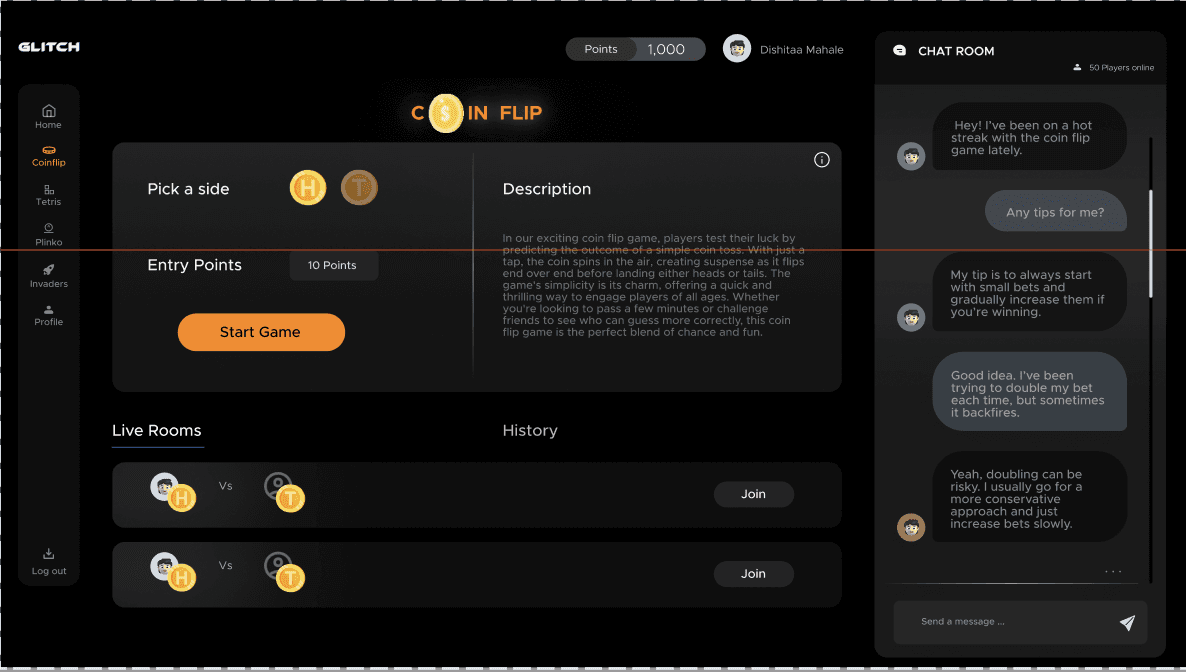
Interactive Chat Section
All games accessible through the nav bar
Points earned
Leaderboard Section
DESIGN RATIONALE
Features
Entry Points and Rewards
Encouraged to imitate wins of other players.
Social proof
Live Game Rooms and Game History
Multiplayer and Chat Section
Having multiplayer games and real time chat.
Social Proof & Belongingness
~42% projected increase in retention
5 of 7 participants reported they would return more often if chat was enabled.
Leaderboard
To repeat play rate.
Competition & Motivation
71% of users navigated to Leaderboard within first 3 minutes
Added sense of achievement.
Gamification & Reinforcement
6 of 7 participants preferred the points system over just win/lose.
Usability Testing - Conducted user test on 7 users
Development Challenges & Solutions
Design Feasibility
We iterated on multiple designs, ensuring each concept was practical for coding.User Engagement
We incorporated animations to boost engagement and kept the CSS simple to implement.Usability
Modal windows were added to improve visual appeal and usability.Navigation and Aesthetics
Focus was on creating a colorful, engaging, and easy-to-navigate design.
Through our collaborative approach, we achieved a harmonious blend of visual appeal and practical development.
REFLECTION
I saw that removing steps before gameplay increased engagement more than adding new features.
I learned to treat speed as a UX requirement, not a bonus.
Making chat and leaderboards optional created connection without overwhelming casual players.
I realized social features don’t need to be loud to be effective.
Watching users hesitate and struggle showed me where simplicity mattered more than complexity.
Usability testing helped me let go of my early assumptions.
Designing within technical constraints pushed me toward cleaner and more practical solutions.
Working closely with developers improved my design decisions.
If I revisited it, I would test retention across multiple sessions to better understand motivation and progression over time.
If I revisited this project, I’d test retention over multiple sessions.
USER JOURNEY
User Goal
“I want to play something quickly.”
Actions
Opens the app with limited time.
Emotion
😐 Neutral / Slightly Impatient
Pain Point
Short attention span.
Game Entry
User Goal
Find a game without friction.
Actions
Scans the navigation →
Looks for familiar games.
Emotion
😕 Frustrated
Pain Point
Too many steps involved.
2. Game Discovery
User Goal
Start playing instantly with light competition.
Actions
Launches a game → completes multiple steps before gameplay begins.
Emotion
😕 → 🙂
Annoyed, then happy the game started.
Pain Point
No instant game access.
Game Play
User Goal
Feel a meaningful sense of outcome after playing.
Actions
Sees result → Earns points.
Emotion
🙂 Relieved if won
😕 Demotivated if lost.
Pain Point
Win/lose outcomes felt final and demotivating, especially after a loss.
Win/Lose State
User Goal
Decide if continuing to play feels worthwhile.
Sees the game end screen → Pauses without a clear next step → Closes the game after a single match
Actions
The match ends naturally, with no progress or social pull to continue.
Pain Point
Emotion
😐 → 😕
Neutral → Disengaged
Post-Game Decision
Reduce time to first gameplay.
Reduce time to first gameplay.
Increase repeat play through social features.
Increase repeat play through social features.
Improve engagement without overwhelming users.
Improve engagement without overwhelming users.
Time to discover games.
Time to discover games.
Willingness to return.
Willingness to return.
Feature preference (chat, leaderboard, points).
Feature preference (chat, leaderboard, points).
GOALS
GOALS
SUCCESS METRICS
SUCCESS METRICS
A Casual Multiplayer Gaming Experience
A Casual Multiplayer Gaming Experience
Timeline
Timeline
Type
Freelance Project
6 weeks
6 weeks
Team
Team
UX Researcher & Product Designer (Me)
Software Developers
UX Researcher & Product Designer (Me)
Software Developers
How do you design a casual multiplayer game that’s fast to start, social by choice, and rewarding to replay?
How do you design a casual multiplayer game that’s zero-friction to play, social by choice, and rewarding to replay?
How do you design a casual multiplayer game that’s zero-friction to play, social by choice, and rewarding to replay?

?
?
The Problem?
The Problem?
Casual players struggle to discover games quickly and lack social features that keep them engaged over time.
Casual players struggle to discover games quickly and lack social features that keep them engaged over time.
Casual gaming sessions are short. Any friction before gameplay or lack of motivation after a session increases drop-off and reduces retention.
Casual gaming sessions are short. Any friction before gameplay or lack of motivation after a session increases drop-off and reduces retention.
Why This Matters?
Why This Matters?
Projected +42% retention (based on reduced steps & motivational incentives)
Projected +42% retention (based on reduced steps & motivational incentives)
Before moving into solutions, I focused on understanding how casual players discover games, what motivates them to return, and how social features influence engagement without overwhelming gameplay.
Before moving into solutions, I focused on understanding how casual players discover games, what motivates them to return, and how social features influence engagement without overwhelming gameplay.
The research aimed to answer three key questions:
How quickly do users expect to start playing a game?
What factors influence repeat play in casual multiplayer games?
How can social interaction be integrated without disrupting focus?
The research aimed to answer three key questions:
How quickly do users expect to start playing a game?
What factors influence repeat play in casual multiplayer games?
How can social interaction be integrated without disrupting focus?
The research aimed to answer three key questions:
How quickly do users expect to start playing a game?
What factors influence repeat play in casual multiplayer games?
How can social interaction be integrated without disrupting focus?
RESEARCH
RESEARCH
Competitive Heuristic Review (3 Platforms)
Competitive Heuristic Review (3 Platforms)
Key Observations:
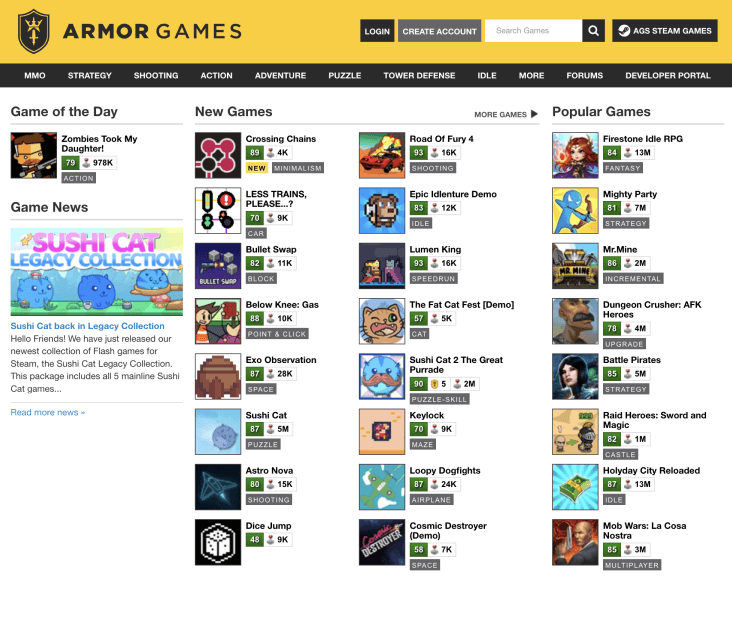
Many platforms prioritized visual complexity over fast game access.
Social features (chat, leaderboards) were often buried or optional.
Progress systems lacked clarity beyond win/lose states.
Onboarding friction increased drop-off for casual players.
Key Observations:
Many platforms prioritized visual complexity over fast game access.
Social features (chat, leaderboards) were often buried or optional.
Progress systems lacked clarity beyond win/lose states.
Onboarding friction increased drop-off for casual players.
Key Observations:
Many platforms prioritized visual complexity over fast game access.
Social features (chat, leaderboards) were often buried or optional.
Progress systems lacked clarity beyond win/lose states.
Onboarding friction increased drop-off for casual players.
Design Implication:
Glitch needed to prioritize speed, clarity, and visible motivation.
Design Implication:
Glitch needed to prioritize speed, clarity, and visible motivation.
The heuristic review revealed several recurring patterns across competing platforms.
I started with a heuristic review across three platforms before talking to users. I wanted to identify existing patterns so that interviews could go deeper rather than just confirming what I could already observe.
I started with a heuristic review across three platforms before talking to users. I wanted to identify existing patterns first so that interviews could go deeper rather than just confirming what I could already observe.
User Interviews (3 Participants)
User Interviews (3 Participants)
Key Patterns Identified:
Users expect to start playing within 1–2 interactions.
Excessive setup or configuration leads to frustration.
Playing alone feels disengaging over time.
Visible rewards and progress increase motivation to return.
Social presence is valued, even without active interaction.
Key Patterns Identified:
Users expect to start playing within 1–2 interactions.
Excessive setup or configuration leads to frustration.
Playing alone feels disengaging over time.
Visible rewards and progress increase motivation to return.
Social presence is valued, even without active interaction.
Key Patterns Identified:
Users expect to start playing within 1–2 interactions.
Excessive setup or configuration leads to frustration.
Playing alone feels disengaging over time.
Visible rewards and progress increase motivation to return.
Social presence is valued, even without active interaction.
What Surprised Me:
Users were more motivated by seeing others’ wins than by winning themselves.
Chat was valued more as a sense of presence than for constant conversation.
Leaderboards sparked curiosity rather than intimidation when positioned clearly.
What Surprised Me:
Users were more motivated by seeing others’ wins than by winning themselves.
Chat was valued more as a sense of presence than for constant conversation.
Leaderboards sparked curiosity rather than intimidation when positioned clearly.
What Surprised Me:
Users were more motivated by seeing others’ wins than by winning themselves.
Chat was valued more as a sense of presence than for constant conversation.
Leaderboards sparked curiosity rather than intimidation when positioned clearly.
“Sometimes I just want a quick game,
other times I want to challenge my friends.”
“Sometimes I just want a quick game,
other times I want to challenge my friends.”
“I just want to open the app and start playing right away.
If I have to set up too much, I’ll drop it.”
“I just want to open the app and start playing right away.
If I have to set up too much, I’ll drop it.”
PROBLEM DECOMPOSITION
PROBLEM DECOMPOSITION
Research helped break the broader problem into actionable UX challenges. These insights directly informed early design decisions.
Research helped break the broader problem into actionable UX challenges. These insights directly informed early design decisions.
Ideation & Early Exploration
Ideation & Early Exploration
. . . . . . . . . . . . . . . . . . . . . . . . . . . . . . . . . . . . . . . . . . . . . . . . . . . . . . . . . . . . . . . . . . . . . . . . . . . . . . . . . . . . . . . . . . . . . . . . . . . . . . . . . . . . . . . . . . . . . . . . . . . . . . . . . . . . . . . . . . . . . . . . . . . . . . . . . . . . . . . . . . . . . . . . . . . . . . . . . . . . . . . . . . . . . . . . . . . . . . . . . . . . . . . . . . . . . . . . . . . . . . . . . . . . . . . . . . . . . . . . . . . . . . . . . . . . . . . . . . . . . . . . . . . . . . . . . . . . . . . . . . . . . . . . . . . . . . . . . . . . . . . . . . . . . . . . . . . . . . . . . . . . . . . . . . . . . . . . . . . . . . . . . . . . . . . . . . . . . . . . . . . . . . . . . . . . . . . . . . . . . . . . . . . . . . . . . . . . . . . . . . . . . . . . . . . . . . . . . . . . . . . . . . . . . . . . . . . . . . . . . . . . . . . . . . . . . . . . . . . . . . . . . . . . . . . . . . . . . . . . . . . . . . . . . . . . . . . . . . . . . . . . . . . . . . . . . . . . . . . . . . . . . . . . . . . . . . . . . . . . . . . . . . . . . . . . . . . . . . . . . . . . . . . . . . . . . . . . . . . . . . . . . . . . . . . . . . . . . . . . . . . . . . . . . . . . . . . . . . . . . . . . . . . . . . . . . . . . . . . . . . . . . . . . . . . . . . . . . . . . . . . . . . . . . . . . . . . . . . . . . . . . . . . . . . . . . . . . . . . . . . . . . . . . . . . . . . . . . . . . . . . . . . . . . . . . . . . . . . . . . . . . . . . . . . . . . . . . . . . . . . . . . . . . . . . . . . . . . . . . . . . . . . . . . . . . . . . . . . . . . . . . . . . . . . . . . . . . . . . . . . . . . . . . . . . . . . . . . . . . . . . . . . . . . . . . . . . . . . . . . . . . . . . . . . . . . . . . . . . . . . . . . . . . . . . . . . . . . . . . . . . . . . . . . . . . . . . . . . . . . . . . . . . . . . . . . . . . . . . . . . . . . . . . . . . . . . . . . . . . . . . . . . . . . . . . . . . . . . . . . . . . . . . . . . . . . . . . . . . . . . . . . . . . . . . . . . . . . . . . . . . . . . . . . . . . . . . . . . . . . . . . . . . . . . . . . . . . . . . . . . . . . . . . . . . . . . . . . . . . . . . . . . . . . . . . . . . . . . . . . . . . . . . . . . . . . . . . . . . . . . . . . . . . . . . . . . . . . . . . . . . . . . . . . . . . . . . . . . . . . . . . . . . . . . . . . . . . . . . . . . . . . . . . . . . . . . . . . . . . . . . . . . . . . . . . . . . . . . . . . . . . . . . . . . . . . . . . . . . . . . . . . . . . . . . . . . . . . . . . . . . . . . . . . . . . . . . . . . . . . . . . . . . . . . . . . . . . . . . . . . . . . . . . . . . . . . . . . . . . . . . . . . . . . . . . . . . . . . . . . . . . . . . . . . . . . . . . . . . . . . . . . . . . . . . . . . . . . . . . . . . . . . . . . . . . . . . . . . . . . . . . . . . . . . . . . . . . . . . . . . . . . . . . . . . . . . . . . . . . . . . . . . . . . . . . . . . . . . . . . . . . . . . . . . . . . . . . . . . . . . . . . . . . . . . . . . . . . . . . . . . . . . . . . . . . . . . . . . . . . . . . . . . . . . . . . . . . . . . . . . . . . . . . . . . . . . . . . . . . . . . . . . . . . . . . . . . . . . . . . . . . . . . . . . . . . . . . . . . . . . . . . . . . . . . . . . . . . . . . . . . . . . . . . . . . . . . . . . . . . . . . . . . . . . . . . . . . . . . . . . . . . . . . . . . . . . . . . . . . . . . . . . . . . . . . . . . . . . . . . . . . . . . . . . . . . . . . . . . . . . . . . . . . . . . . . . . . . . . . . . . . . . . . . . . . . . . . . . . . . . . . . . . . . . . . . . . . . . . . . . . . . . . . . . . . . . . . . . . . . . . . . . . . . . . . . . . . . . . . . . . . . . . . . . . . . . . . . . . . . . . . . . . . . . . . . . . . . . . . . . . . . . . . . . . . . . . . . . . . . . . . . . . . . . . . . . . . . . . . . . . . . . . . . . . . . . . . . . . .
. . . . . . . . . . . . . . . . . . . . . . . . . . . . . . . . . . . . . . . . . . . . . . . . . . . . . . . . . . . . . . . . . . . . . . . . . . . . . . . . . . . . . . . . . . . . . . . . . . . . . . . . . . . . . . . . . . . . . . . . . . . . . . . . . . . . . . . . . . . . . . . . . . . . . . . . . . . . . . . . . . . . . . . . . . . . . . . . . . . . . . . . . . . . . . . . . . . . . . . . . . . . . . . . . . . . . . . . . . . . . . . . . . . . . . . . . . . . . . . . . . . . . . . . . . . . . . . . . . . . . . . . . . . . . . . . . . . . . . . . . . . . . . . . . . . . . . . . . . . . . . . . . . . . . . . . . . . . . . . . . . . . . . . . . . . . . . . . . . . . . . . . . . . . . . . . . . . . . . . . . . . . . . . . . . . . . . . . . . . . . . . . . . . . . . . . . . . . . . . . . . . . . . . . . . . . . . . . . . . . . . . . . . . . . . . . . . . . . . . . . . . . . . . . . . . . . . . . . . . . . . . . . . . . . . . . . . . . . . . . . . . . . . . . . . . . . . . . . . . . . . . . . . . . . . . . . . . . . . . . . . . . . . . . . . . . . . . . . . . . . . . . . . . . . . . . . . . . . . . . . . . . . . . . . . . . . . . . . . . . . . . . . . . . . . . . . . . . . . . . . . . . . . . . . . . . . . . . . . . . . . . . . . . . . . . . . . . . . . . . . . . . . . . . . . . . . . . . . . . . . . . . . . . . . . . . . . . . . . . . . . . . . . . . . . . . . . . . . . . . . . . . . . . . . . . . . . . . . . . . . . . . . . . . . . . . . . . . . . . . . . . . . . . . . . . . . . . . . . . . . . . . . . . . . . . . . . . . . . . . . . . . . . . . . . . . . . . . . . . . . . . . . . . . . . . . . . . . . . . . . . . . . . . . . . . . . . . . . . . . . . . . . . . . . . . . . . . . . . . . . . . . . . . . . . . . . . . . . . . . . . . . . . . . . . . . . . . . . . . . . . . . . . . . . . . . . . . . . . . . . . . . . . . . . . . . . . . . . . . . . . . . . . . . . . . . . . . . . . . . . . . . . . . . . . . . . . . . . . . . . . . . . . . . . . . . . . . . . . . . . . . . . . . . . . . . . . . . . . . . . . . . . . . . . . . . . . . . . . . . . . . . . . . . . . . . . . . . . . . . . . . . . . . . . . . . . . . . . . . . . . . . . . . . . . . . . . . . . . . . . . . . . . . . . . . . . . . . . . . . . . . . . . . . . . . . . . . . . . . . . . . . . . . . . . . . . . . . . . . . . . . . . . . . . . . . . . . . . . . . . . . . . . . . . . . . . . . . . . . . . . . . . . . . . . . . . . . . . . . . . . . . . . . . . . . . . . . . . . . . . . . . . . . . . . . . . . . . . . . . . . . . . . . . . . . . . . . . . . . . . . . . . . . . . . . . . . . . . . . . . . . . . . . . . . . . . . . . . . . . . . . . . . . . . . . . . . . . . . . . . . . . . . . . . . . . . . . . . . . . . . . . . . . . . . . . . . . . . . . . . . . . . . . . . . . . . . . . . . . . . . . . . . . . . . . . . . . . . . . . . . . . . . . . . . . . . . . . . . . . . . . . . . . . . . . . . . . . . . . . . . . . . . . . . . . . . . . . . . . . . . . . . . . . . . . . . . . . . . . . . . . . . . . . . . . . . . . . . . . . . . . . . . . . . . . . . . . . . . . . . . . . . . . . . . . . . . . . . . . . . . . . . . . . . . . . . . . . . . . . . . . . . . . . . . . . . . . . . . . . . . . . . . . . . . . . . . . . . . . . . . . . . . . . . . . . . . . . . . . . . . . . . . . . . . . . . . . . . . . . . . . . . . . . . . . . . . . . . . . . . . . . . . . . . . . . . . . . . . . . . . . . . . . . . . . . . . . . . . . . . . . . . . . . . . . . . . . . . . . . . . . . . . . . . . . . . . . . . . . . . . . . . . . . . . . . . . . . . . . . . . . . . . . . . . . . . . . . . . . . . . . . . . . . . . . . . . . . . . . . . . . . . . . . . . . . . . . . . . . . . . . . . . . . . . . . . . . . . . . . . . . . . . . . . . . . . . . . . . . . . . . . . . . . . . . . . . . . . . . . . . . . . . . . . . . . . . . . . . . .
Started from rough sketches
Started from rough sketches
Explored multiple entry-point layouts
Explored multiple entry-point layouts
Prioritized ideas that reduced steps to play
Prioritized ideas that reduced steps to play
Tested nav-first vs modal-first approaches
Tested nav-first vs modal-first approaches
Early exploration focused on reducing steps to play while keeping social features discoverable but optional.
Early exploration focused on reducing steps to play while keeping social features discoverable but optional.
EARLY FLOW DECISIONS
EARLY FLOW DECISIONS
These ensured users could start playing immediately while discovering social features organically.
These ensured users could start playing immediately while discovering social features organically.
Centralized games in
the nav bar
Centralized games in
the nav bar
Removed unnecessary
onboarding steps
Removed unnecessary
onboarding steps
Made chat persistent
but unobtrusive
Made chat persistent
but unobtrusive
Positioned leaderboard as discoverable,
not mandatory
Positioned leaderboard as discoverable,
not mandatory
ITERATIONS (based on feedback & Initial User testing)
ITERATIONS (based on feedback & Initial User testing)
To validate early flows and reduce friction before finalizing the design, moderated usability testing sessions were conducted. Some of the iterations are mentioned below:
I chose moderated think-aloud sessions because I needed to catch hesitation in real time. A survey would've told me what users thought after the fact. I needed to see where they paused in the moment.
I chose moderated think-aloud sessions because I needed to catch hesitation in real time. A survey would've told me what users thought after the fact. I needed to see where they paused in the moment.
7 moderated sessions · Think-aloud · Interactive prototype
7 moderated sessions · Think-aloud · Interactive prototype
Restart Button to Increase Engagement
User Feedback
During usability testing, several users paused after the game ended and attempted to exit rather than replay, indicating uncertainty about the next action.
Design Change
Added a clearly visible Restart button to the end-of-game state to encourage immediate replay and reduce drop-off between sessions.
Restart Button to Increase Engagement
User Feedback
During usability testing, several users paused after the game ended and attempted to exit rather than replay, indicating uncertainty about the next action.
Design Change
Added a clearly visible Restart button to the end-of-game state to encourage immediate replay and reduce drop-off between sessions.
Rules Readability Improvements
User Feedback
Users skimmed or skipped the rules and asked clarifying questions during gameplay, suggesting the information was not easily scannable.
Design Change
Reworked the rules layout to improve readability by simplifying language, improving hierarchy, and making key actions more visually prominent.
Rules Readability Improvements
User Feedback
Users skimmed or skipped the rules and asked clarifying questions during gameplay, suggesting the information was not easily scannable.
Design Change
Reworked the rules layout to improve readability by simplifying language, improving hierarchy, and making key actions more visually prominent.
Modal-Based Game Launch (Development Constraint)
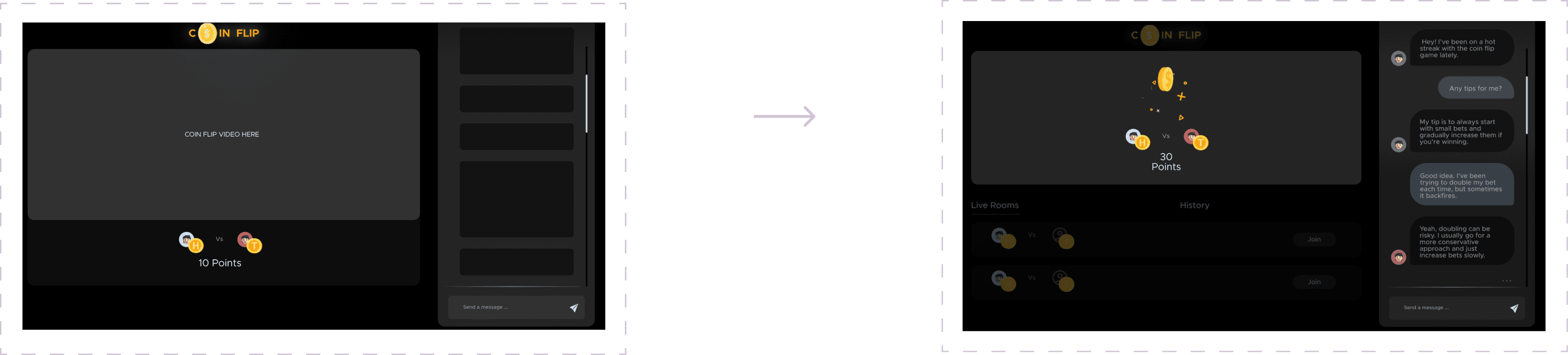
When developers flagged that a new page for each game would require additional routing and increase load time, I moved to a modal instead. This wasn't just a technical compromise. Keeping users on the same page actually maintained context better during gameplay, which aligned with the goal of reducing friction.
Modal-Based Game Launch (Development Constraint)
When developers flagged that a new page for each game would require additional routing and increase load time, I moved to a modal instead. This wasn't just a technical compromise. Keeping users on the same page actually maintained context better during gameplay, which aligned with the goal of reducing friction.
FINAL SOLUTION
FINAL SOLUTION
Interactive Chat Section
Interactive Chat Section
All games accessible through the nav bar
All games accessible through the nav bar
Points earned
Points earned
Leaderboard Section
Leaderboard Section
DESIGN RATIONALE
DESIGN RATIONALE
Features
Features
Entry Points and Rewards
Entry Points and Rewards
Encouraged to imitate wins of other players.
Encouraged to imitate wins of other players.
Social proof
Social proof
Live Game Rooms and Game History
Live Game Rooms and Game History
Multiplayer and Chat Section
Multiplayer and Chat Section
Having multiplayer games and real time chat.
Having multiplayer games and real time chat.
Social Proof & Belongingness
Social Proof & Belongingness
~42% projected increase in retention
~42% projected increase in retention
5 of 7 participants reported they would return more often if chat was enabled.
5 of 7 participants reported they would return more often if chat was enabled.
Leaderboard
Leaderboard
To repeat play rate.
To repeat play rate.
Competition & Motivation
Competition & Motivation
71% of users navigated to Leaderboard within first 3 minutes
71% of users navigated to Leaderboard within first 3 minutes
Added sense of achievement.
Added sense of achievement.
Gamification & Reinforcement
Gamification & Reinforcement
6 of 7 participants preferred the points system over just win/lose.
6 of 7 participants preferred the points system over just win/lose.
Usability Testing - Conducted user test on 7 users
Usability Testing - Conducted user test on 7 users
Development Challenges & Solutions
Development Challenges & Solutions
Design Feasibility
We iterated on multiple designs, ensuring each concept was practical for coding.
User Engagement
We incorporated animations to boost engagement and kept the CSS simple to implement.
Usability
Modal windows were added to improve visual appeal and usability.
Navigation and Aesthetics
Focus was on creating a colorful, engaging, and easy-to-navigate design.
Through our collaborative approach, we achieved a harmonious blend of visual appeal and practical development.
Design Feasibility
We iterated on multiple designs, ensuring each concept was practical for coding.User Engagement
We incorporated animations to boost engagement and kept the CSS simple to implement.Usability
Modal windows were added to improve visual appeal and usability.Navigation and Aesthetics
Focus was on creating a colorful, engaging, and easy-to-navigate design.
Through our collaborative approach, we achieved a harmonious blend of visual appeal and practical development.
Design Feasibility
We iterated on multiple designs, ensuring each concept was practical for coding.User Engagement
We incorporated animations to boost engagement and kept the CSS simple to implement.Usability
Modal windows were added to improve visual appeal and usability.Navigation and Aesthetics
Focus was on creating a colorful, engaging, and easy-to-navigate design.
Through our collaborative approach, we achieved a harmonious blend of visual appeal and practical development.
REFLECTION
REFLECTION
I saw that removing steps before gameplay increased engagement more than adding new features.
I saw that removing steps before gameplay increased engagement more than adding new features.
I learned to treat speed as a UX requirement, not a bonus.
I learned to treat speed as a UX requirement, not a bonus.

Making chat and leaderboards optional created connection without overwhelming casual players.
Making chat and leaderboards optional created connection without overwhelming casual players.
I realized social features don’t need to be loud to be effective.
I realized social features don’t need to be loud to be effective.

Watching users hesitate and struggle showed me where simplicity mattered more than complexity.
Watching users hesitate and struggle showed me where simplicity mattered more than complexity.
Usability testing helped me let go of my early assumptions.
Usability testing helped me let go of my early assumptions.

Designing within technical constraints pushed me toward cleaner and more practical solutions.
Designing within technical constraints pushed me toward cleaner and more practical solutions.
Working closely with developers improved my design decisions.
Working closely with developers improved my design decisions.

If I revisited it, I would test retention across multiple sessions to better understand motivation and progression over time.
If I revisited it, I would test retention across multiple sessions to better understand motivation and progression over time.
If I revisited this project, I’d test retention over multiple sessions.
If I revisited this project, I’d test retention over multiple sessions.

USER JOURNEY
USER JOURNEY
User Goal
User Goal
“I want to play something quickly.”
“I want to play something quickly.”
Actions
Actions
Opens the app with limited time.
Opens the app with limited time.
Emotion
Emotion
😐 Neutral / Slightly Impatient
😐 Neutral / Slightly Impatient
Pain Point
Pain Point
Short attention span.
Short attention span.
Game Entry
Game Entry
Game Entry
User Goal
User Goal
Find a game without friction.
Find a game without friction.
Actions
Actions
Scans the navigation →
Looks for familiar games.
Scans the navigation →
Looks for familiar games.
Emotion
Emotion
😕 Frustrated
😕 Frustrated
Pain Point
Pain Point
Too many steps involved.
Too many steps involved.
2. Game Discovery
2. Game Discovery
User Goal
User Goal
Start playing instantly with light competition.
Start playing instantly with light competition.
Actions
Actions
Launches a game → completes multiple steps before gameplay begins.
Launches a game → completes multiple steps before gameplay begins.
Emotion
Emotion
😕 → 🙂
Annoyed, then happy the game started.
😕 → 🙂
Annoyed, then happy the game started.
Pain Point
Pain Point
No instant game access.
No instant game access.
Game Play
Game Play
Game Play
User Goal
User Goal
Feel a meaningful sense of outcome after playing.
Feel a meaningful sense of outcome after playing.
Actions
Actions
Sees result → Earns points.
Sees result → Earns points.
Emotion
Emotion
🙂 Relieved if won
😕 Demotivated if lost.
🙂 Relieved if won
😕 Demotivated if lost.
Pain Point
Pain Point
Win/lose outcomes felt final and demotivating, especially after a loss.
Win/lose outcomes felt final and demotivating, especially after a loss.
Win/Lose State
Win/Lose State
Win/Lose State
User Goal
User Goal
Decide if continuing to play feels worthwhile.
Decide if continuing to play feels worthwhile.
Sees the game end screen → Pauses without a clear next step → Closes the game after a single match
Sees the game end screen → Pauses without a clear next step → Closes the game after a single match
Actions
Actions
The match ends naturally, with no progress or social pull to continue.
The match ends naturally, with no progress or social pull to continue.
Pain Point
Pain Point
Emotion
Emotion
😐 → 😕
Neutral → Disengaged
😐 → 😕
Neutral → Disengaged
Post-Game Decision
Post-Game Decision
Post-Game Decision
A Casual Multiplayer
Gaming Experience
How do you design a multiplayer game that’s zero-friction to play, social by choice, and rewarding to replay?
Timeline
6 weeks
Team
UX Researcher &
Product Designer (Me)
Software Developers
Projected +42% retention
(based on reduced steps & motivational incentives)
The Problem?
Casual players struggle to discover games quickly and lack social features that keep them engaged over time.
Why This Matters?
Casual gaming sessions are short. Any friction before gameplay or lack of motivation after a session increases drop-off and reduces retention.
Goals
Success
metrics
Reduce time to first gameplay.
Increase repeat play through social features.
Improve engagement without overwhelming users.
Time to discover games.
Willingness to return.
Feature preference (chat, leaderboard, points).
RESEARCH
Before moving into solutions, I focused on understanding how casual players discover games, what motivates them to return, and how social features influence engagement without overwhelming gameplay.
The research aimed to answer three key questions:
How quickly do users expect to start playing a game?
What factors influence repeat play in casual multiplayer games?
How can social interaction be integrated without disrupting focus?
Competitive Heuristic Review
(3 Platforms)
Key Observations:
Many platforms prioritized visual complexity over fast game access.
Social features (chat, leaderboards) were often buried or optional.
Progress systems lacked clarity beyond win/lose states.
Onboarding friction increased drop-off for casual players.
Design Implication:
Glitch needed to prioritize speed, clarity, and visible motivation.
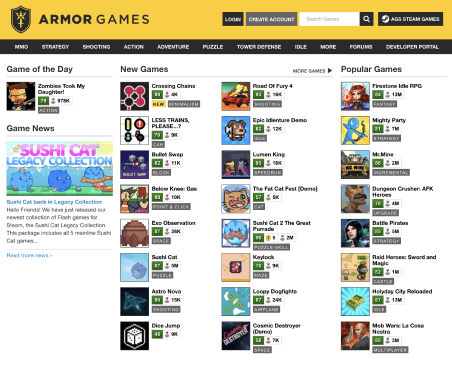
I started with a heuristic review across three platforms before talking to users. I wanted to identify existing patterns first so that interviews could go deeper rather than just confirming what I could already observe.
User Interviews (3 Participants)
Key Patterns Identified:
Users expect to start playing within 1–2 interactions.
Excessive setup or configuration leads to frustration.
Playing alone feels disengaging over time.
Visible rewards and progress increase motivation to return.
Social presence is valued, even without active interaction.
What Surprised Me:
Users were more motivated by seeing others’ wins than by winning themselves.
Chat was valued more as a sense of presence than for constant conversation.
Leaderboards sparked curiosity rather than intimidation when positioned clearly.
“Sometimes I just want a quick game,
other times I want to challenge my friends.”
“I just want to open the app and start playing right away.
If I have to set up too much, I’ll drop it.”
PROBLEM DECOMPOSITION
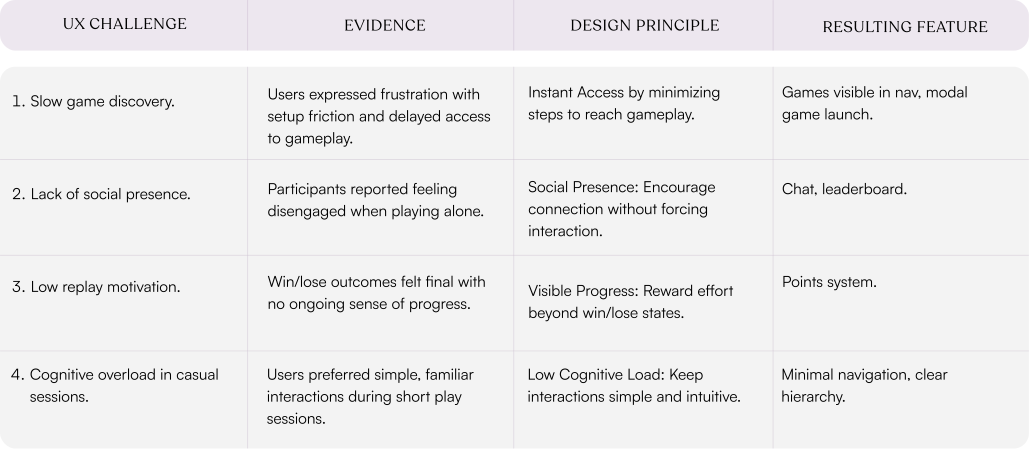
Research helped break the broader problem into actionable UX challenges. These insights directly informed early design decisions.
UX Challenge
Slow game discovery.
Evidence
Users expressed frustration with setup friction and delayed access to gameplay.
Design Principle
Instant Access by minimizing steps to reach gameplay.
Resulting Feature
Games visible in nav, modal game launch.
UX Challenge
Lack of social presence.
Evidence
Participants reported feeling disengaged when playing alone.
Design Principle
Social Presence: Encourage connection without forcing interaction.
Resulting Feature
Chat, leaderboard.
UX Challenge
Low replay motivation.
Evidence
Win/lose outcomes felt final with no ongoing sense of progress.
Design Principle
Visible Progress: Reward effort beyond win/lose states.
Resulting Feature
Points system.
UX Challenge
Cognitive overload in casual sessions.
Evidence
Users preferred simple, familiar interactions during short play sessions.
Design Principle
Low Cognitive Load: Keep interactions simple and intuitive.
Resulting Feature
Minimal navigation, clear hierarchy.
USER JOURNEY
User Goal
Find a game without friction.
Actions
Scans the navigation,
Looks for familiar games.
Emotion
😕 Frustrated
Pain Point
Too many steps involved.
1. Game
Discovery
User Goal
Start playing instantly with light competition.
Actions
Launches a game, completes multiple steps before gameplay begins.
Emotion
Pain Point
No instant game access.
Game
Play
😕 → 🙂
Annoyed, then happy the game started.
User Goal
Feel a meaningful sense of outcome after playing.
Actions
Sees result, Earns points.
Pain Point
Win/lose outcomes felt final and demotivating, especially after a loss.
Emotion
🙂 Relieved if won
😕 Demotivated if lost.
Win/Lose State
User Goal
Decide if continuing to play feels worthwhile.
Actions
Sees the game end screen, Pauses without a clear next step, Closes game after a single match
Pain Point
The match ends naturally, with no progress or social pull to continue.
Post-Game Decision
Emotion
😐 → 😕
Neutral → Disengaged
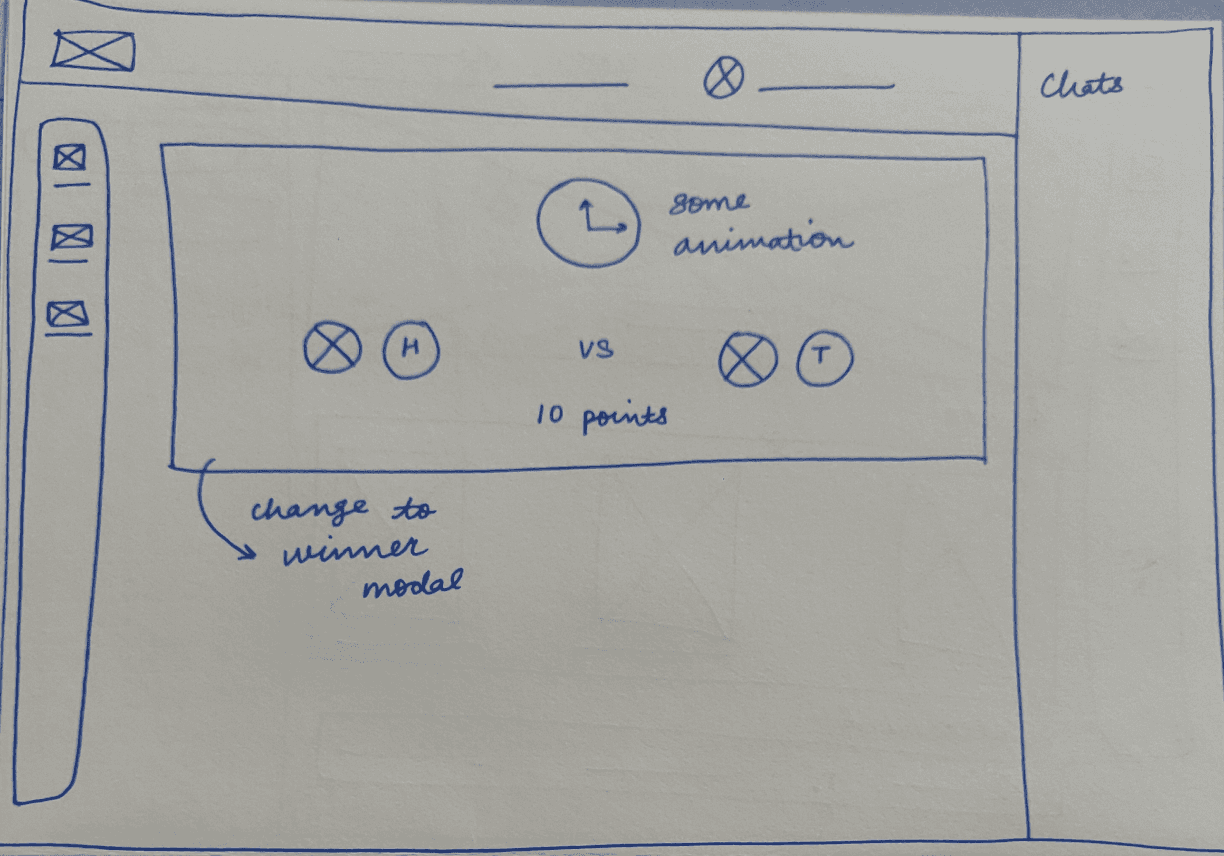
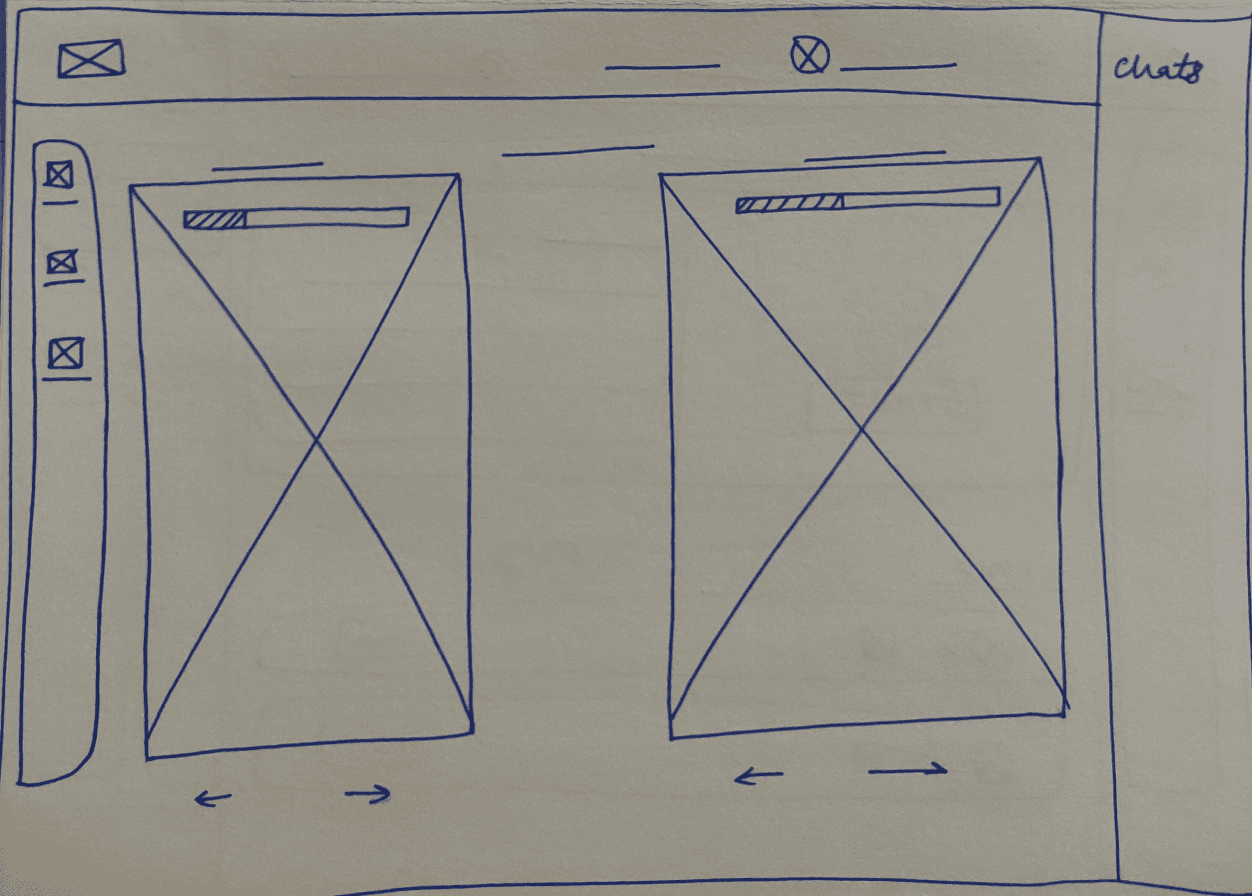
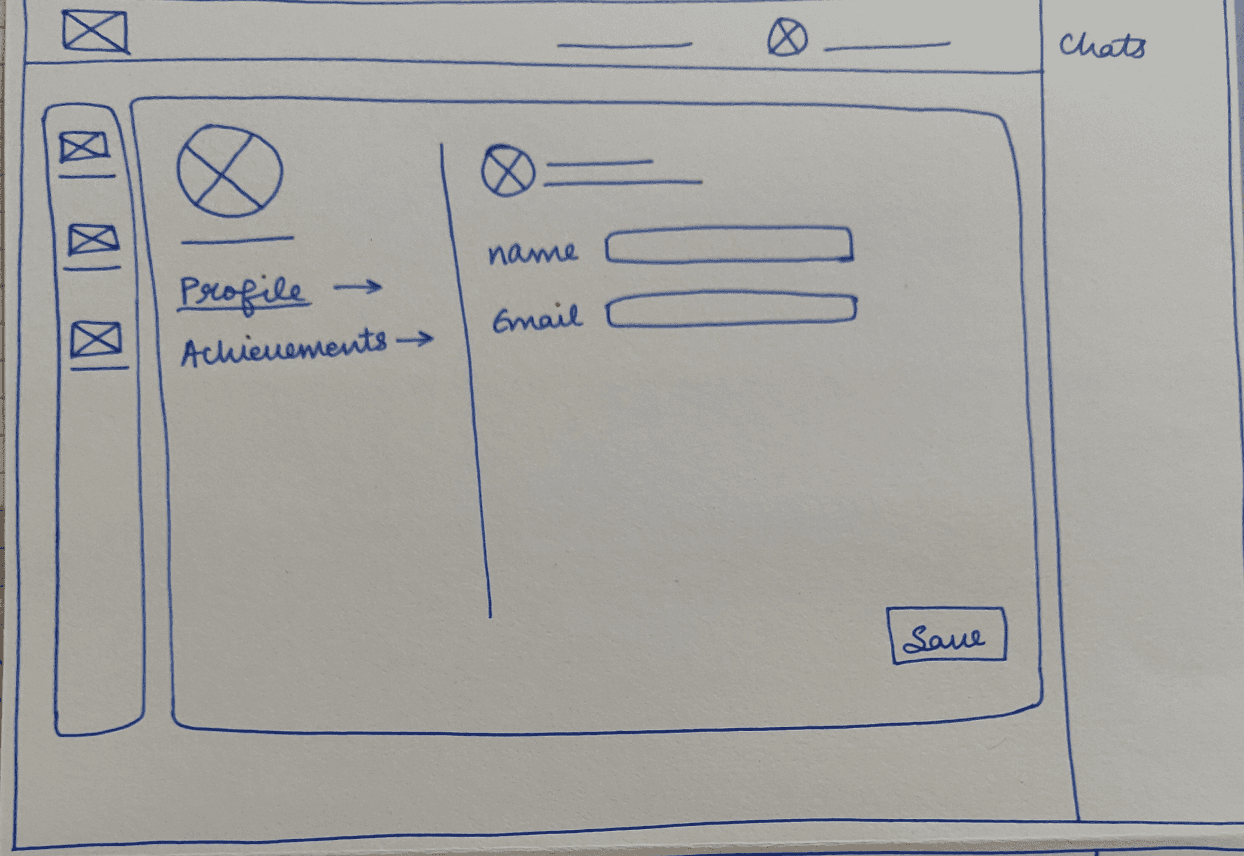
Ideation &
Early Exploration
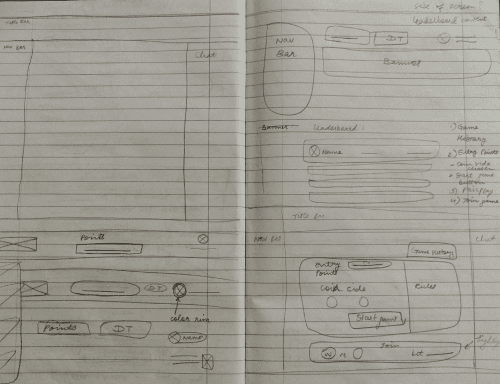
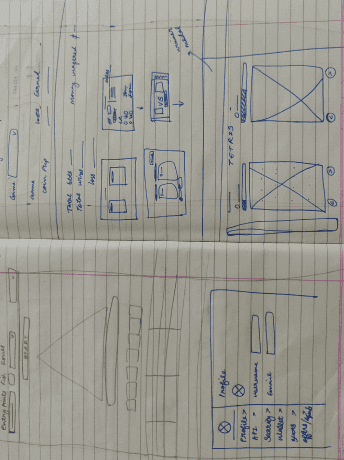
Early exploration focused on reducing steps to play while keeping social features discoverable but optional.
Started from
rough sketches
Explored multiple
entry-point layouts
Prioritized ideas that
reduced steps to play
Tested nav-first vs
modal-first approaches
Ideation &
Early Exploration
Early exploration focused on reducing steps to play while keeping social features discoverable but optional.
Started from
rough sketches
Explored multiple
entry-point layouts
Prioritized ideas that
reduced steps to play
Tested nav-first vs
modal-first approaches
EARLY FLOW DECISIONS
These ensured users could start playing immediately while discovering social features organically.
Centralized games in
the nav bar
Removed unnecessary
onboarding steps
Made chat persistent
but unobtrusive
Positioned leaderboard
as discoverable,
not mandatory
ITERATIONS
(based on feedback & Initial User testing)
I chose moderated think-aloud sessions because I needed to catch hesitation in real time. A survey would've told me what users thought after the fact. I needed to see where they paused in the moment.
7 moderated sessions · Think-aloud · Interactive prototype
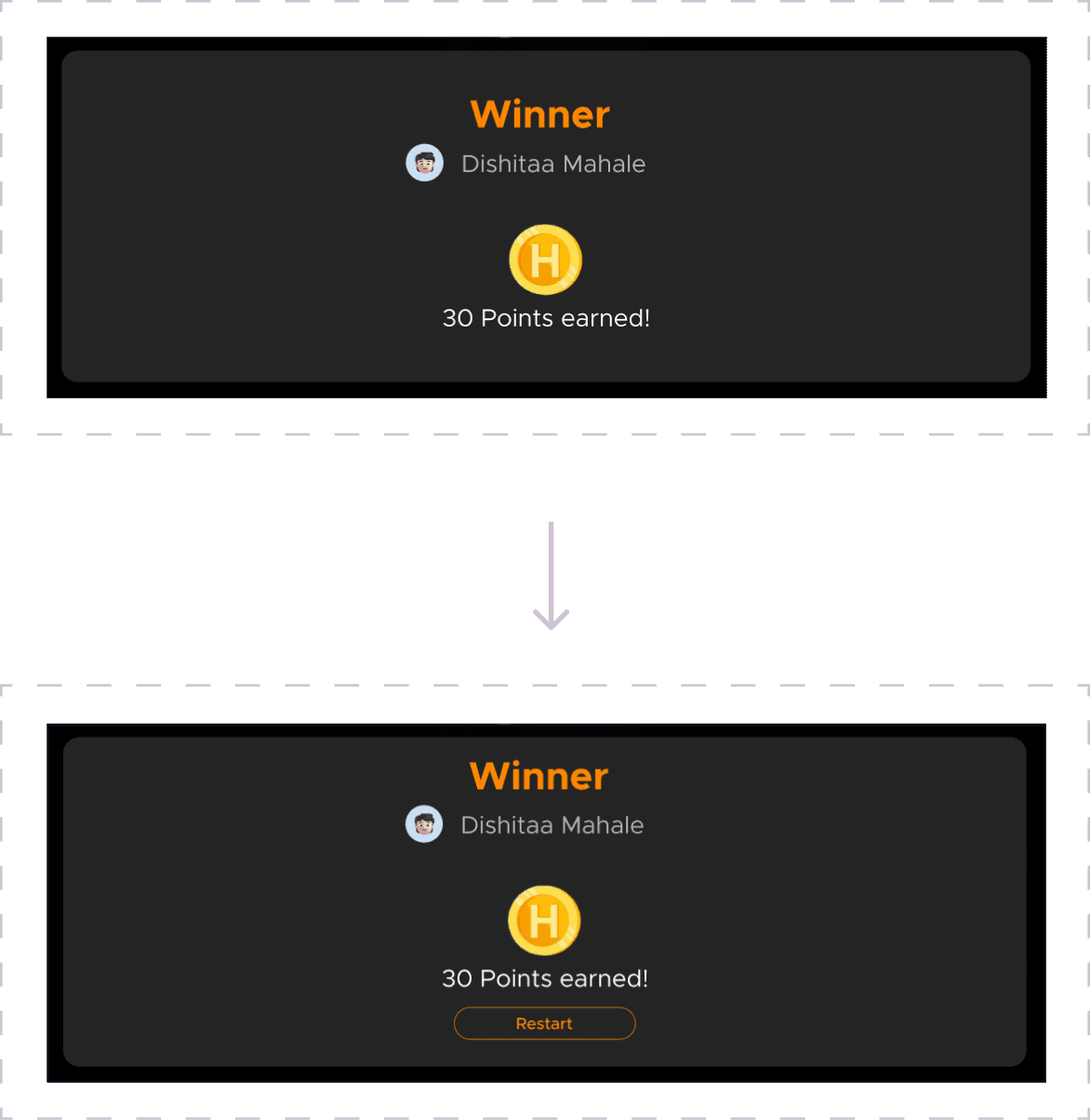
Restart Button to Increase Engagement
User Feedback
During usability testing, several users paused after the game ended and attempted to exit rather than replay, indicating uncertainty about the next action.
Design Change
Added a clearly visible Restart button to the end-of-game state to encourage immediate replay and reduce drop-off between sessions.
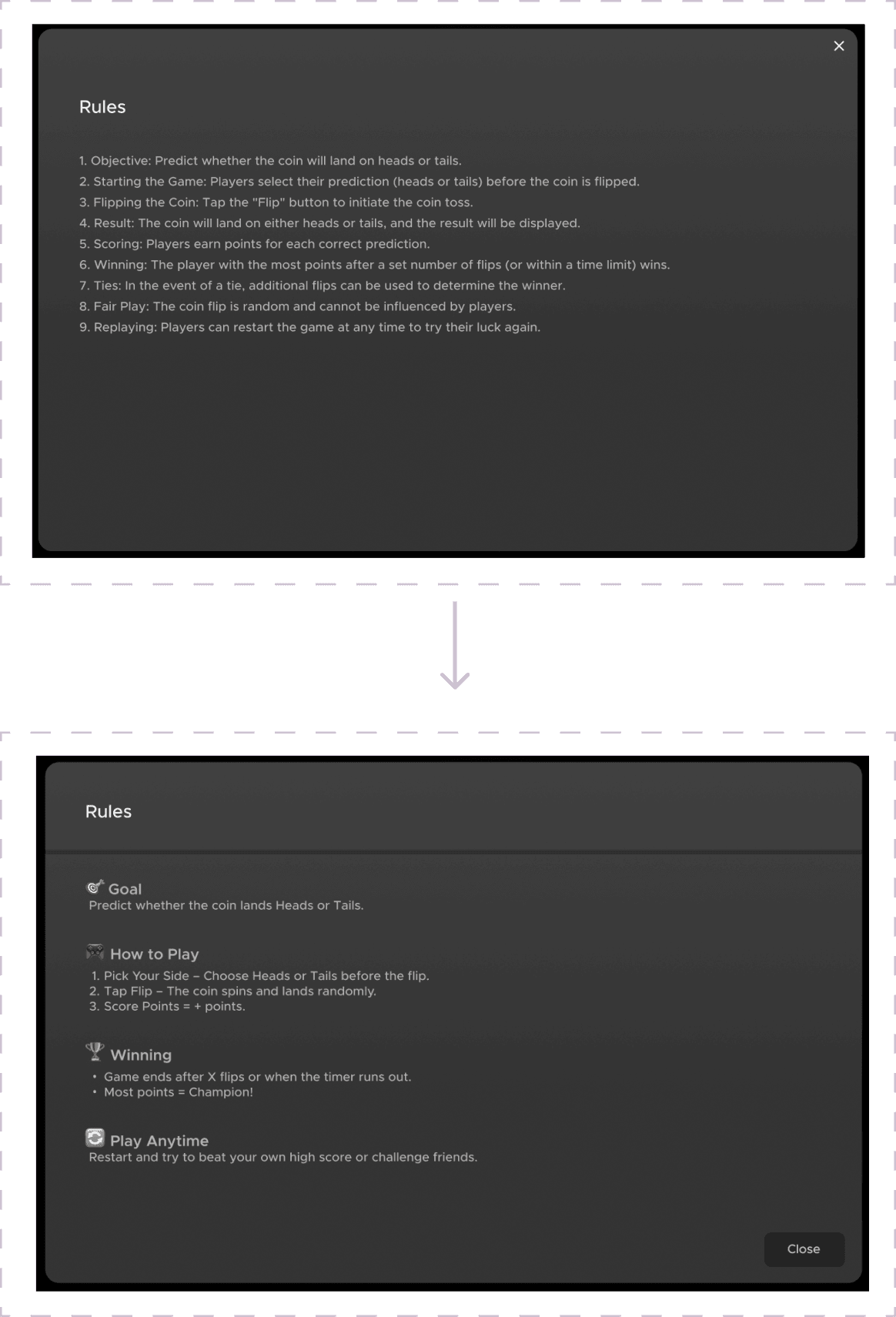
Rules Readability Improvements
User Feedback
Users skimmed or skipped the rules and asked clarifying questions during gameplay, suggesting the information was not easily scannable.
Design Change
Reworked the rules layout to improve readability by simplifying language, improving hierarchy, and making key actions more visually prominent.
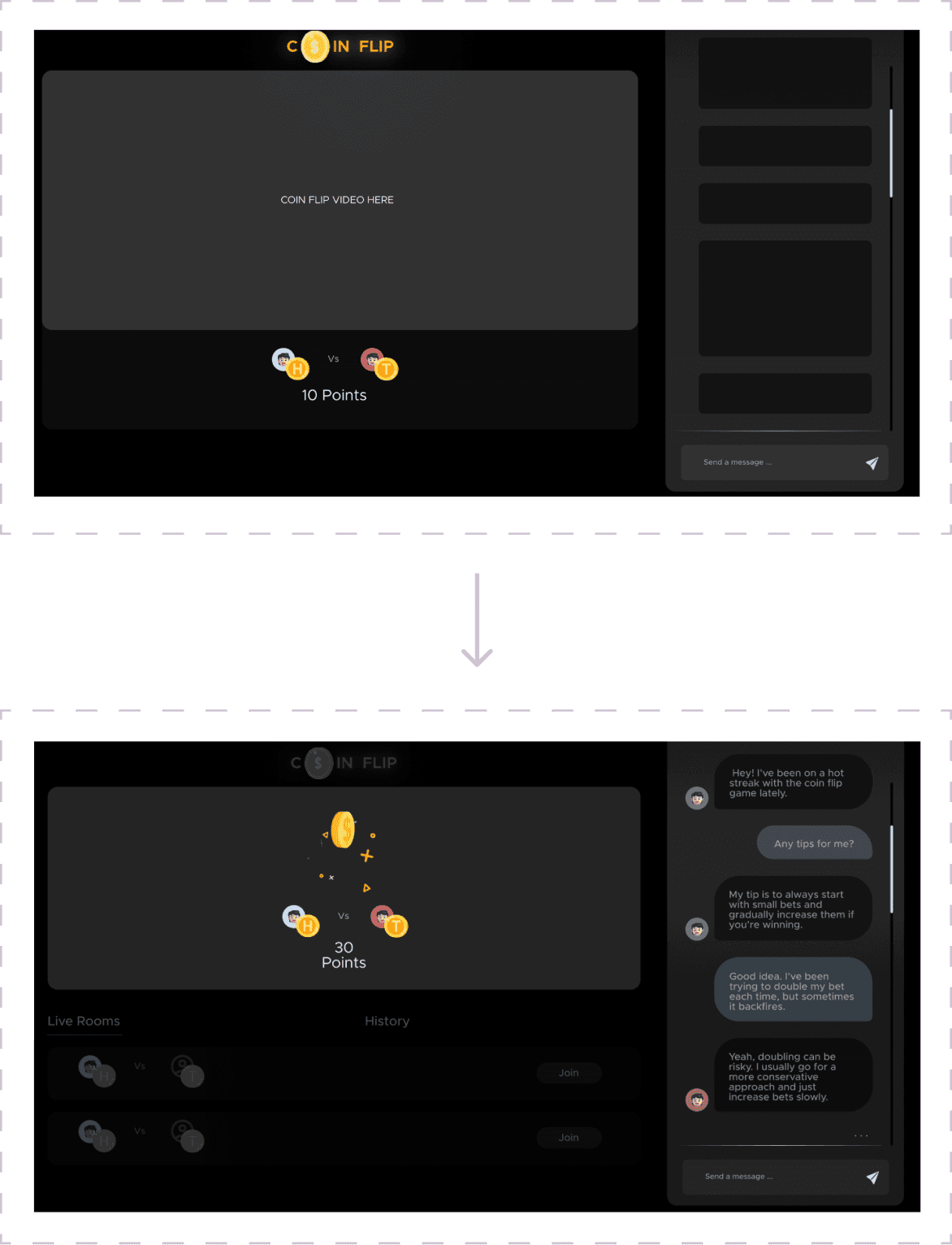
Modal-Based Game Launch
(Development Constraint)
When developers flagged that a new page for each game would require additional routing and increase load time, I moved to a modal instead. This wasn't just a technical compromise. Keeping users on the same page actually maintained context better during gameplay, which aligned with the goal of reducing friction.
FINAL SOLUTION
DESIGN RATIONALE
Usability Testing
Conducted user test on 7 users
Features
Leaderboard
To repeat play rate.
Competition & Motivation
71% of users navigated to Leaderboard within first 3 minutes
Multiplayer and Chat Section
Having multiplayer games and real time chat.
Social Proof & Belongingness
~42% projected increase in retention
5 of 7 participants reported they would return more often if chat was enabled.
Entry Points and Rewards
Added sense of achievement.
Gamification & Reinforcement
6 of 7 participants preferred the points system over just win/lose.
Development Challenges
& Solutions
Design Feasibility
We iterated on multiple designs, ensuring each concept was practical for coding.User Engagement
We incorporated animations to boost engagement and kept the CSS simple to implement.Usability
Modal windows were added to improve visual appeal and usability.Navigation and Aesthetics
Focus was on creating a colorful, engaging, and easy-to-navigate design.
Through our collaborative approach, we achieved a harmonious blend of visual appeal and practical development.
REFLECTION
I saw that removing steps before gameplay increased engagement more than adding new features.
I learned to treat speed as a UX requirement, not a bonus.

Making chat and leaderboards optional created connection without overwhelming casual players.
I realized social features don’t need to be loud to be effective.

Watching users hesitate and struggle showed me where simplicity mattered more than complexity.
Usability testing helped me let go of my early assumptions.

Designing within technical constraints pushed me toward cleaner and more practical solutions.
Working closely with developers improved my design decisions.

If I revisited it, I would test retention across multiple sessions to better understand motivation and progression over time.
If I revisited this project, I’d test retention over multiple sessions.