UX Researcher
UX Researcher
ROLE
ROLE
Interviews, Netnography, Competitive Analysis, Literature Review
Interviews, Netnography, Competitive Analysis, Literature Review
METHODS
METHODS
10 weeks
10 weeks
TIMELINE
TIMELINE
WHAT THIS STUDY REVEALS
WHAT THIS STUDY REVEALS
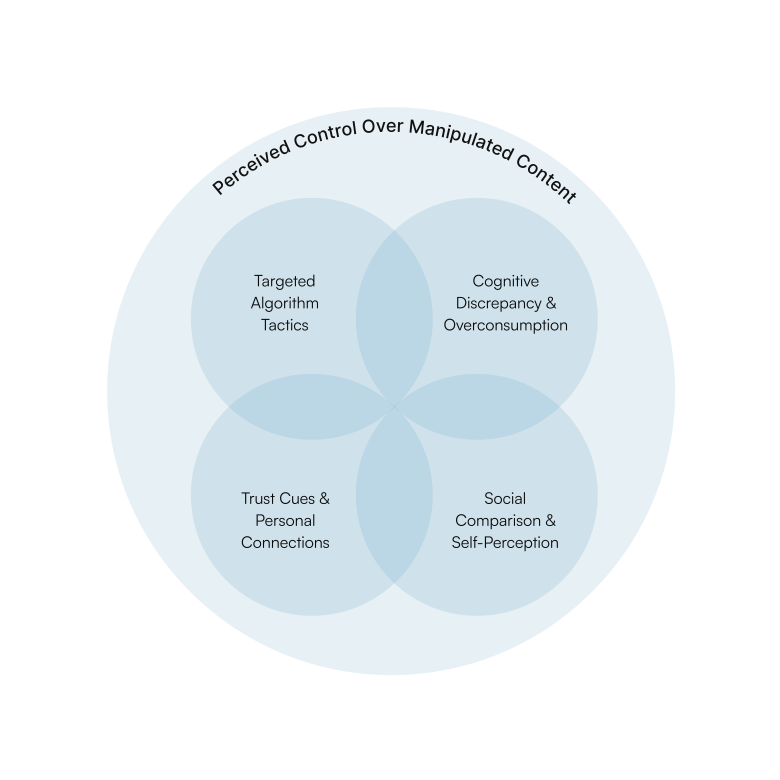
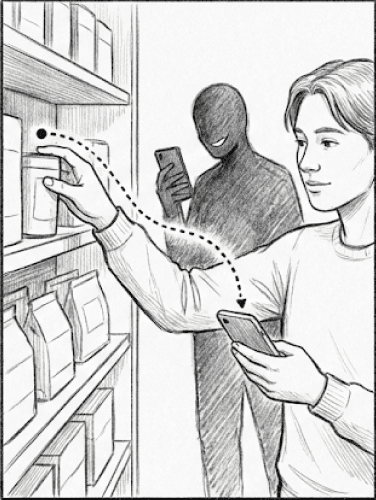
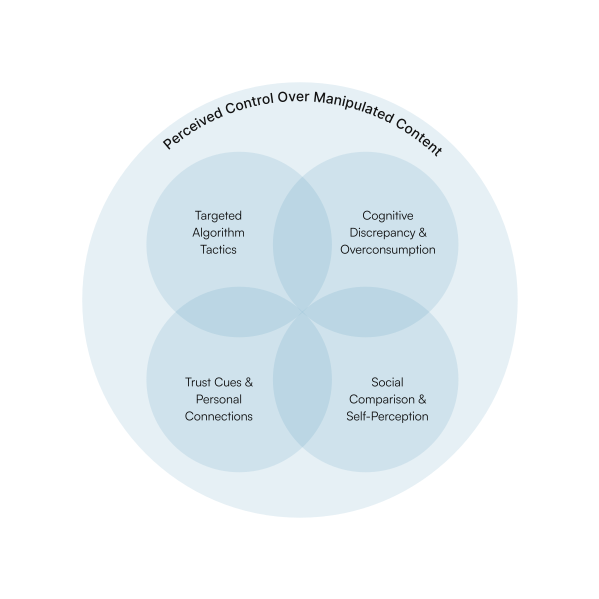
How and why young adults feel “in control” even when they are being subtly influenced.
How and why young adults feel “in control” even when they are being subtly influenced.
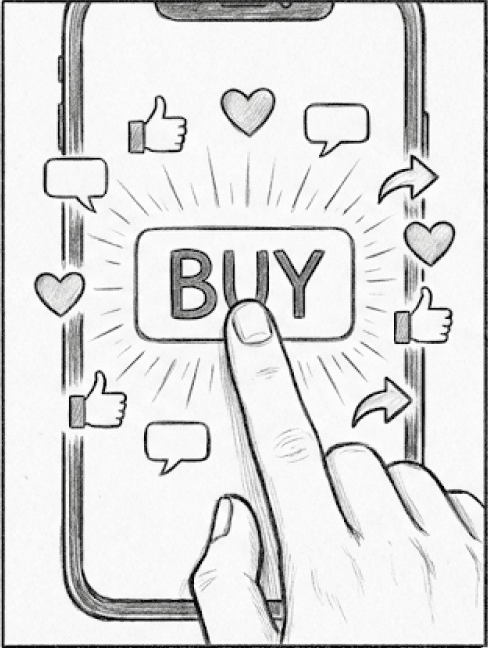

How engagement metrics (likes, comments, shares) shape trust, desire, and purchase decisions.
How engagement metrics (likes, comments, shares) shape trust, desire, and purchase decisions.
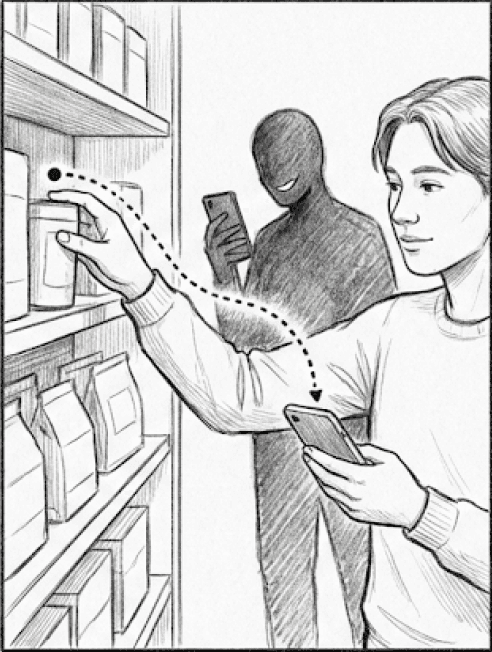

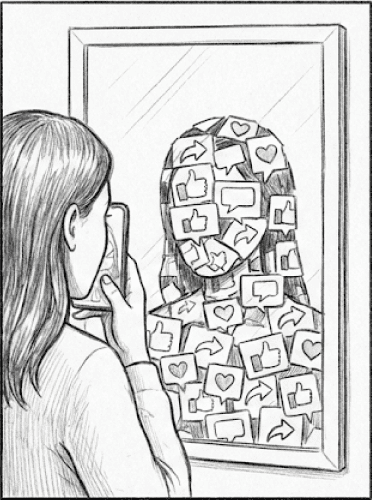
How peer validation intertwines with self-esteem, comparison, and identity formation.
How peer validation intertwines with self-esteem, comparison, and identity formation.
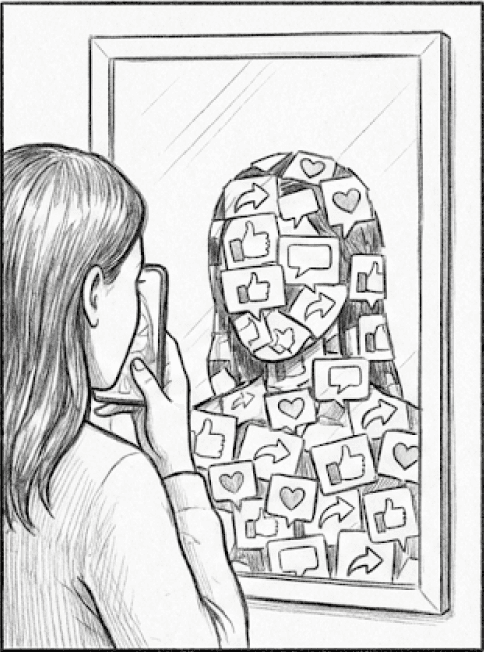

Consumerism and consumption has just been increasing many, many folds… I feel like even though I am aware of this, and I try to avoid it personally, I still get influenced by these things. - Interview Participant
Consumerism and consumption has just been increasing many, many folds… I feel like even though I am aware of this, and I try to avoid it personally, I still get influenced by these things. - Interview Participant

RESEARCH QUESTION
RESEARCH QUESTION
How does peer validation through likes, shares, and comments on platforms like Instagram, TikTok, and YouTube influence how young adults perceive products and buy them?
How does peer validation through likes, shares, and comments on platforms like Instagram, TikTok, and YouTube influence how young adults perceive products and buy them?
In what ways do peer reactions (likes, comments, and shares) and comparisons with other people on social media lead young adults to spend beyond what they intended?
How do peer reactions online shape young adults’ perceptions of self-image and social standing, both when engaging with others’ content and when sharing their own?
How do young adults perceive and make sense of the marketing tactics they encounter when deciding to buy something online?
In what ways do peer reactions (likes, comments, and shares) and comparisons with other people on social media lead young adults to spend beyond what they intended?
How do peer reactions online shape young adults’ perceptions of self-image and social standing, both when engaging with others’ content and when sharing their own?
How do young adults perceive and make sense of the marketing tactics they encounter when deciding to buy something online?
WHY DOES THIS MATTER?
WHY DOES THIS MATTER?
Social Pressure
Drives Overspending
Social Pressure
Drives Overspending
Young adults often buy more than planned because fitting in or avoiding FOMO can feel more important than financial caution, even when budgets are limited.
Young adults often buy more than planned because fitting in or avoiding FOMO can feel more important than financial caution, even when budgets are limited.
Engagement Cues Shape Emotions and Self-Perception
Engagement Cues Shape Emotions and Self-Perception
Likes, shares, and comments impact more than purchase decisions, but they influence self-esteem, comparison, and anxiety.
Likes, shares, and comments impact more than purchase decisions, but they influence self-esteem, comparison, and anxiety.
Consumption Is Tied to Identity Formation
Consumption Is Tied to Identity Formation
What young adults buy becomes part of how they see themselves, making peer validation a powerful force in shaping identity during this developmental stage.
What young adults buy becomes part of how they see themselves, making peer validation a powerful force in shaping identity during this developmental stage.
METHODOLOGY
METHODOLOGY
Literature Review
Literature Review
Purpose
Established theoretical grounding
Shape the direction of our research
Purpose
Established theoretical grounding
Shape the direction of our research
What we did
Extract papers related to influencer marketing, authenticity, credibility cues, social comparison, materialism, and compulsive buying
What we did
Extract papers related to influencer marketing, authenticity, credibility cues, social comparison, materialism, and compulsive buying
Data Analysis
Extracted key concepts and synthesized them into themes like credibility, peer validation, self-perception, and impulsive purchasing
Data Analysis
Extracted key concepts and synthesized them into themes like credibility, peer validation, self-perception, and impulsive purchasing
Why it mattered
Most research focuses on influencers, not everyday peer validation, guiding the direction of our study and research questions
Why it mattered
Most research focuses on influencers, not everyday peer validation, guiding the direction of our study and research questions
6 Literatures
6 Literatures
Semi-Structured User Interviews
Semi-Structured User Interviews
Purpose
Capture personal experiences and psychological reasoning on how young adults interpret peer validation and how it influences their decisions
Purpose
Capture personal experiences and psychological reasoning on how young adults interpret peer validation and how it influences their decisions
3 Interviewees
3 Interviewees
Participants
Selected using a screener form
Is a young adult (18-28 years)
Had previously purchased products discovered online and spent significant time on social media platforms
Recruited by sending Zoom interview invitations via email
Participants
Selected using a screener form
Is a young adult (18-28 years)
Had previously purchased products discovered online and spent significant time on social media platforms
Recruited by sending Zoom interview invitations via email
Data Collection
Anonymized audio recordings along with transcripts of interview
Stored on a google drive shared only amongst team members and teaching faculty
Data Collection
Anonymized audio recordings along with transcripts of interview
Stored on a google drive shared only amongst team members and teaching faculty
Data Analysis
Extracted key responses from interviewees that directly addressed our research questions
Conducted a thematic analysis to identify recurring patterns and insights
Data Analysis
Extracted key responses from interviewees that directly addressed our research questions
Conducted a thematic analysis to identify recurring patterns and insights
Why it mattered
Revealed the psychological reasoning behind user behavior, why certain cues feel persuasive, when social pressure builds, and how users justify purchases
Why it mattered
Revealed the psychological reasoning behind user behavior, why certain cues feel persuasive, when social pressure builds, and how users justify purchases
Ethics
Obtained informed consent from each participant before starting recording
Anonymized all responses during data collection to protect user privacy
Sensitive to participants’ privacy and comfort throughout the process
Ethics
Obtained informed consent from each participant before starting recording
Anonymized all responses during data collection to protect user privacy
Sensitive to participants’ privacy and comfort throughout the process
Competitive Analysis
Competitive Analysis
Purpose
Understand how each platform’s design shapes the meaning and impact of peer validation cues
Purpose
Understand how each platform’s design shapes the meaning and impact of peer validation cues
What we did
Analyzed interfaces and 24 engagement features across TikTok, Instagram, YouTube, Facebook, and X
What we did
Analyzed interfaces and 24 engagement features across TikTok, Instagram, YouTube, Facebook, and X
Data Analysis
Compared platform cultures, discovery paths, and types of validation cues
Data Analysis
Compared platform cultures, discovery paths, and types of validation cues
Why it mattered
Observing how validation feels different depending on the platform, helping contextualize participant experiences
Why it mattered
Observing how validation feels different depending on the platform, helping contextualize participant experiences
24 feature comparison across 5 platforms
24 feature comparison across 5 platforms
Netnography
Netnography
4 Reddit threads and 1 Podcast
4 Reddit threads and 1 Podcast
Purpose
Understand how people naturally talk about overspending, FOMO, and social pressure online
Purpose
Understand how people naturally talk about overspending, FOMO, and social pressure online
Participants
Reddit users from publicly available threads (mixed ages, diverse backgrounds).
Not limited to young adults, selected posts based on relevance, not demographics.
Participants
Reddit users from publicly available threads (mixed ages, diverse backgrounds).
Not limited to young adults, selected posts based on relevance, not demographics.
Data Collection
Analyzed publicly available Reddit threads from the past year referencing TikTok, Instagram, and YouTube
Reddit threads like “Social media made me buy this”
Subreddits like r/shoppingaddiction, r/beautyhauls, r/digitalminimalism
Data Collection
Analyzed publicly available Reddit threads from the past year referencing TikTok, Instagram, and YouTube
Reddit threads like “Social media made me buy this”
Subreddits like r/shoppingaddiction, r/beautyhauls, r/digitalminimalism
Data Analysis
Collected relevant comments and conversations following the same and extracted emotion behind each.
Data Analysis
Collected relevant comments and conversations following the same and extracted emotion behind each.
Why it mattered
Provided real-world context and sensitized us to themes
Why it mattered
Provided real-world context and sensitized us to themes
Ethics
Collected data only from publicly accessible threads
Did not interact or engage with users
Anonymized all responses during data collection to protect user privacy
Ethics
Collected data only from publicly accessible threads
Did not interact or engage with users
Anonymized all responses during data collection to protect user privacy
“People want to think they're above advertising, but no one truly is.”
- Reddit User
“People want to think they're above advertising, but no one truly is.”
- Reddit User
“Anything and everything I’m doing in my real life is being read by Instagram… It’s a bad feeling.”
- Interview Participant
“Anything and everything I’m doing in my real life is being read by Instagram… It’s a bad feeling.”
- Interview Participant
“There's just so much consumption, there's so much content around consumption… I know, like, friends who are a bit of shopaholics and that's a bit scary, honestly, because it influences so much of your tastes and likes.”
- Interview Participant
“There's just so much consumption, there's so much content around consumption… I know, like, friends who are a bit of shopaholics and that's a bit scary, honestly, because it influences so much of your tastes and likes.”
- Interview Participant
“They are just selling like a place or a product, which I honestly just do not like….but if it's like genuine content, they have actually used it…..then I feel like, okay, this is like a bit more trustworthy.”
- Interview Participant
“They are just selling like a place or a product, which I honestly just do not like….but if it's like genuine content, they have actually used it…..then I feel like, okay, this is like a bit more trustworthy.”
- Interview Participant
“Social media does create a change to how you see things around you, because at some point of time you would want that people should pursue you a certain way…. social media is a game changer in today's world.”
- Interview Participant
“Social media does create a change to how you see things around you, because at some point of time you would want that people should pursue you a certain way…. social media is a game changer in today's world.”
- Interview Participant
KEY FINDINGS
KEY FINDINGS
LEARNINGS
LEARNINGS
Methodological Triangulation
Methodological Triangulation
Synthesizing Qualitative Data
Synthesizing Qualitative Data
Digital Research Ethics
Digital Research Ethics
Designing With Social Impact in Mind
Designing With Social Impact in Mind
I learned that combining methods (Netnography, Interviews, Platform Analysis) creates richer and more reliable insights.
I learned that combining methods (Netnography, Interviews, Platform Analysis) creates richer and more reliable insights.
I learned to distill large volumes of qualitative data into clear, high-level insights that reveal underlying human motivations.
I learned to distill large volumes of qualitative data into clear, high-level insights that reveal underlying human motivations.
I learned to handle publicly available online data with empathy and rigor, ensuring anonymity and respectful interpretation of sensitive user experiences.
I learned to handle publicly available online data with empathy and rigor, ensuring anonymity and respectful interpretation of sensitive user experiences.
I learned that even small design choices can carry significant emotional and financial consequences, reinforcing the need for responsible, human-centered design.
I learned that even small design choices can carry significant emotional and financial consequences, reinforcing the need for responsible, human-centered design.
IMPLICATIONS OF THE STUDY
IMPLICATIONS OF THE STUDY
Feeling of Control
Feeling of Control
Designers can create prompts in shopping journeys that help people pause:
“Do you want this for usefulness or for the aesthetic?”
Social media education programs on campuses can help young adults reflect on self-image pressures.
Financial wellness tools can be integrated into social platforms for young adults.
Designers can create prompts in shopping journeys that help people pause:
“Do you want this for usefulness or for the aesthetic?”
Social media education programs on campuses can help young adults reflect on self-image pressures.
Financial wellness tools can be integrated into social platforms for young adults.

Prioritizing Realness
Prioritizing Realness
Industry should move toward proof-based, experience-based, community-validated content rather than influencer-heavy ads.
Industry should move toward proof-based, experience-based, community-validated content rather than influencer-heavy ads.

Community and Reflection
Community and Reflection
Designers, universities, and youth organizations can create community reflection spaces where young adults can talk about consumption habits.
Designers, universities, and youth organizations can create community reflection spaces where young adults can talk about consumption habits.

DATA CODING
DATA CODING
Selected Richest Interview
Selected Richest Interview
Team reviewed the most content rich interview together.
Team reviewed the most content rich interview together.
Initial Collaborative Coding
Initial Collaborative Coding
Extract quotes.
Assign codes (Descriptive, in-vivo)
Define each code for shared understanding.
Extract quotes.
Assign codes (Descriptive, in-vivo)
Define each code for shared understanding.
Categorize Codes
into Themes
Categorize Codes
into Themes
Organize codes into 3-4 higher level themes.
Organize codes into 3-4 higher level themes.
Group Codes
Group Codes
Combine quotes under the same code.
Combine quotes under the same code.
Individual Coding of
Remaining Transcripts
Individual Coding of
Remaining Transcripts
Divide transcripts among team members.
Extract and assign codes individually.
Divide transcripts among team members.
Extract and assign codes individually.
Compile Comprehensive Spreadsheet
Compile Comprehensive Spreadsheet
Themes → Codes → Definition → Quotes → Source.
Themes → Codes → Definition → Quotes → Source.
A qualitative study uncovering how likes, comments, and social cues influence buying behavior, identity, and emotional well-being on TikTok, Instagram, and YouTube.
A qualitative study uncovering how likes, comments, and social cues influence buying behavior, identity, and emotional well-being on TikTok, Instagram, and YouTube.
How Peer Validation on Social Media Shapes Young Adults’ Spending And Their Sense of Self
How Peer Validation on Social Media Shapes Young Adults’ Spending And Their Sense of Self

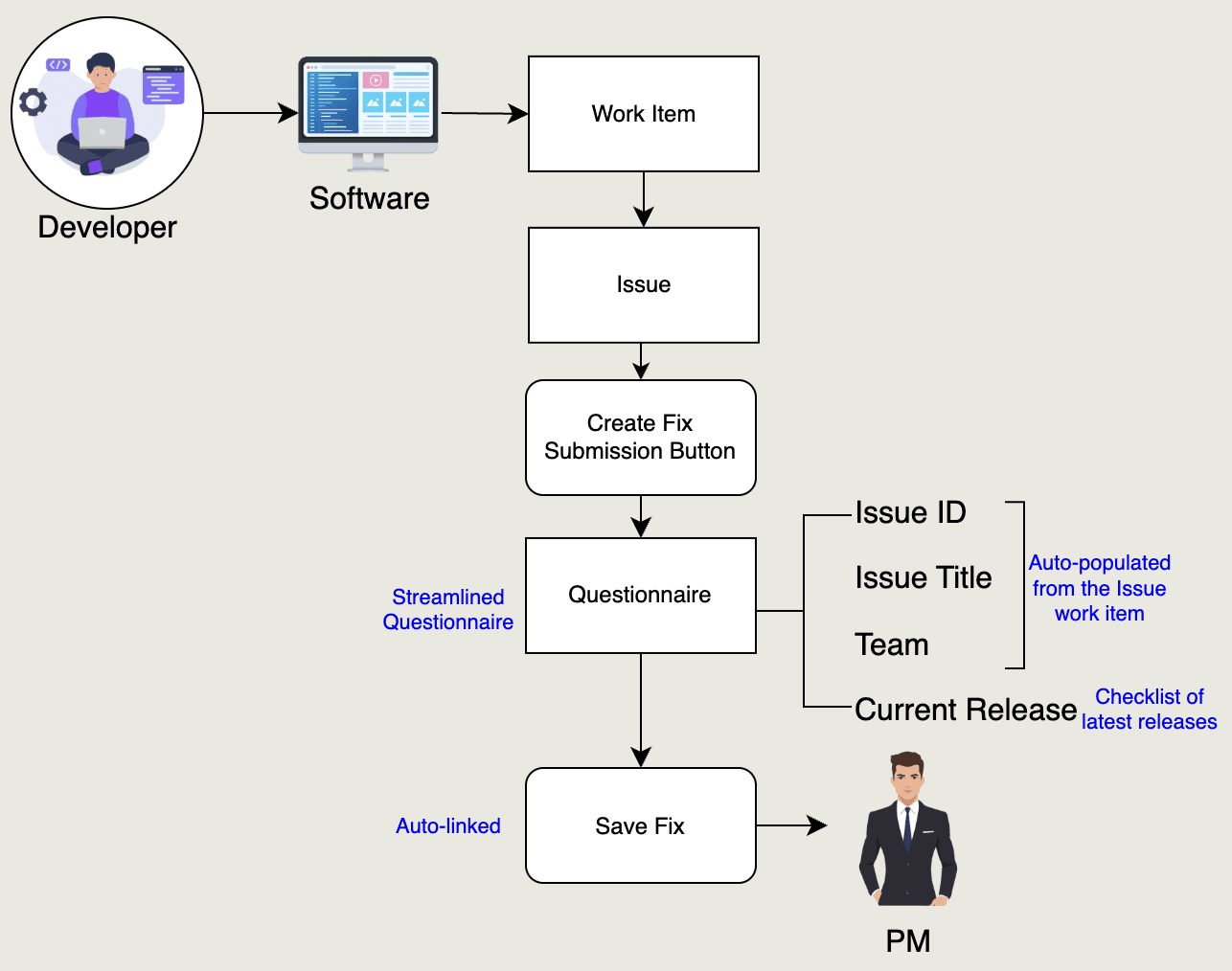
Usability testing with developers showed that the redesigned workflow was significantly more intuitive and required fewer navigation steps. Participants completed the fix submission process 80% faster than before, with noticeably fewer errors and reduced cognitive effort.
From Frustration to Flow
Simplifying Fix Submissions
80% faster
Completion rate
IMPACT
Product Designer + Developer (me)
Development Team
Management and Leadership Team
TEAM
5-6 months
TIMELINE
WORKFLOW BEFORE
Fragmented and Redundant Workflow
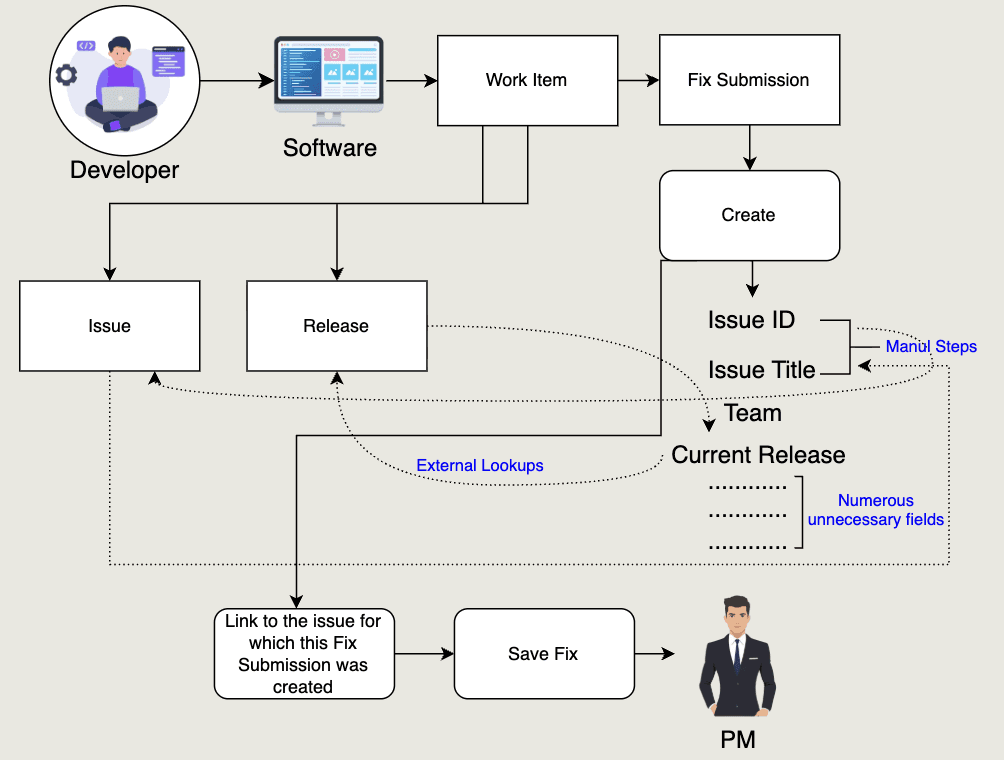
PROBLEM OBSERVED

1
2
3
4
IMPACT ON USERS


Increased task completion time
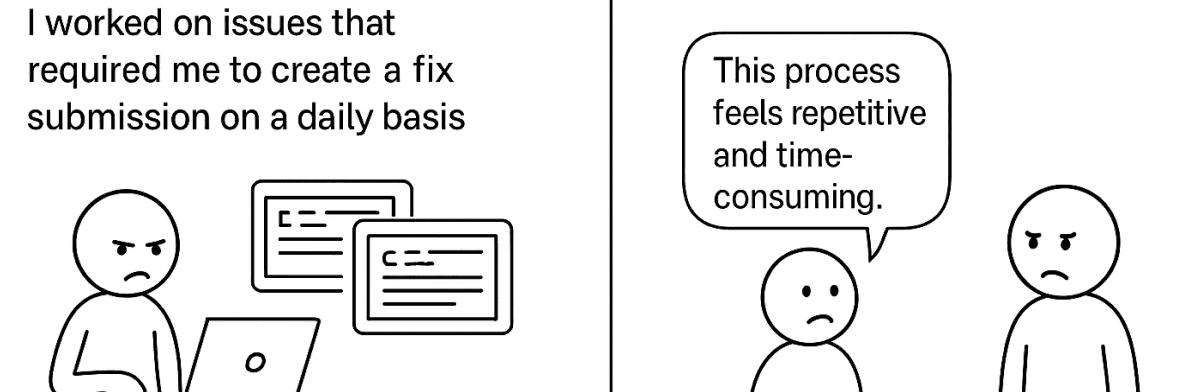
Repeat the same manual steps multiple times a day
GOAL
Simplify and streamline complex workflows to reduce fix submission creation time for developers.
RESEARCH AND DISCOVERY
DEVELOPERS
Conducted contextual inquiries with developers to understand their existing workflows and pain points in issue tracking and fix submission requests.
Mapped current developer workflows to identify redundant steps and bottlenecks in the issue-resolution process.
SCRUM MASTERS
Facilitated discovery sessions with Scrum Masters to consolidate workflow requirements.
Together, these insights highlighted key opportunities to simplify the process, improve visibility between teams, and align the workflow with real user needs and team structures.
KEY INSIGHTS
The interface presented too many fields at once, forcing users to spend extra time figuring out which data was relevant to their task.
Cognitive Overload from Visual Clutter
Each team required slightly different information when submitting a fix, leading to confusion, rework, and inconsistent entries across submissions.
Inconsistent Data Requirements Across Teams
After creating a fix submission request, users had to manually associate it with the corresponding issue, an extra step that added friction and delayed completion.
Manual Linking Between Issues and Fix Submission Requests
Users often had to leave the current workflow to look up the most recent release details before submitting a request, interrupting focus and adding unnecessary time.
Lack of visibility into the latest release version for Fix Submission
WORKFLOW AFTER
Streamlined, Contextual, and Automated
VALIDATION
CONFIDENTIALITY DISCLAIMER
Due to NDA restrictions, visuals and content have been recreated and anonymized to protect proprietary information.
UX Researcher
ROLE
Interviews, Netnography, Competitive Analysis, Literature Review
METHODS
10 weeks
TIMELINE
WHAT THIS STUDY REVEALS
How and why young adults feel “in control” even when they are being subtly influenced.
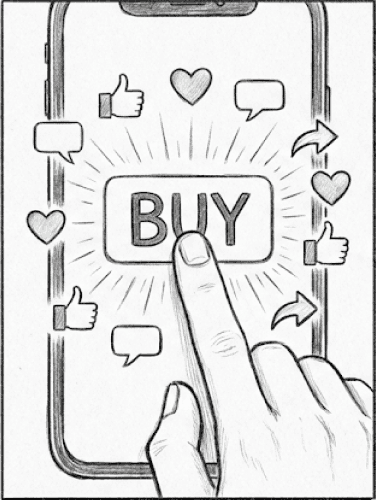
How engagement metrics (likes, comments, shares) shape trust, desire, and purchase decisions.
How peer validation intertwines with self-esteem, comparison, and identity formation.
Consumerism and consumption has just been increasing many, many folds… I feel like even though I am aware of this, and I try to avoid it personally, I still get influenced by these things. - Interview Participant
RESEARCH QUESTION
How does peer validation through likes, shares, and comments on platforms like Instagram, TikTok, and YouTube influence how young adults perceive products and buy them?
In what ways do peer reactions (likes, comments, and shares) and comparisons with other people on social media lead young adults to spend beyond what they intended?
How do peer reactions online shape young adults’ perceptions of self-image and social standing, both when engaging with others’ content and when sharing their own?
How do young adults perceive and make sense of the marketing tactics they encounter when deciding to buy something online?
WHY DOES THIS MATTER?
Social Pressure
Drives Overspending
Young adults often buy more than planned because fitting in or avoiding FOMO can feel more important than financial caution, even when budgets are limited.
Engagement Cues Shape Emotions and Self-Perception
Likes, shares, and comments impact more than purchase decisions, but they influence self-esteem, comparison, and anxiety.
Consumption Is Tied to Identity Formation
What young adults buy becomes part of how they see themselves, making peer validation a powerful force in shaping identity during this developmental stage.
METHODOLOGY
Literature Review
Purpose
Established theoretical grounding
Shape the direction of our research
What we did
Extract papers related to influencer marketing, authenticity, credibility cues, social comparison, materialism, and compulsive buying
Data Analysis
Extracted key concepts and synthesized them into themes like credibility, peer validation, self-perception, and impulsive purchasing
Why it mattered
Most research focuses on influencers, not everyday peer validation, guiding the direction of our study and research questions
6 Literatures
Semi-Structured User Interviews
Purpose
Capture personal experiences and psychological reasoning on how young adults interpret peer validation and how it influences their decisions
3 Interviewees
Participants
Selected using a screener form
Is a young adult (18-28 years)
Had previously purchased products discovered online and spent significant time on social media platforms
Recruited by sending Zoom interview invitations via email
Data Collection
Anonymized audio recordings along with transcripts of interview
Stored on a google drive shared only amongst team members and teaching faculty
Data Analysis
Extracted key responses from interviewees that directly addressed our research questions
Conducted a thematic analysis to identify recurring patterns and insights
Why it mattered
Revealed the psychological reasoning behind user behavior, why certain cues feel persuasive, when social pressure builds, and how users justify purchases
Ethics
Obtained informed consent from each participant before starting recording
Anonymized all responses during data collection to protect user privacy
Sensitive to participants’ privacy and comfort throughout the process
Competitive Analysis
Purpose
Understand how each platform’s design shapes the meaning and impact of peer validation cues
What we did
Analyzed interfaces and 24 engagement features across TikTok, Instagram, YouTube, Facebook, and X
Data Analysis
Compared platform cultures, discovery paths, and types of validation cues
Why it mattered
Observing how validation feels different depending on the platform, helping contextualize participant experiences
24 feature comparison across 5 platforms
Netnography
4 Reddit threads and 1 Podcast
Purpose
Understand how people naturally talk about overspending, FOMO, and social pressure online
Participants
Reddit users from publicly available threads (mixed ages, diverse backgrounds).
Not limited to young adults, selected posts based on relevance, not demographics.
Data Collection
Analyzed publicly available Reddit threads from the past year referencing TikTok, Instagram, and YouTube
Reddit threads like “Social media made me buy this”
Subreddits like r/shoppingaddiction, r/beautyhauls, r/digitalminimalism
Data Analysis
Collected relevant comments and conversations following the same and extracted emotion behind each.
Why it mattered
Provided real-world context and sensitized us to themes
Ethics
Collected data only from publicly accessible threads
Did not interact or engage with users
Anonymized all responses during data collection to protect user privacy
“People want to think they're above advertising, but no one truly is.”
- Reddit User
“Anything and everything I’m doing in my real life is being read by Instagram… It’s a bad feeling.”
- Interview Participant
“There's just so much consumption, there's so much content around consumption… I know, like, friends who are a bit of shopaholics and that's a bit scary, honestly, because it influences so much of your tastes and likes.”
- Interview Participant
“They are just selling like a place or a product, which I honestly just do not like….but if it's like genuine content, they have actually used it…..then I feel like, okay, this is like a bit more trustworthy.”
- Interview Participant
“Social media does create a change to how you see things around you, because at some point of time you would want that people should pursue you a certain way…. social media is a game changer in today's world.”
- Interview Participant
KEY FINDINGS
LEARNINGS
Methodological Triangulation
Synthesizing Qualitative Data
Digital Research Ethics
Designing With Social Impact in Mind
I learned that combining methods (Netnography, Interviews, Platform Analysis) creates richer and more reliable insights.
I learned to distill large volumes of qualitative data into clear, high-level insights that reveal underlying human motivations.
I learned to handle publicly available online data with empathy and rigor, ensuring anonymity and respectful interpretation of sensitive user experiences.
I learned that even small design choices can carry significant emotional and financial consequences, reinforcing the need for responsible, human-centered design.
IMPLICATIONS OF THE STUDY
Feeling of Control
Designers can create prompts in shopping journeys that help people pause:
“Do you want this for usefulness or for the aesthetic?”
Social media education programs on campuses can help young adults reflect on self-image pressures.
Financial wellness tools can be integrated into social platforms for young adults.
Prioritizing Realness
Industry should move toward proof-based, experience-based, community-validated content rather than influencer-heavy ads.
Community and Reflection
Designers, universities, and youth organizations can create community reflection spaces where young adults can talk about consumption habits.
DATA CODING
Selected Richest Interview
Team reviewed the most content rich interview together.
Initial Collaborative Coding
Extract quotes.
Assign codes (Descriptive, in-vivo)
Define each code for shared understanding.
Categorize Codes
into Themes
Organize codes into 3-4 higher level themes.
Group Codes
Combine quotes under the same code.
Individual Coding of
Remaining Transcripts
Divide transcripts among team members.
Extract and assign codes individually.
Compile Comprehensive Spreadsheet
Themes → Codes → Definition → Quotes → Source.
A qualitative study uncovering how likes, comments, and social cues influence buying behavior, identity, and emotional well-being on TikTok, Instagram, and YouTube.
How Peer Validation on Social Media Shapes Young Adults’ Spending And Their Sense of Self